


For a cell to survive and proliferate, it must accurately copy its vast quantity of genetic information before division. This process, known as DNA replication, is a high-speed, high-fidelity operation where proteins work together as a complex "replication machine". However, DNA is constantly under threat from chemical damage and radiation, necessitating a suite of sophisticated repair mechanisms to maintain genomic stability.
The Fundamentals of DNA Replication
The ability of DNA to replicate is rooted in the principle of base-pairing. Because each strand of a DNA double helix contains a sequence of nucleotides that is exactly complementary to its partner, each original strand can serve as a template for the synthesis of a new strand. This results in semiconservative replication, where each daughter DNA molecule consists of one original (old) strand and one newly synthesized strand.
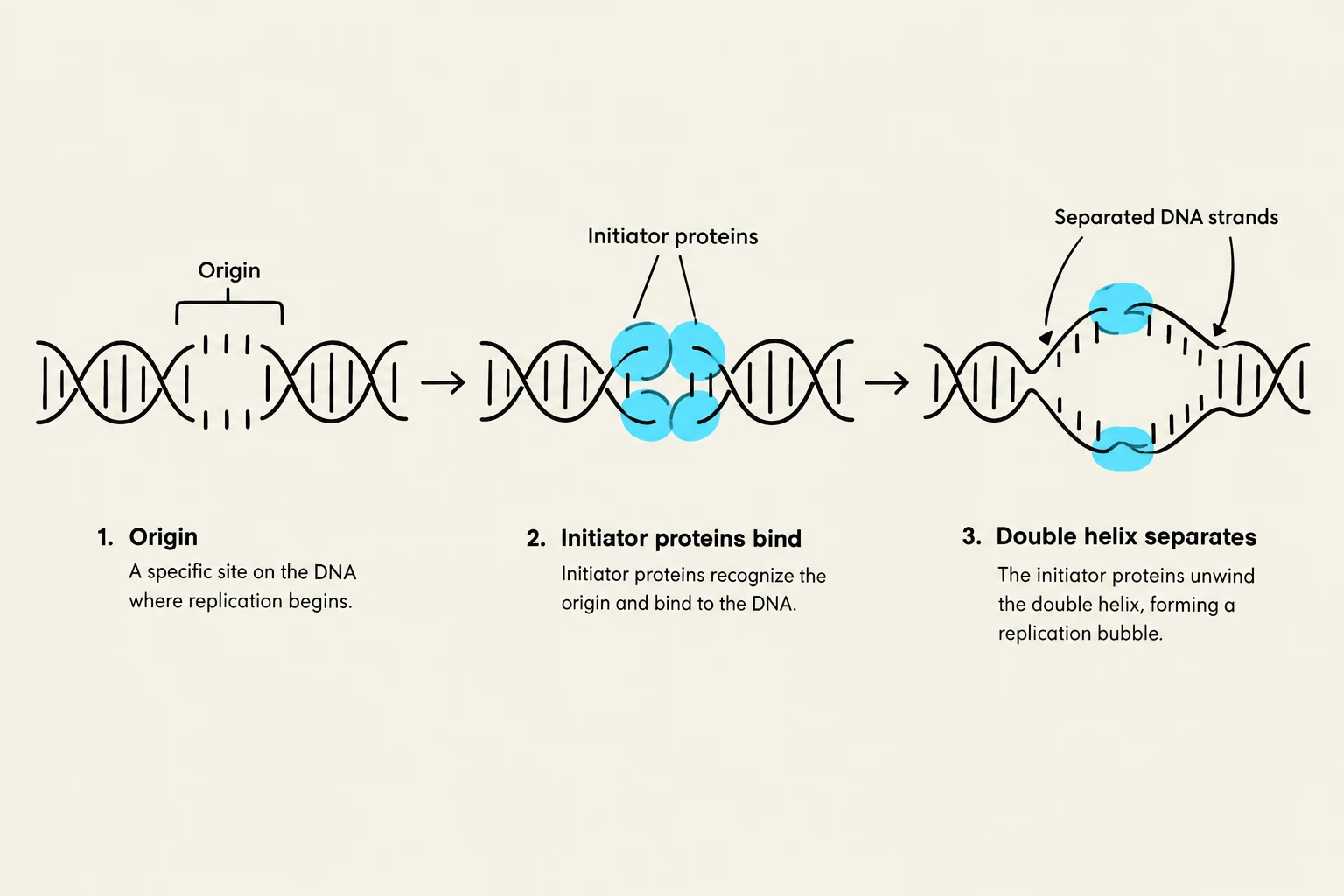
Replication does not begin randomly along the DNA molecule. Instead, it starts at specific sequences called replication origins. At these origins, initiator proteins bind to the DNA and pry the two strands apart, breaking the hydrogen bonds between the bases to expose the templates. Once the strands are separated, two replication forks form at each origin and move away from each other in opposite directions. These Y-shaped junctions are the active sites of DNA synthesis.
The Replication Machine: Leading and Lagging Strands
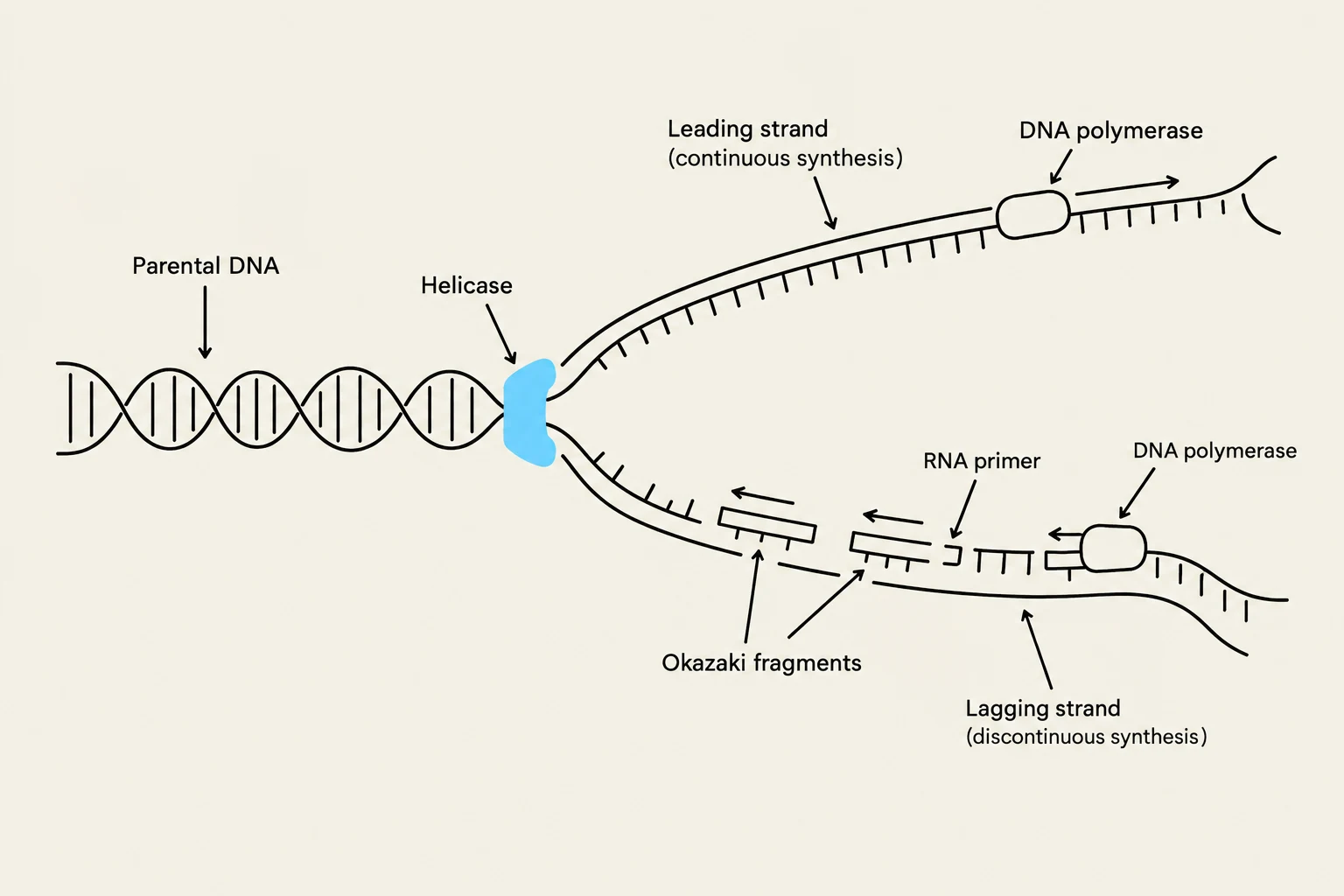
The primary enzyme responsible for building the new DNA is DNA polymerase. However, DNA polymerase has a strict limitation: it can only add deoxyribonucleotides to the 3' end of a growing strand, meaning synthesis must always proceed in the 5' to 3' direction.
Keep reading for free.
Create an account to finish this reading and make it part of your study routine.
Continue reading freeAlready have an account? Log in
Updated