


Genetic diversity is the cornerstone of evolution, providing the raw material upon which natural selection acts. While DNA replication ensures that genetic information is passed faithfully from one generation to the next, recombination processes ensure that this information is shuffled, creating new combinations of alleles. This article explores how cells achieve this shuffling through two primary lenses: the macroscopic outcomes seen during meiosis and the microscopic, molecular dance of DNA strands breaking and rejoining.
Genetic Diversity in Meiosis
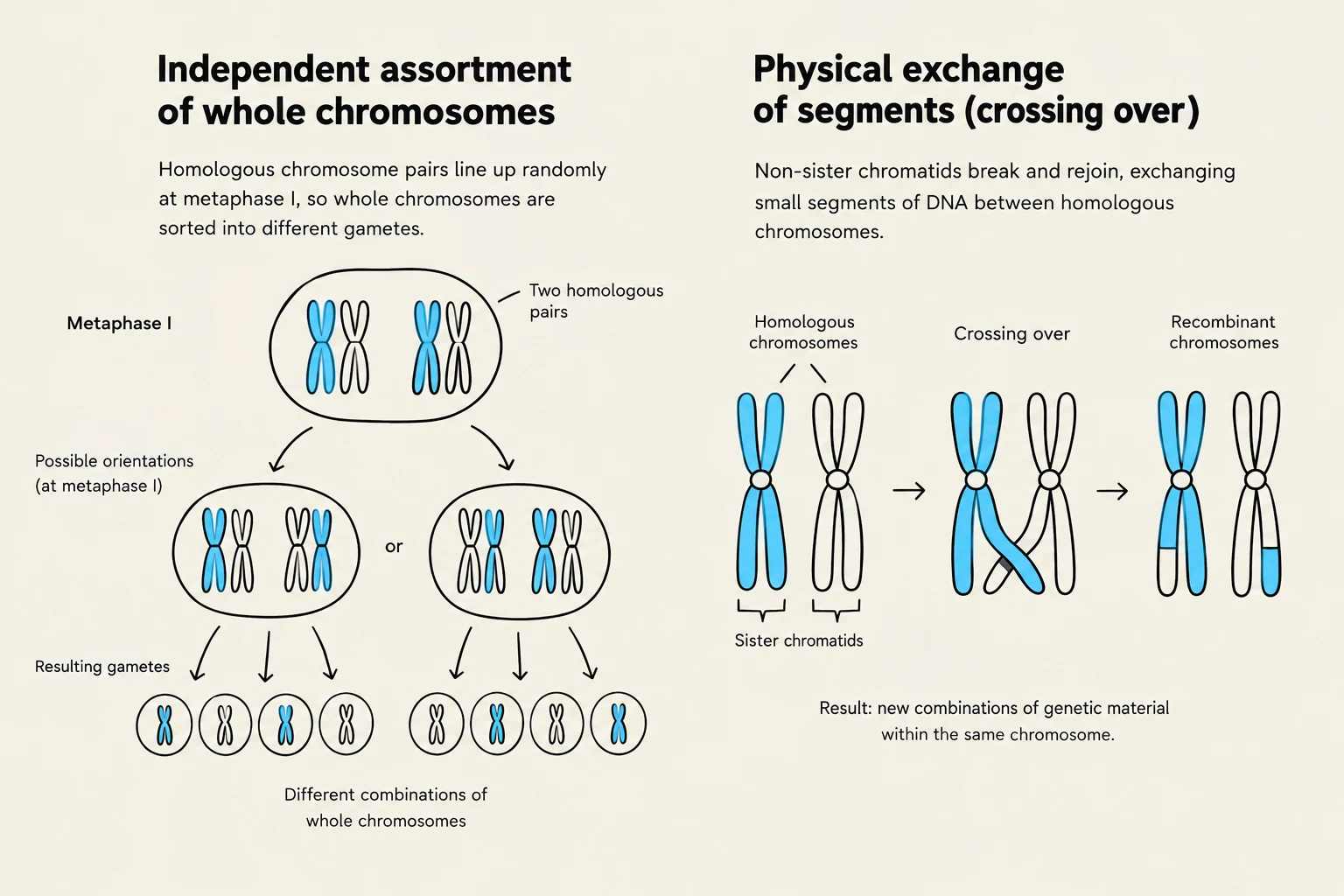
In eukaryotic organisms, recombination occurs during meiosis to ensure that offspring possess unique genetic profiles. There are two fundamental ways this happens:
- Independent Assortment: This occurs when each pair of homologous chromosomes segregates freely from other pairs. Because the orientation of one pair is independent of another, it creates new combinations of alleles for unlinked genes.
- Crossing Over: Unlike independent assortment, crossing over involves the physical exchange of DNA segments between two homologous chromosomes. This is essential for creating new allele combinations for linked genes and ensures that chromosomes segregate properly during cell division.
The Molecular Mechanism of Homologous Recombination
At the molecular level, recombination is a highly regulated multi-step process. It typically begins with a controlled injury to the DNA structure.
Step 1: Breaking and Preparing the DNA
The process is initiated by the formation of a double-strand break (DSB). A specific protein, such as Spo11, breaks the phosphodiester bonds of both strands of one chromatid. Once the break is made, the cell must prepare the ends for exchange through a process called resection. During resection, exonucleases degrade the 5' ends of the broken strands, leaving behind long, single-stranded 3' tails.

Keep reading for free.
Create an account to finish this reading and make it part of your study routine.
Continue reading freeAlready have an account? Log in
Updated