


DNA Double-Strand Break Repair Mechanisms
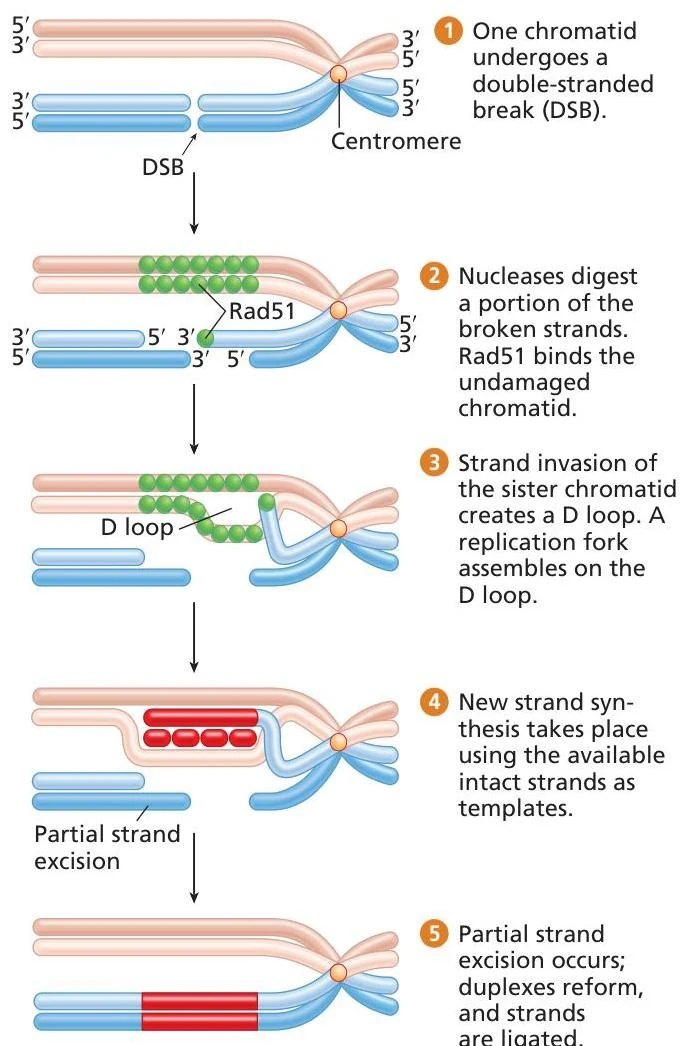
In the complex environment of a eukaryotic nucleus, the integrity of the genome is constantly under threat from various forms of damage. Among the most lethal of these are double-strand breaks (DSBs), where both strands of the DNA duplex are severed. If left unrepaired, these breaks can lead to catastrophic chromosomal abnormalities, such as translocations, inversions, or large-scale deletions. To combat this, cells have evolved specialized molecular pathways to stitch the broken DNA back together. The two primary strategies used in eukaryotes are Nonhomologous End Joining (NHEJ) and Synthesis-Dependent Strand Annealing (SDSA).
Nonhomologous End Joining (NHEJ)
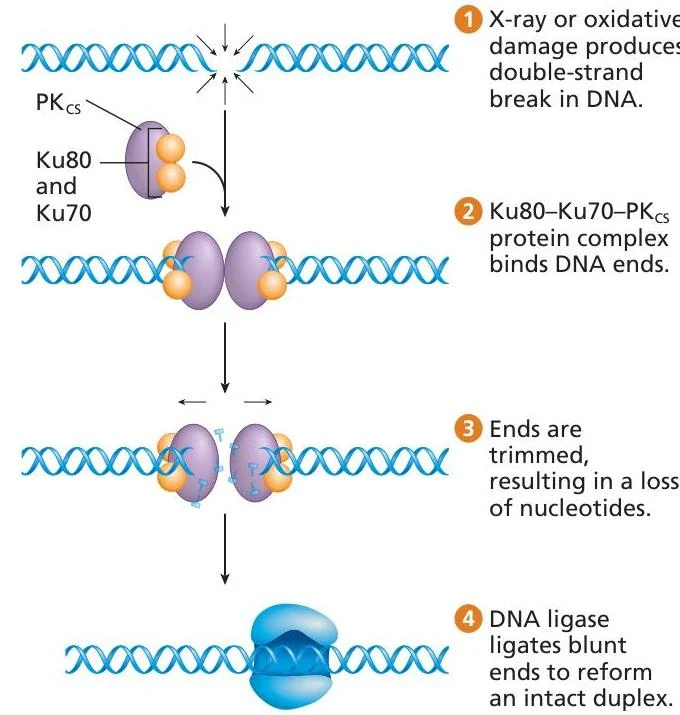
Nonhomologous End Joining (NHEJ) is a rapid, versatile repair mechanism that functions throughout the cell cycle. Its defining characteristic is that it does not require a homologous template to guide the repair, making it the primary choice when a sister chromatid is unavailable (such as during the phase of the cell cycle).
The NHEJ process can be broken down into four distinct stages:
- Recognition: The process begins when a specialized protein complex, consisting of , , and , identifies the broken ends of the DNA and binds to them to protect the DNA from further degradation.
- Resection: Once the complex is bound, the free ends of the broken strands are trimmed back.
- Processing: This trimming step often results in the creation of blunt ends on each side of the break.
- Ligation: Finally, a specialized DNA ligase enzyme joins these blunt ends together to restore a continuous DNA duplex.
Keep reading for free.
Create an account to finish this reading and make it part of your study routine.
Continue reading freeAlready have an account? Log in
Updated