Distinguishing Between Sadness and Clinical Depression
This content differentiates everyday sadness from clinical depression (unipolar depression), detailing key distinctions like anhedonia, physical symptoms, and cognitive distortions, and touches upon biological perspectives.
We have all experienced the heavy weight of a bad day. Perhaps a breakup, a professional setback, or a period of grief has left us feeling low, unmotivated, or tearful. In these moments, sadness feels like a natural, albeit painful, response to the circumstances of life. However, there is a profound clinical distinction between this transient emotional state and the debilitating condition known as unipolar depression. Understanding where "normal" sadness ends and clinical pathology begins is essential for both mental health literacy and effective medical intervention.
The Nature of Everyday Sadness
Everyday sadness is a functional, transient emotional response. It is typically "reactive," meaning it is triggered by specific external events—such as the loss of a job, the death of a loved one, or a social rejection. During these periods, an individual may feel low, but their emotional state remains tethered to reality.
Key characteristics of everyday sadness include:
Transience: The feeling comes in waves and eventually subsides as the individual processes the event or as circumstances improve.
Contextual Appropriateness: The sadness is a proportional response to a specific stressor.
Preservation of Function: While a person might feel less energetic, they can usually still fulfill their primary responsibilities, such as attending work, maintaining hygiene, and engaging in social interactions, even if they do so with less enthusiasm.
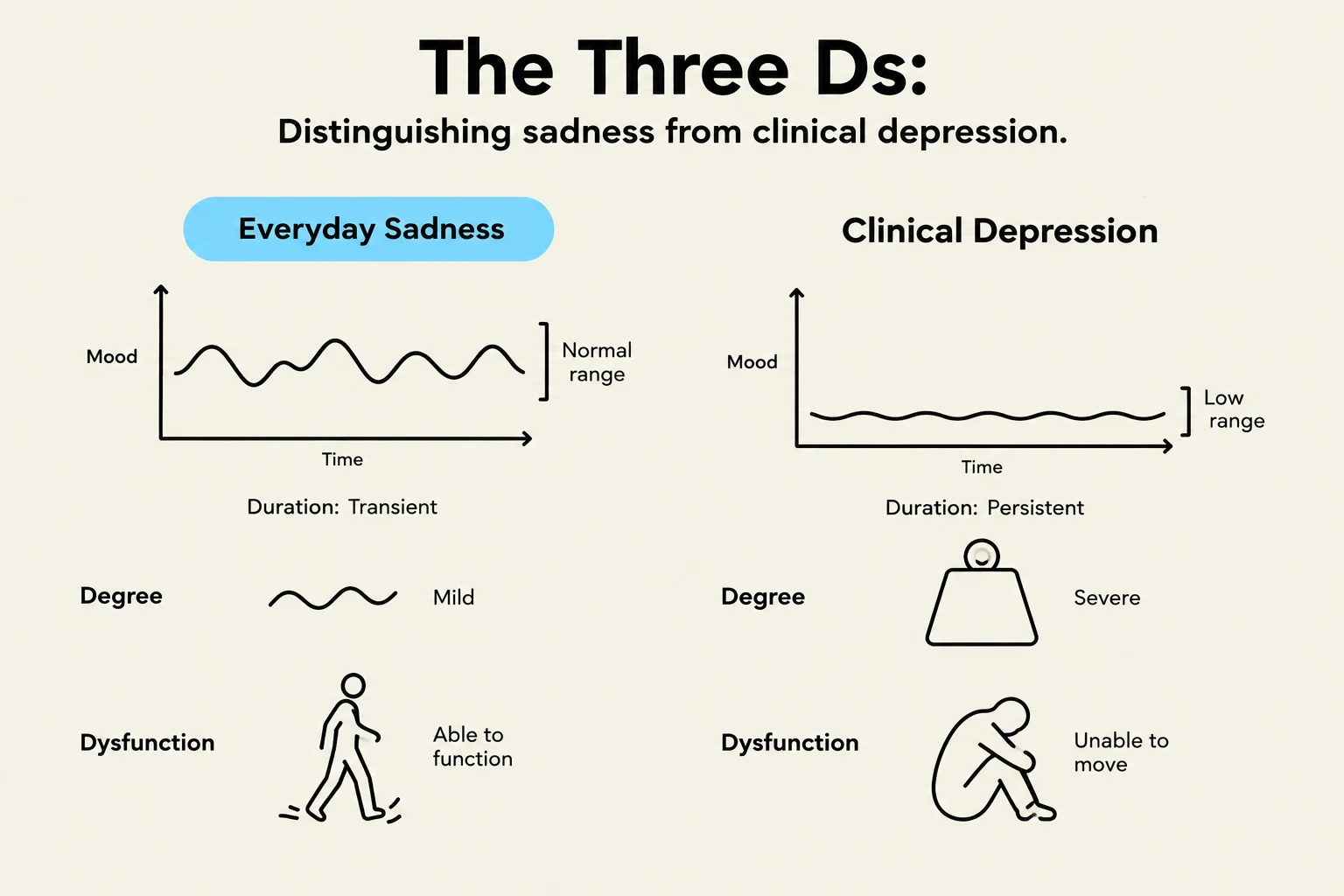
The Three Ds: Distinguishing sadness from clinical depression, illustrating differences in mood, duration, degree, and dysfunction.
Clinical depression, often referred to as Major Depressive Disorder (MDD) or unipolar depression, is not merely an intensification of sadness; it is a distinct biological and psychological syndrome. Unlike everyday sadness, clinical depression is often characterized by its persistence and its ability to exist independently of external circumstances.
A person suffering from unipolar depression may experience a profound sense of emptiness or hopelessness even when "life is going well" on paper. This is not a mood swing; it is a systemic disruption of emotional regulation.
Exam Tip: When distinguishing between sadness and depression, look for the "Three Ds": Duration (how long it lasts), Degree (how intense it is), and Dysfunction (how much it interferes with daily life).
Key Clinical Distinctions
To differentiate between the two, clinicians look for specific markers that move a patient from a "sad" category into a "depressive disorder" category.
1. Anhedonia
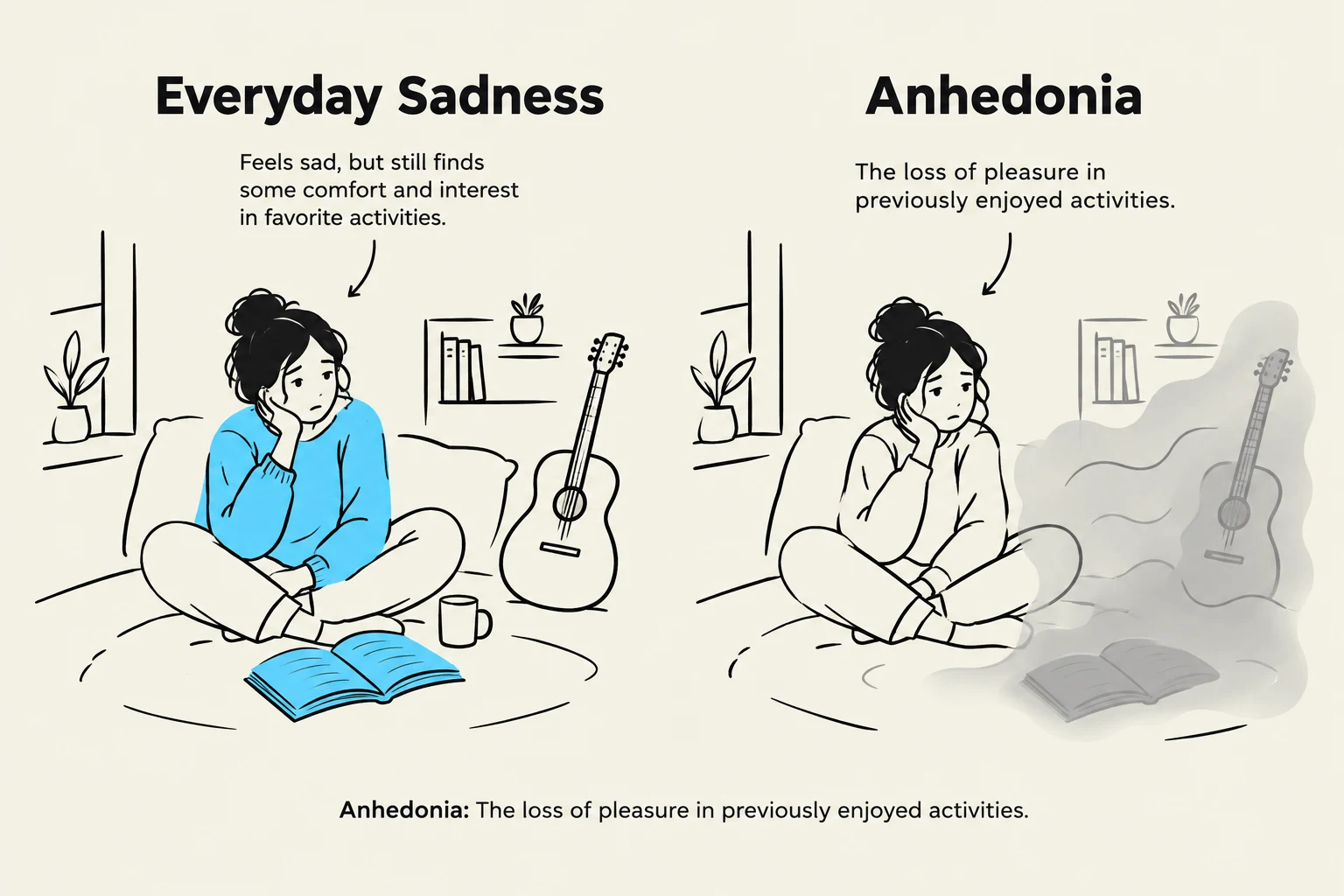
The image contrasts "Everyday Sadness" with "Anhedonia," illustrating the difference between feeling sad but still finding comfort and interest, versus the loss of pleasure in previously enjoyed activities.
One of the most significant markers of clinical depression is anhedonia—the loss of interest or pleasure in activities that the person previously enjoyed. While a sad person might find temporary relief in a hobby or a conversation with a friend, a person with clinical depression often finds no solace in anything, feeling a pervasive sense of numbness or emptiness.
2. Physical and Vegetative Symptoms
Everyday sadness is primarily an emotional experience. Clinical depression, however, manifests through significant physiological changes. These may include:
Sleep Disturbances: Insomnia (inability to sleep) or hypersomnia (excessive sleeping).
Appetite Changes: Significant weight loss or gain unrelated to dieting.
Psychomotor Agitation or Retardation: Moving in a noticeably slowed-down manner or, conversely, being unable to sit still due to inner tension.
Energy Fluctuations: Chronic fatigue that is not relieved by rest.
3. Cognitive Distortions
While sadness can lead to pessimistic thoughts, clinical depression often involves deep-seated cognitive distortions, including intense feelings of worthlessness or excessive, inappropriate guilt. In severe cases, this can escalate to suicidal ideation or thoughts of death.
Summary Comparison Table
Feature
Everyday Sadness
Clinical Depression (Unipolar)
Trigger
Usually a specific external event
Can occur without an obvious trigger
Duration
Short-term; fluctuates
Persistent (often weeks or months)
Anhedonia
Rare; pleasure is still possible
Common; profound loss of interest
Physicality
Minimal physical impact
Significant (sleep, appetite, energy)
Functionality
Generally maintained
Significantly impaired
The Biological Perspective
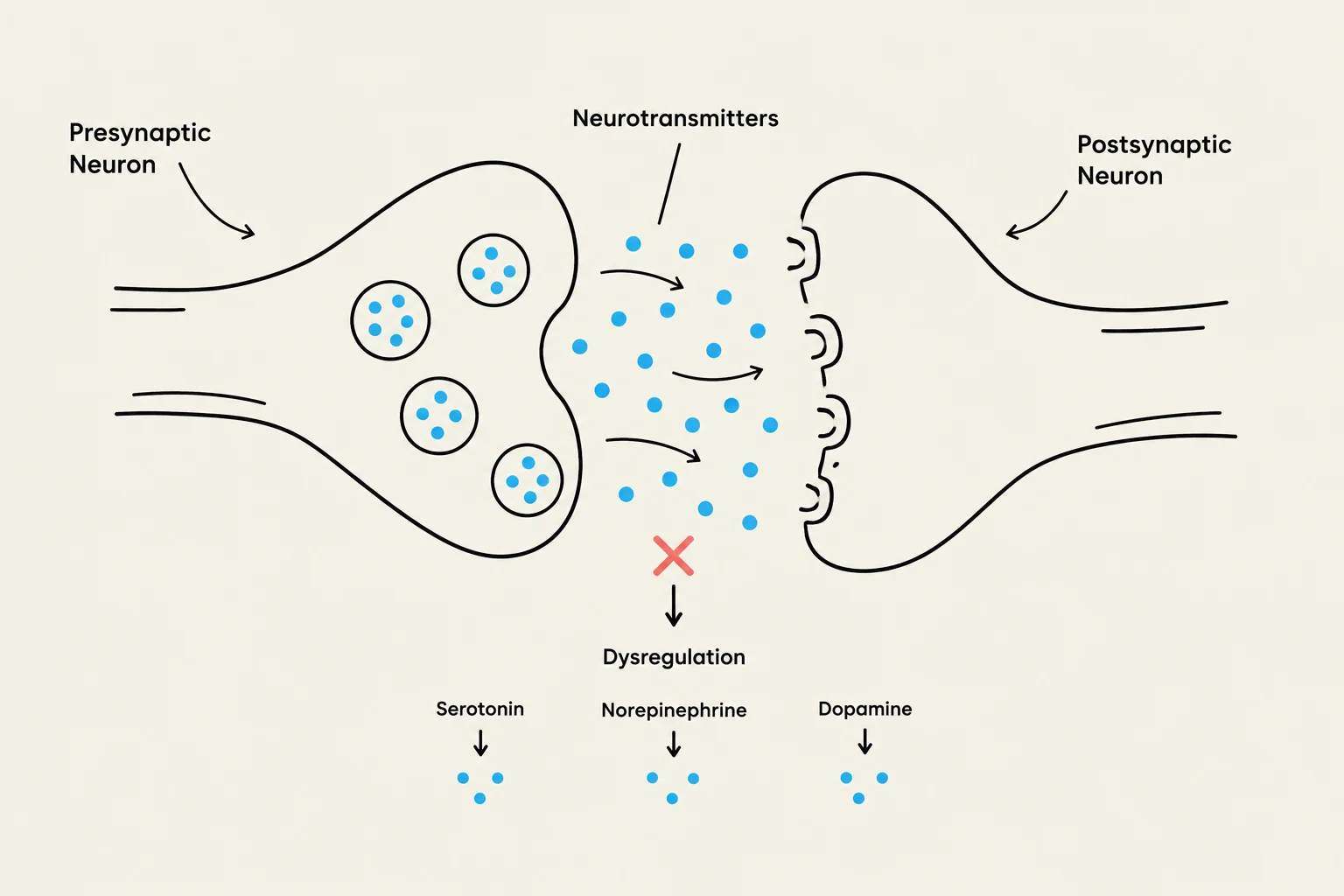
This diagram illustrates a synapse, the junction between two neurons, where neurotransmitters are released from the presynaptic neuron to communicate with the postsynaptic neuron. It also depicts the concept of neurotransmitter dysregulation involving serotonin, norepinephrine, and dopamine.
It is a common misconception that depression is "all in the head" in a way that implies it is imaginary. In reality, unipolar depression involves complex biological mechanisms. Research into the biology of depression explores various factors, including:
Neurotransmitter Dysregulation: Imbalances in chemicals like serotonin, norepinephrine, and dopamine that facilitate communication between neurons.
Structural Brain Changes: Alterations in areas of the brain responsible for emotion regulation, such as the hippocampus or the prefrontal cortex.
Genetic Predisposition: A family history of depressive disorders can increase an individual's vulnerability to developing the condition.
Conclusion
Distinguishing between sadness and clinical depression is not about minimizing human emotion; rather, it is about recognizing when an emotional state has transitioned into a medical condition that requires professional intervention. While sadness is a part of the human experience, clinical depression is a serious disorder that affects the body, the mind, and the ability to function in the world. Recognizing the signs of anhedonia, physical changes, and persistent hopelessness can be the first step toward seeking the appropriate biological or psychological treatments.
Keep reading for free.
Create an account to finish this reading and make it part of your study routine.