


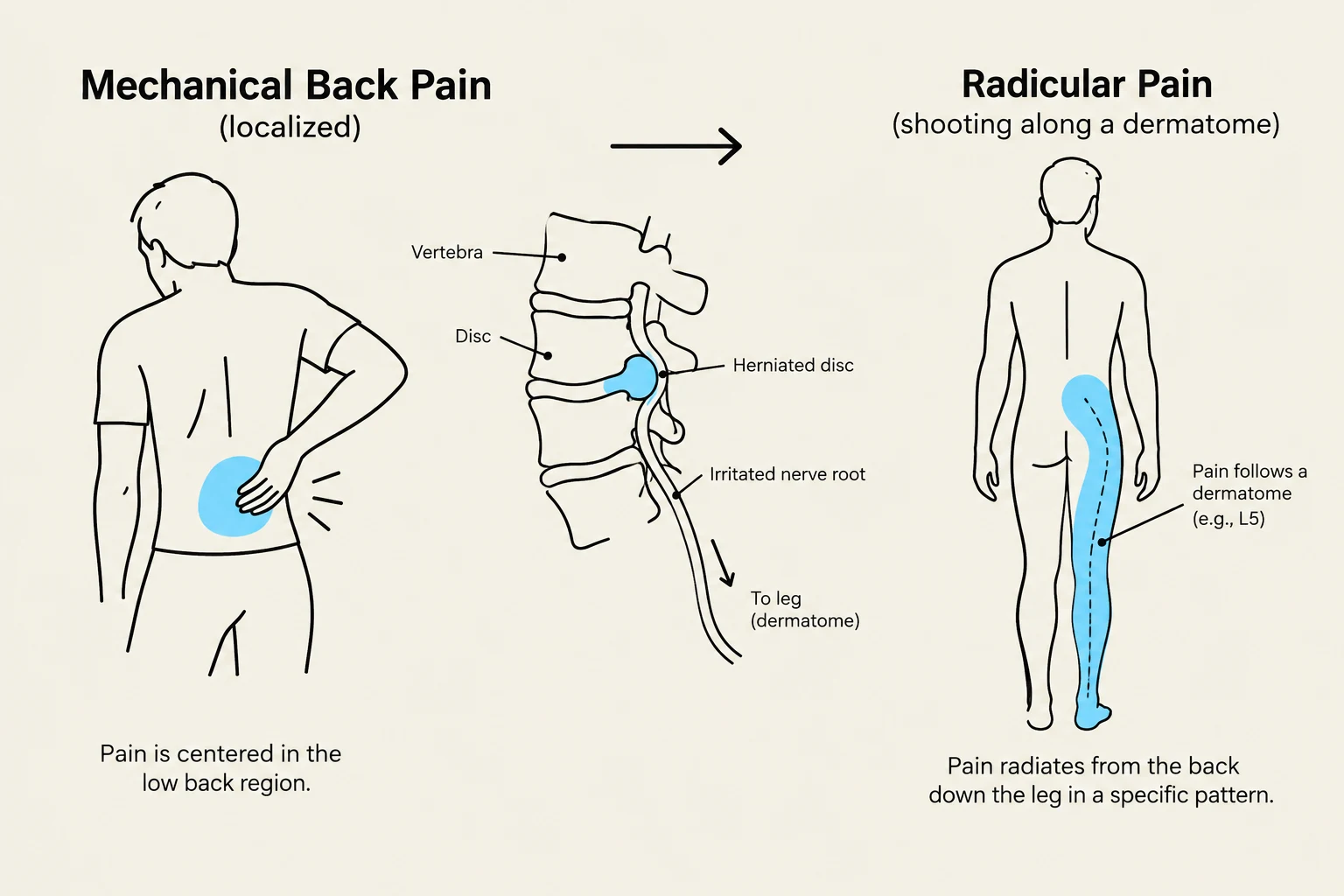
Clinical practice often requires distinguishing between various types of joint inflammation and spinal-related pain. While patients may use the term "arthritis" or "back pain" broadly, these terms encompass a wide range of pathologies with vastly different underlying mechanisms, onset speeds, and clinical implications. Understanding whether a patient is experiencing an inflammatory arthropathy, a degenerative joint condition, or a neurological complication of the spine is critical for determining the appropriate course of action, ranging from conservative physiotherapy to emergency medical referral.
Inflammatory and Degenerative Arthritis
Arthritis conditions are generally categorized by their underlying cause: metabolic, autoimmune, or degenerative. A key clinical distinction lies in whether the condition is monoarticular (affecting a single joint) or polyarticular (affecting multiple joints).
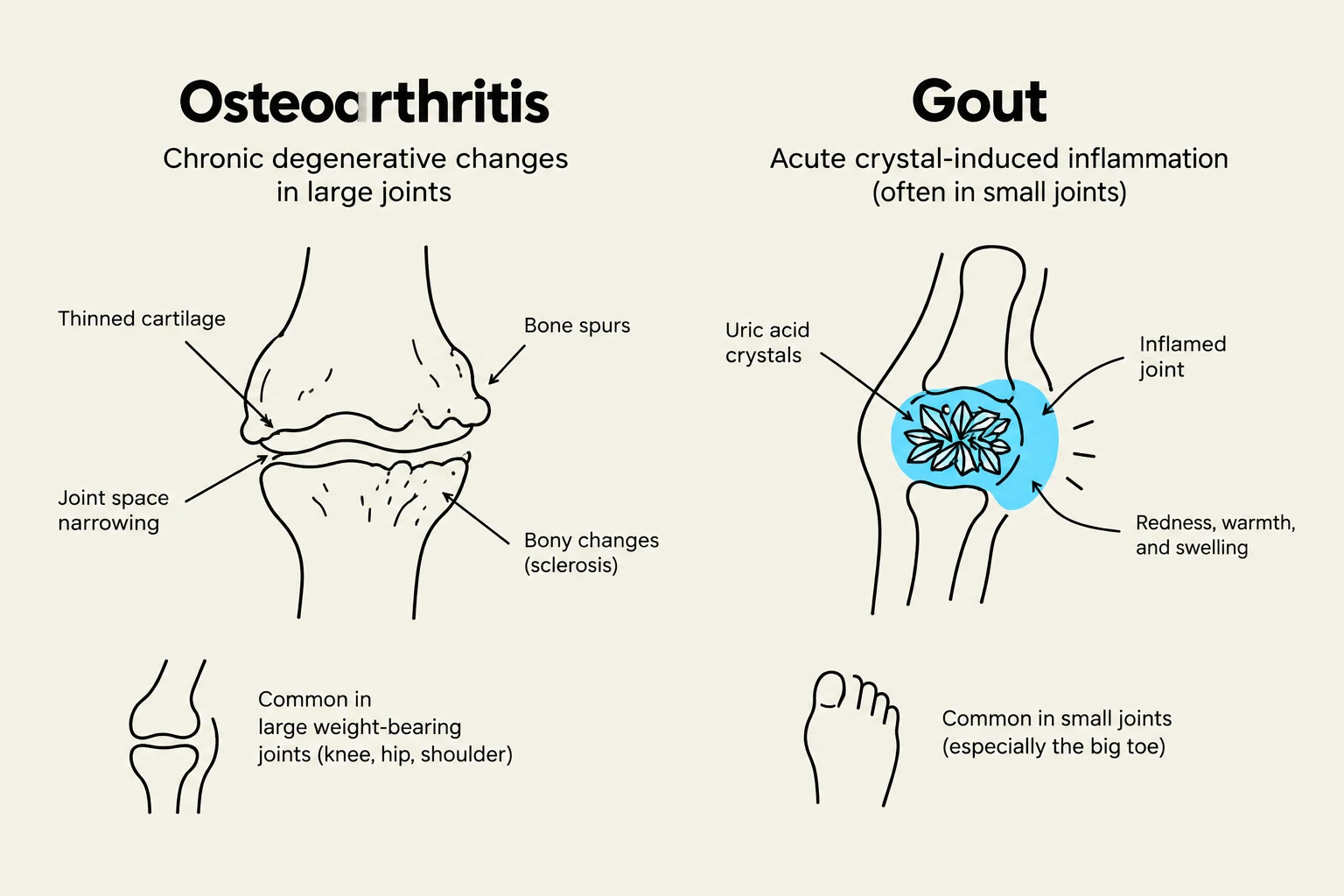
Gout
Gout is an acute inflammatory arthropathy caused by the deposition of monosodium urate (MSU) monohydrate crystals within the joint space. It is characteristically monoarticular and most frequently affects males under the age of 40. The hallmark of a gout flare is a rapid, intense onset of pain—often occurring in less than 24 hours—accompanied by significant heat, redness, and swelling. The metatarsophalangeal (MTF) joint of the great toe is the most common site of involvement.
Clinical Alert: Because of the rapid onset and severity of pain, gout is considered an urgent condition requiring contact with a GP or emergency services.
Osteoarthritis (OA)
Unlike the systemic nature of some inflammatory conditions, osteoarthritis is a progressive, degenerative process involving the loss of articular cartilage and changes to the subchondral bone. It typically affects adults over the age of 50 and is often asymmetrical and monoarticular. Common sites include the hip, knee, and the small joints of the hands (PIP, DIP, and thumb CMC).
Keep reading for free.
Create an account to finish this reading and make it part of your study routine.
Continue reading freeAlready have an account? Log in
Updated