


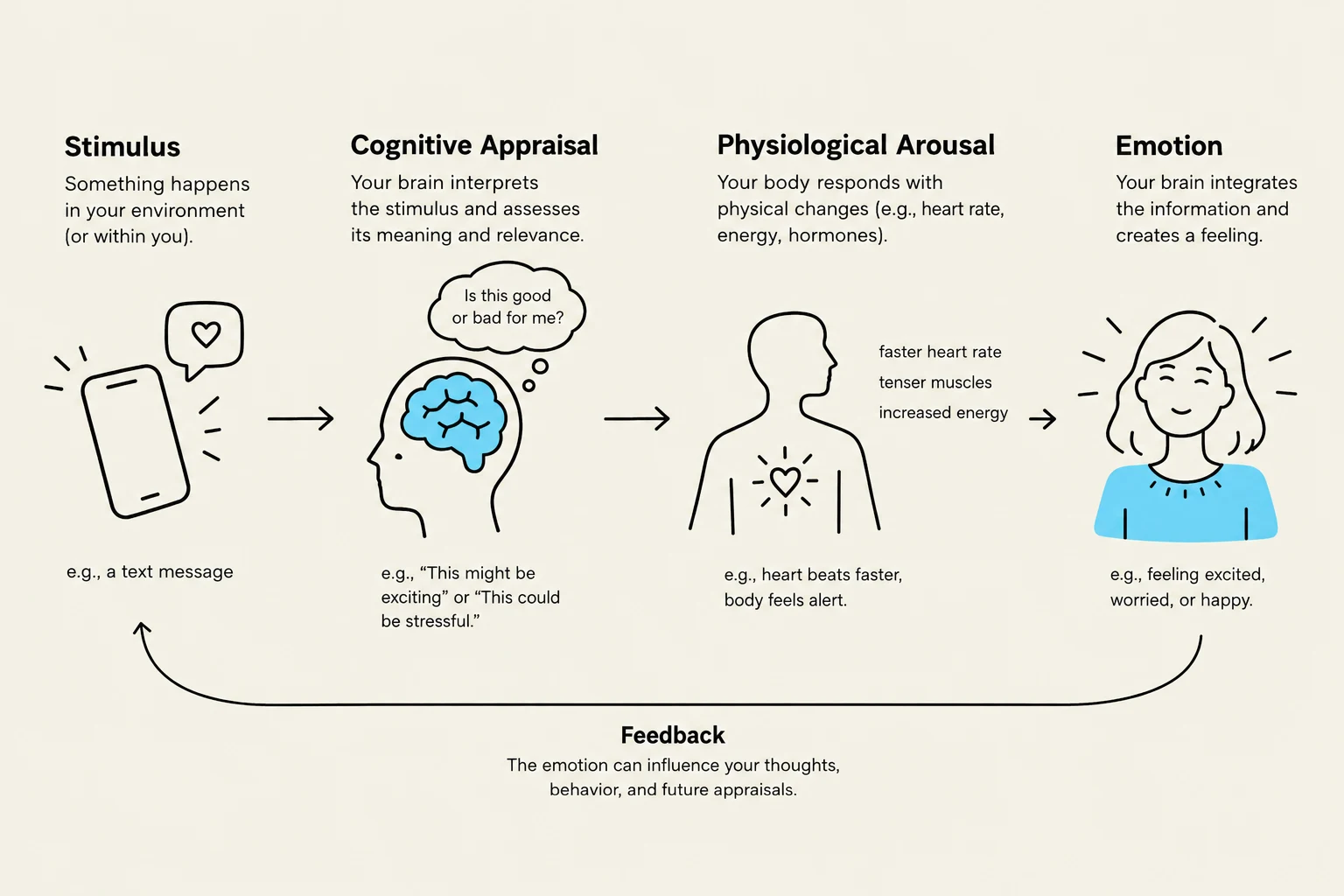
In everyday conversation, we often use the words "affect" and "emotion" interchangeably. We might say we are "feeling a lot of affect" or "having an emotional moment," but in the rigorous study of psychology, these terms represent distinct layers of human experience. Understanding the nuance between them is essential for grasping how humans process stimuli, manage anxiety, and regulate performance.
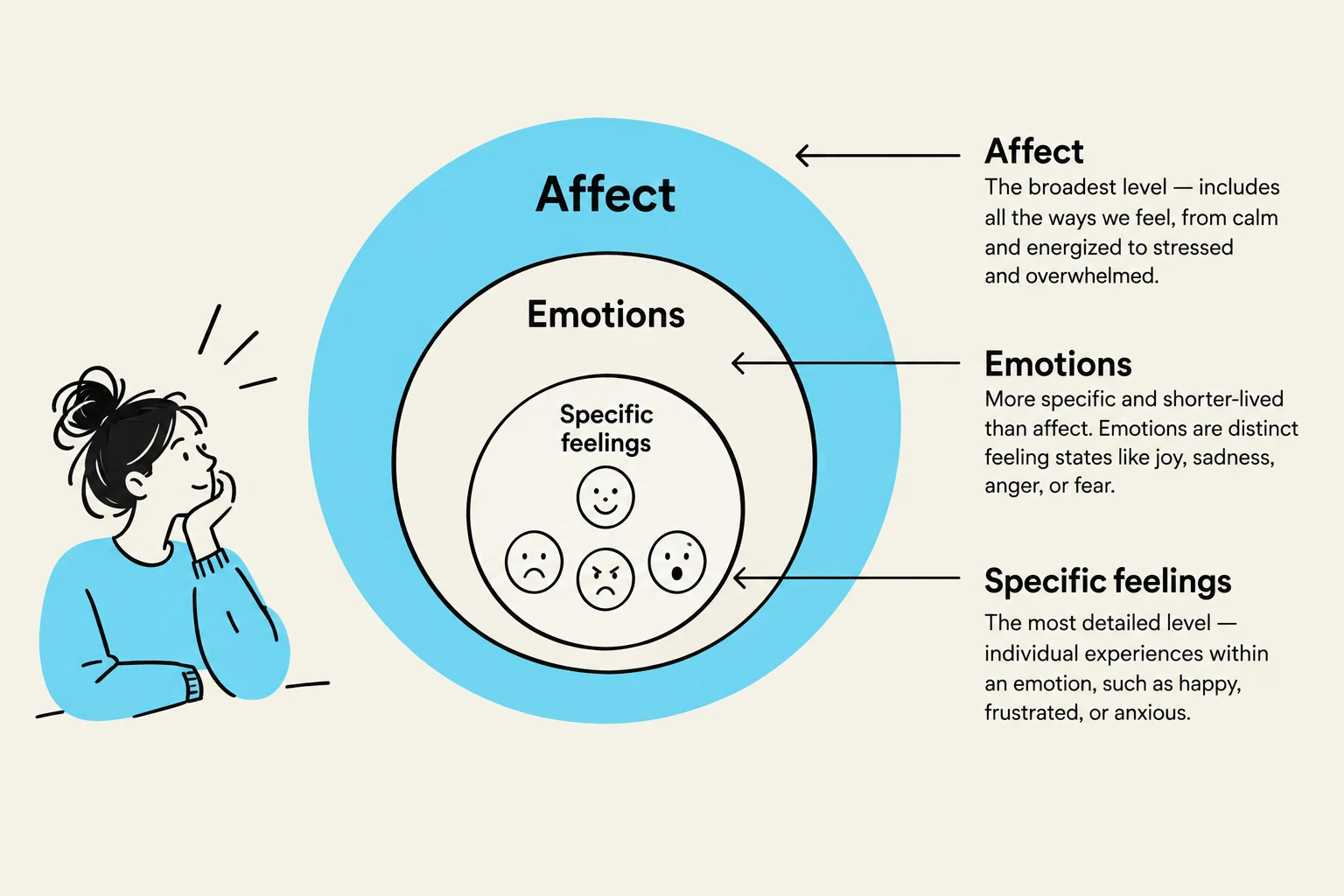
While they are closely related, the primary distinction lies in their scope: affect is the broad, foundational umbrella, while emotion is a specific, structured response to a particular event.
The Umbrella Term: Affect
To understand the hierarchy of human feeling, we must start with affect. Affect is the most fundamental and generalized term in the study of internal states. It refers to the underlying neurophysiological state that characterizes our experience of "feeling" in a broad sense.
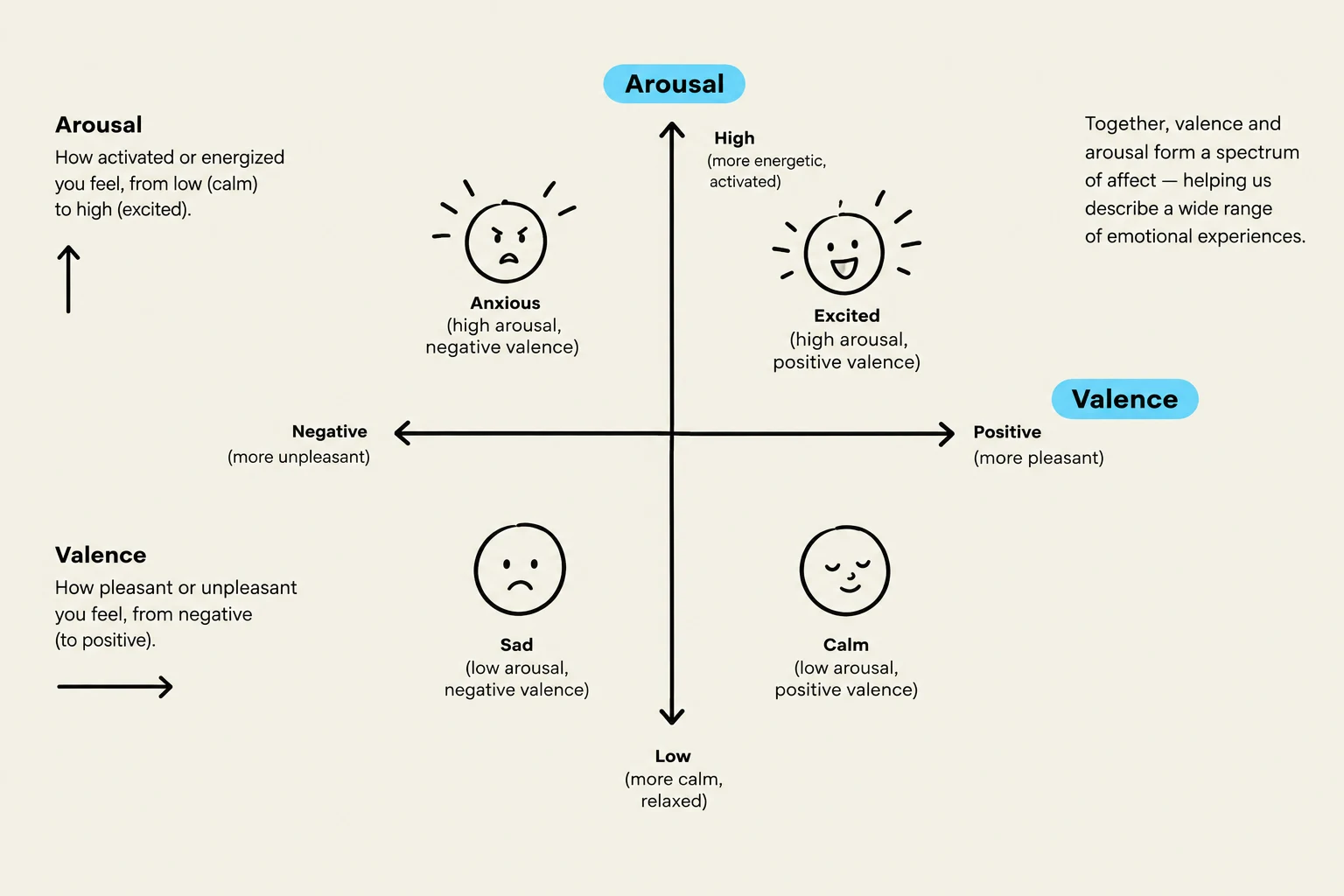
Affect is often described through two primary dimensions: valence (how positive or negative a feeling is) and arousal (the level of physiological activation or energy). For example, a person sitting quietly in a sunny garden might experience high positive valence and low arousal, whereas someone running from a predator would experience high negative valence and high arousal.
Because affect is so broad, it serves as the "raw material" for more complex psychological states. It is the baseline of our internal weather—the general sense of whether things are going well or poorly, and how much energy we are bringing to the moment.
Keep reading for free.
Create an account to finish this reading and make it part of your study routine.
Continue reading freeAlready have an account? Log in
Updated