


The upper airway is a complex anatomical region where respiratory, digestive, and vocal functions intersect. Disorders of the throat and larynx can range from chronic, lifestyle-related issues like obstructive sleep apnea to acute, life-threatening emergencies such as epiglottitis or foreign body aspiration. Understanding the distinction between benign vocal pathologies and malignant transformations is critical for effective clinical management.
Obstructive Sleep Apnea (OSA)
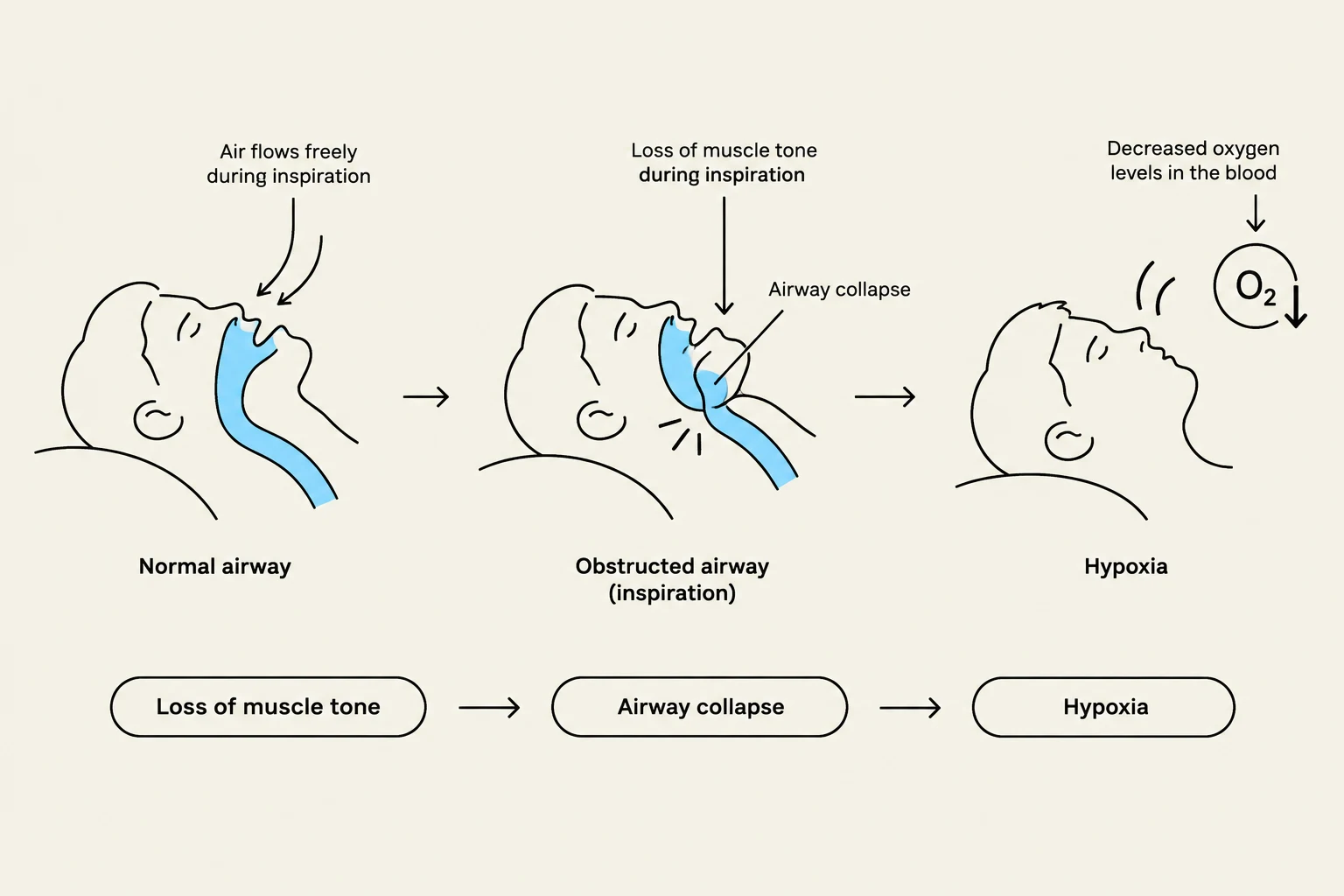
Obstructive sleep apnea is characterized by the repeated collapse of the upper airway during sleep due to a loss of normal pharyngeal muscle tone. This collapse leads to intermittent hypoxia and frequent awakenings, which manifest clinically as loud snoring, excessive daytime sleepiness, morning headaches, and fatigue.
Risk factors for OSA include obesity, macroglossia (enlarged tongue), micrognathia (small jaw), tonsillar hypertrophy, and the use of alcohol or sedatives. Diagnosis is typically confirmed via polysomnography (a "sleep study"), which monitors for apneic episodes, oxygen desaturations, and arrhythmias.
Management strategies follow a tiered approach:
- Behavioral/Lifestyle: Weight loss and avoiding alcohol.
- Non-invasive: Continuous Positive Airway Pressure (CPAP).
- Surgical: Uvulopalatopharyngoplasty (UPPP) to resect pharyngeal soft tissue, mandibular repositioning, or hypoglossal nerve stimulation.
- Definitive: Tracheostomy is considered a definitive treatment but carries significant adverse effects.
Tonsillar Disorders and Tonsillectomy
Tonsillar hypertrophy is a common contributor to airway obstruction. While tonsils serve an immunological role, surgical removal (tonsillectomy) is indicated for several reasons, including recurrent tonsillitis, recurrent peritonsillar abscess, suspected malignancy, OSA, or halitosis caused by tonsilloliths.
Keep reading for free.
Create an account to finish this reading and make it part of your study routine.
Continue reading freeAlready have an account? Log in
Updated