


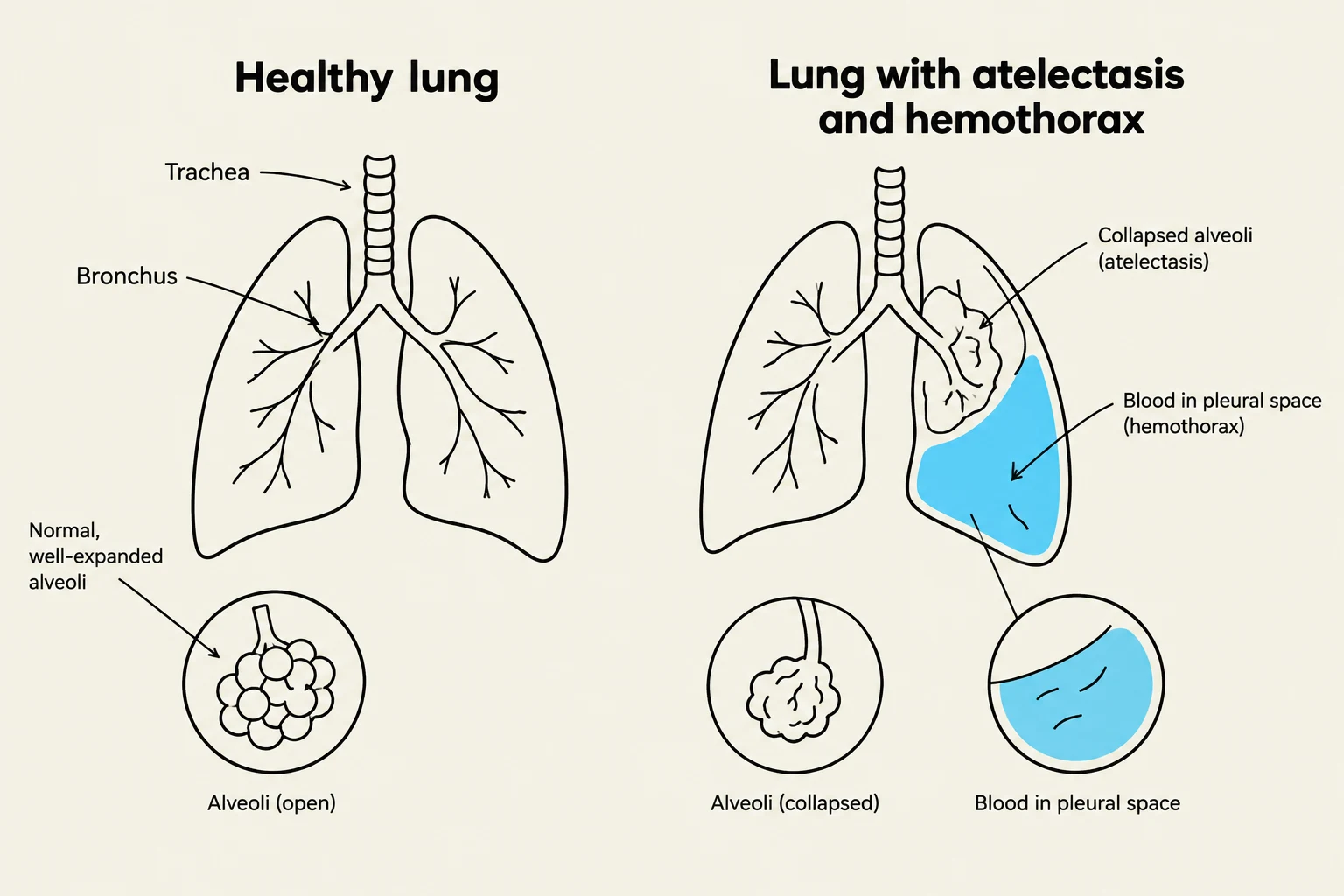
Effective respiration relies on a delicate balance between ventilation (the movement of air in and out of the lungs) and gas exchange (the diffusion of oxygen and carbon dioxide across the alveolar-capillary membrane). When this balance is disrupted by structural changes, airway obstructions, or physiological mismatches, the body enters a state of respiratory distress. Understanding these disorders requires distinguishing between gas exchange abnormalities, such as hypoxemia and hypercapnia, and structural complications, such as pneumothorax and atelectasis.
Gas Exchange Abnormalities: Hypoxemia and Hypercapnia
The most immediate threats to cellular survival involve the failure to maintain adequate levels of oxygen () and carbon dioxide () in the arterial blood.
Hypoxemia
Hypoxemia is defined as a decrease in the partial pressure of oxygen in the arterial blood (). This threshold is critical because, according to the shape of the oxygen-hemoglobin dissociation curve, once drops below 60 mmHg, the hemoglobin's ability to carry oxygen decreases precipitously.
Several mechanisms can cause hypoxemia:
- Hypoventilation: Insufficient air movement leads to low oxygen intake.
- Diffusion Impairment: A thickened or damaged alveolar-capillary membrane makes it difficult for to cross into the capillaries.
- V/Q Mismatch: An imbalance between the amount of air reaching the alveoli (ventilation) and the amount of blood reaching the alveoli (perfusion).
- Shunt: This occurs when blood bypasses the lungs entirely or passes through unventilated areas. Shunt is considered the most serious cause because supplemental oxygen often cannot correct the issue, forcing cells to switch to anaerobic metabolism.
When cells cannot utilize oxygen, they produce lactic acid, leading to lactic acidosis. Clinical manifestations include cyanosis, tachycardia, tachypnea, and neurological changes like restlessness, confusion, or anxiety.


Keep reading for free.
Create an account to finish this reading and make it part of your study routine.
Continue reading freeAlready have an account? Log in
Updated