Dismantling the Old Order: Structural Transformation of Regimes
Examines the structural process of dismantling an old regime by removing economic, social, and political privileges, reconfiguring power distribution and resource allocation.
When a regime undergoes a fundamental shift, the change is rarely limited to a simple swap of leaders. True systemic transformation requires "dismantling the old order"—a structural process of stripping away the economic, social, and political privileges that sustained the previous regime. This process is not merely about destruction; it is about the deliberate reconfiguration of how power is distributed and how resources are allocated within a society.
The Three Pillars of Privilege
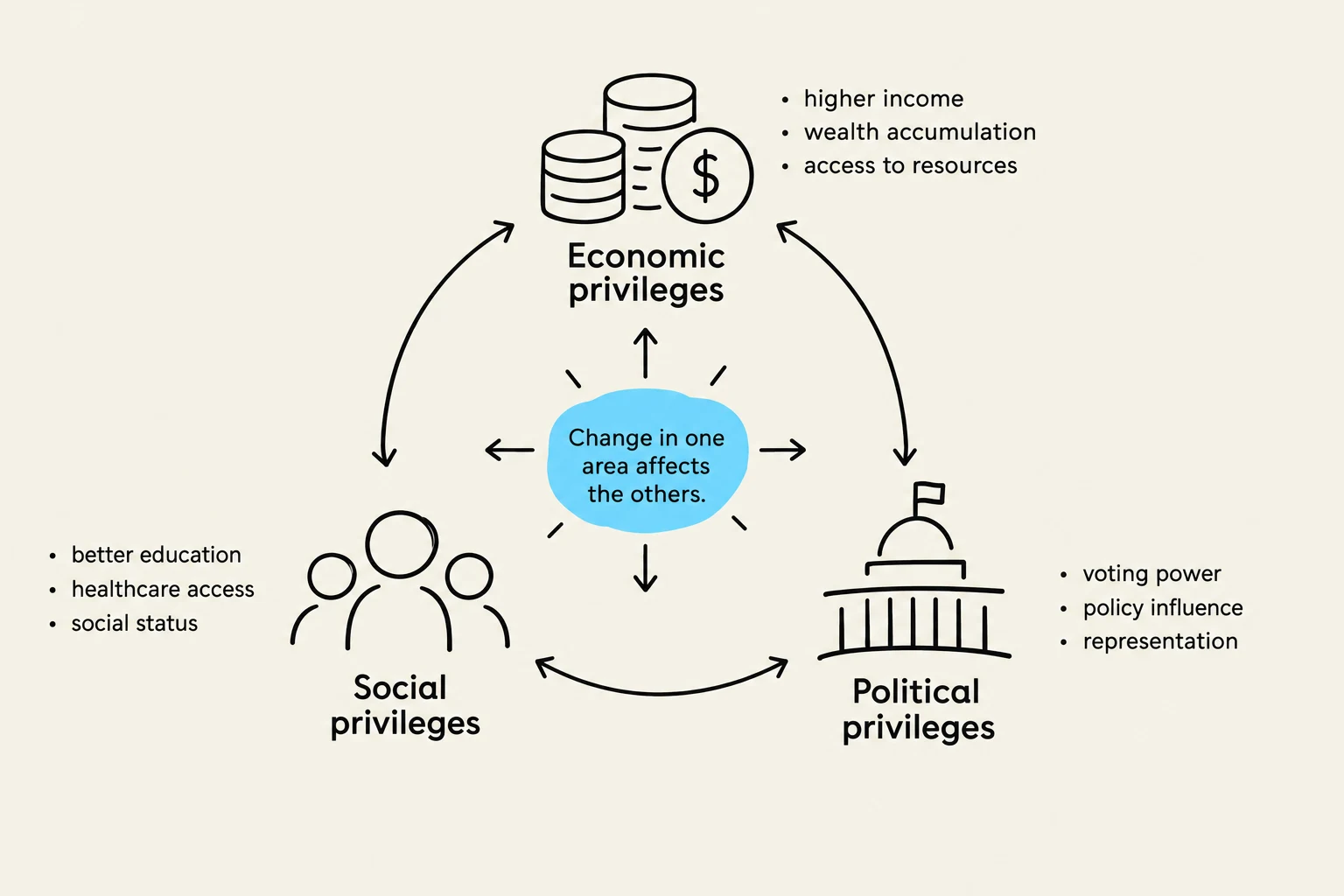
To understand how an old order is dismantled, one must first understand what constitutes its foundation. Privileges are typically categorized into three interconnected pillars: economic, social, and political.
Economic Privileges: These include monopolies on trade, tax exemptions for specific classes, and control over land ownership. In many historical contexts, such as pre-revolutionary France, the ability of a small elite to avoid taxation while controlling the means of production created a structural imbalance.
Social Privileges: These are the unwritten or codified rules that dictate status, such as hereditary titles, caste systems, or exclusive access to certain social circles and educational institutions.
Political Privileges: This involves the legal right to hold office, participate in decision-making, or influence legislation without being subject to the same laws as the general populace.
Exam Tip: When analyzing a revolution or regime change, do not look for "who is in charge." Instead, look for "who is exempt from the rules." The removal of exemptions is the clearest indicator of dismantling the old order.
This diagram illustrates the interconnectedness of social, economic, and political privileges, showing how changes in one area can impact the others.
The Process of Deconstruction
Dismantling the old order is a multi-stage process that often moves from the legal to the cultural. It begins with the formal revocation of rights and privileges.
Legal and Political Decoupling
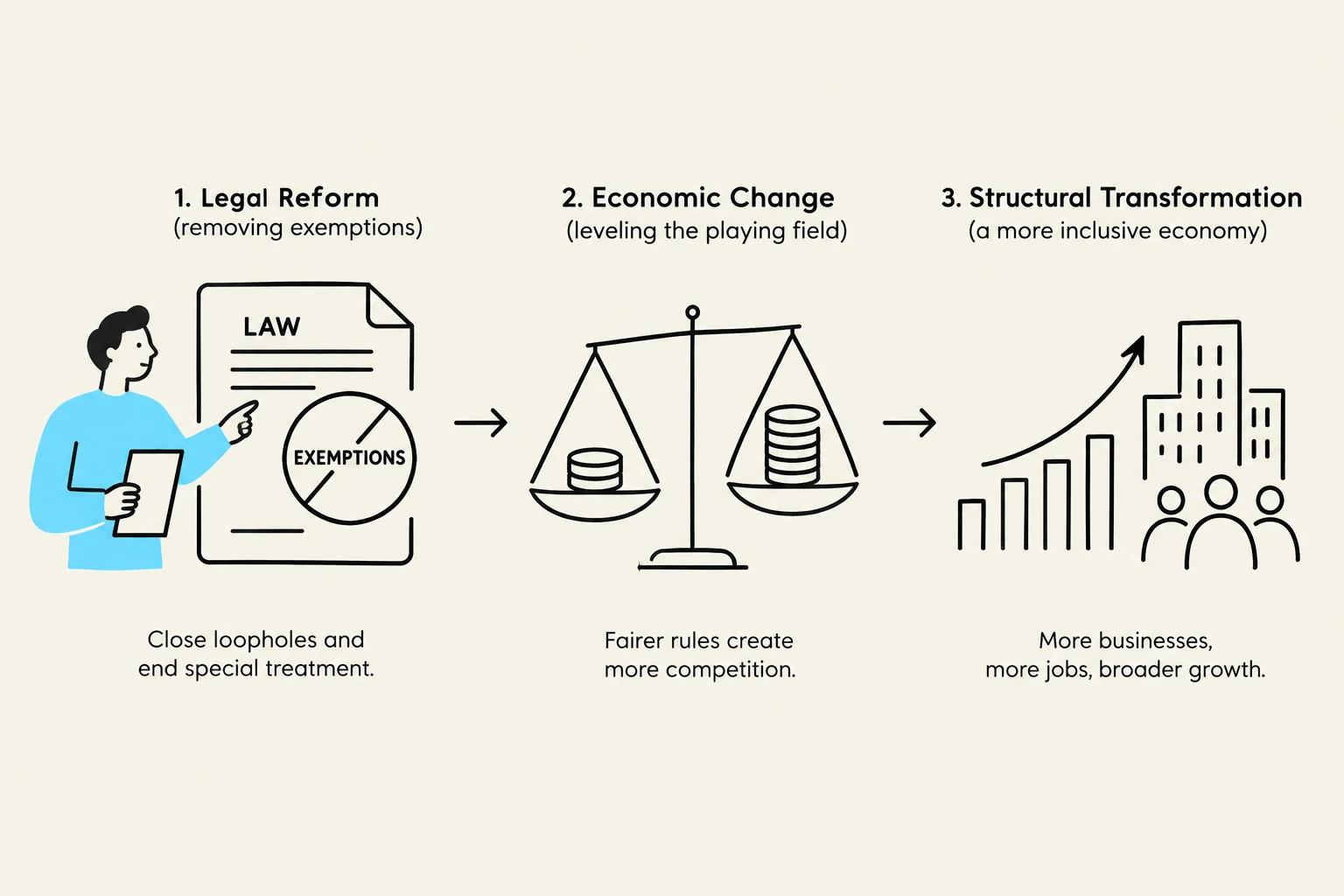
The first step is often the implementation of new legal frameworks that establish equality before the law. This involves the abolition of special courts, the removal of hereditary rights to political office, and the establishment of universal suffrage or new representative bodies. By decoupling political power from birthright or wealth, the new regime attempts to stabilize its legitimacy through institutionalized rules rather than personal loyalty.
Economic Redistribution and Reform
Once the legal framework is altered, the focus shifts to the material base. This may involve land reform, the dissolution of monopolies, or the restructuring of tax codes to ensure that the burden of state maintenance is shared more equitably.
For example, if a regime's stability relied on a specific ratio of wealth distribution, we might model the shift in resource allocation. If Pold represents the concentration of wealth in the hands of the elite and Pnew represents the redistributed wealth, the goal of dismantling is to minimize the variance:
Goal: min(Var(Pnew)) where Var(Pnew)<Var(Pold)
This diagram illustrates the process of economic transformation through legal reform, leading to fairer competition and broader growth.
The Paradox of Liberty and Resistance
Dismantling an old order is rarely a smooth transition. It often creates a "paradox of liberty," where the very act of freeing a population from old constraints can lead to new forms of instability or even new types of tyranny.
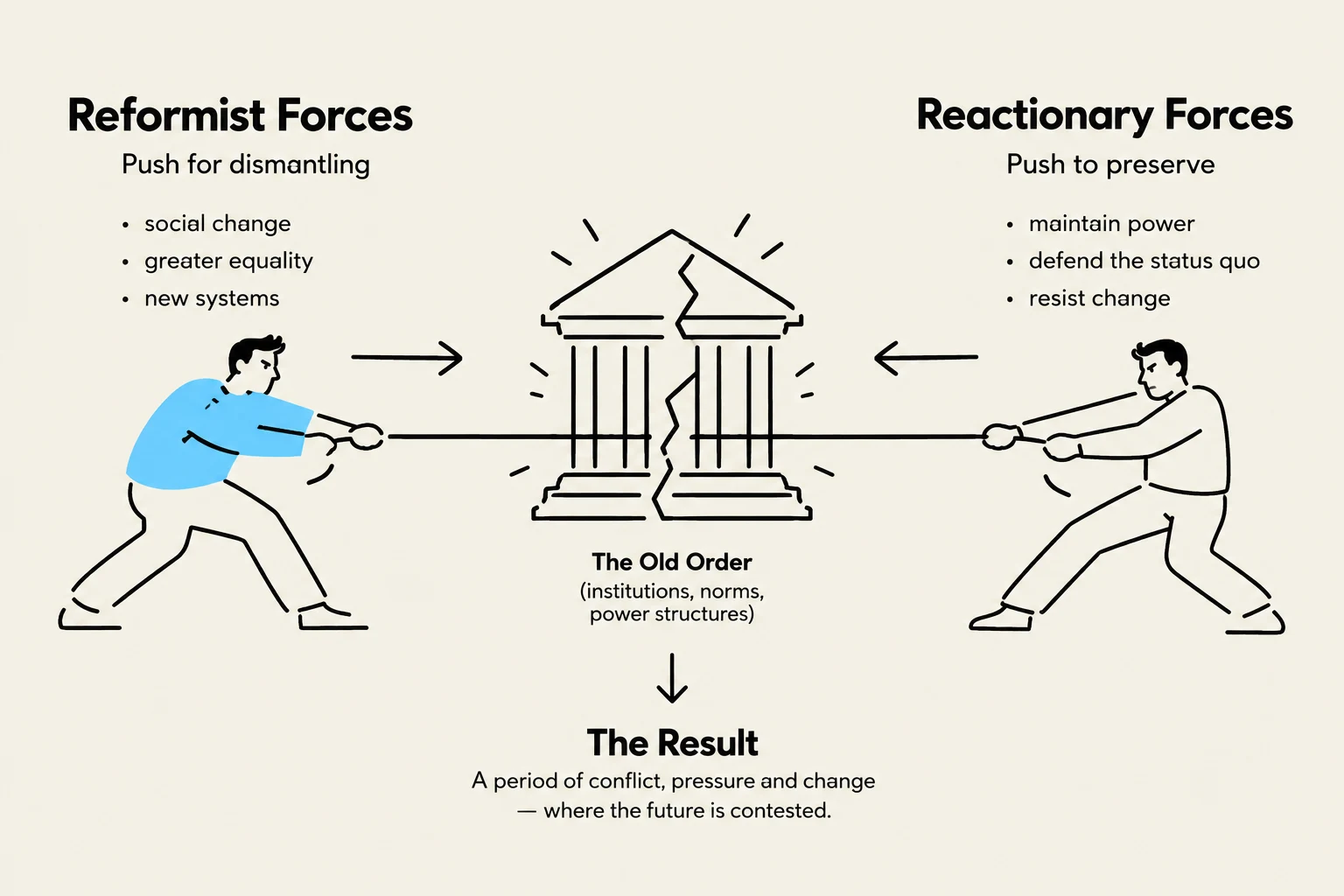
As the old privileges are stripped away, the displaced elite often attempt to reclaim their status through shadow networks or by exploiting the chaos of the transition. Furthermore, the new order must balance the demand for radical equality with the need for social order. If the dismantling is too slow, the revolution may fail due to lack of momentum; if it is too rapid, the resulting economic vacuum can lead to collapse.
Resistance Mechanisms
Resistance to dismantling typically takes three forms:
Institutional Inertia: Bureaucrats within the old system working to slow down or sabotage new laws.
Economic Sabotage: The elite withdrawing capital or disrupting trade to prove the new system is "unworkable."
Cultural Counter-Revolution: Using religion, tradition, or nationalism to argue that the old privileges were "natural" or "divinely ordained".
This illustration depicts the conflict between reformist and reactionary forces, symbolizing the tension between change and preservation of the status quo, leading to conflict and societal transformation.
Summary Table: Old Order vs. New Order
Feature
Old Order Characteristics
New Order Objectives
Legal Basis
Privilege-based; exemptions for elites
Rule-based; equality before the law
Economic Structure
Monopolies and tax exemptions
Competitive markets and shared taxation
Social Hierarchy
Hereditary and static
Meritocratic or fluid
Political Power
Concentrated in specific classes
Distributed through institutions
In conclusion, dismantling the old order is a structural necessity for any regime seeking to move from a system of privilege to a system of rights. It requires a simultaneous attack on the legal, economic, and social foundations that allow inequality to become institutionalized.
Keep reading for free.
Create an account to finish this reading and make it part of your study routine.