


Intravenous (IV) therapy is a cornerstone of modern clinical practice, providing essential fluids, electrolytes, and medications directly into the circulatory system. However, an IV catheter is a foreign object inserted into a patient's vein, which inherently carries risks such as infection, phlebitis, or infiltration. Therefore, the decision to discontinue therapy is just as critical as the decision to initiate it. This article explores the clinical rationale for stopping IV therapy and the standardized, safe procedures required to ensure patient safety during removal.
The Rationale for Discontinuation
The primary goal of IV therapy is to meet a specific physiological need. Once that need is met, or if the risks of maintaining the line outweigh the benefits, the therapy must be discontinued. Clinical decision-making for discontinuation typically falls into three categories: therapeutic completion, clinical necessity, or complication management.
1. Therapeutic Completion
The most straightforward reason for discontinuation is that the prescribed treatment has concluded. This occurs when a patient has completed a specific course of antibiotics, has achieved adequate hydration, or no longer requires continuous medication titration.
2. Clinical Necessity and Patient Status
As patients recover, their ability to maintain fluid and electrolyte balance through oral intake increases. If a patient transitions from "NPO" (nothing by mouth) status to being able to tolerate oral fluids, the IV may no longer be necessary.
3. Complication Management
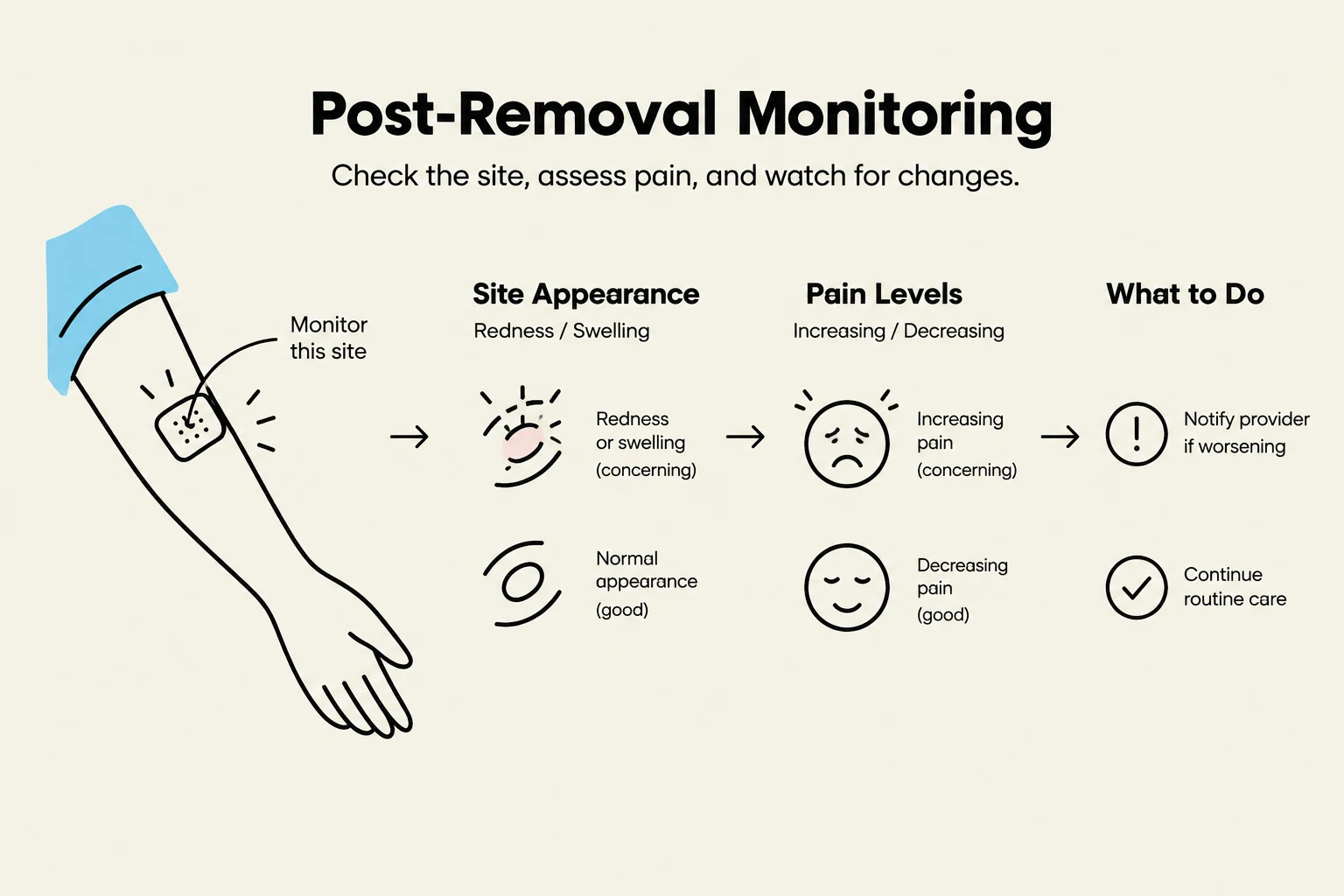
The presence of complications is a mandatory trigger for immediate discontinuation. These complications include:
- Infiltration: The leakage of non-vesicant fluid into the surrounding subcutaneous tissue.
- Extravasation: The leakage of vesicant (tissue-damaging) medications into the tissue.
- Phlebitis: Inflammation of the vein, often characterized by redness, warmth, and pain along the vein path.
- Infection: Localized redness or systemic signs like fever at the insertion site.


Keep reading for free.
Create an account to finish this reading and make it part of your study routine.
Continue reading freeAlready have an account? Log in
Updated