This content explains the narrow therapeutic index of digoxin, its pharmacological action, and the clinical manifestations and management of digoxin toxicity, including the use of Digoxin Immune Fab.
Digoxin has long been a cornerstone in the pharmacological management of congestive heart failure and certain supraventricular arrhythmias. By inhibiting the Na+/K+-ATPase pump, it increases intracellular calcium, thereby enhancing cardiac contractility (positive inotropy) and slowing conduction through the AV node. However, the clinical utility of digoxin is perpetually shadowed by its "narrow therapeutic index." This means the margin between a dose that provides therapeutic benefit and a dose that causes life-threatening toxicity is exceptionally slim.
Understanding the Narrow Therapeutic Index
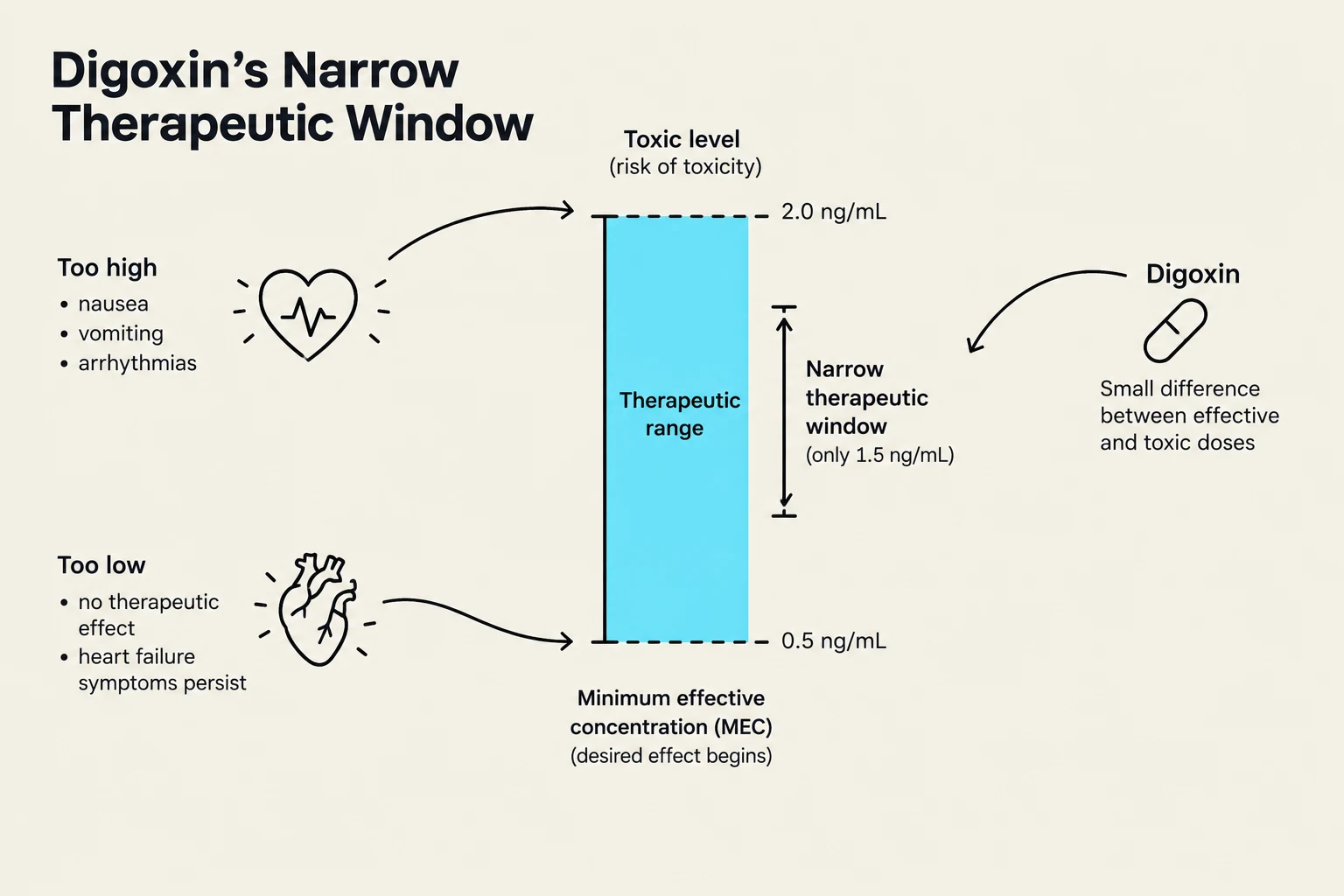
In pharmacology, the therapeutic index (TI) is a comparison of the amount of a therapeutic agent that causes the therapeutic effect to the amount that causes toxicity. For digoxin, the therapeutic window is notoriously tight.
A patient may be within the "normal" range for digoxin levels, yet still experience toxicity due to external factors. These factors include:
Renal Function: Since digoxin is primarily excreted by the kidneys, any decline in glomerular filtration rate (GFR) can lead to rapid accumulation.
Electrolyte Imbalances: Specifically, hypokalemia (low potassium) is a major risk factor. Because potassium and digoxin compete for the same binding site on the Na+/K+-ATPase pump, low levels of potassium allow more digoxin to bind, effectively magnifying its effects and increasing the risk of toxicity.
Drug Interactions: Medications like amiodarone or verapamil can increase digoxin serum concentrations.
This diagram illustrates the narrow therapeutic window of Digoxin, a medication. It shows that concentrations too low result in no therapeutic effect, while concentrations too high can lead to toxicity, with symptoms like nausea, vomiting, and arrhythmias. The therapeutic range is between 0.5 ng/mL (Minimum Effective Concentration) and 2.0 ng/mL, with a narrow therapeutic window of only 1.5 ng/mL, indicating a small difference between effective and toxic doses.
Exam Tip: If a question presents a patient on digoxin who is also taking a loop diuretic (like furosemide), immediately look for signs of hypokalemia. The diuretic causes potassium loss, which directly predisposes the patient to digoxin toxicity.
Clinical Manifestations of Toxicity
Recognizing digoxin toxicity requires a high index of suspicion, as symptoms can be non-specific and mimic other gastrointestinal or neurological conditions. Toxicity typically manifests in three main domains: gastrointestinal, neurological/visual, and cardiac.
Gastrointestinal and Neurological Signs
Early signs of toxicity often include anorexia, nausea, vomiting, and abdominal pain. As the toxicity progresses, neurological changes may occur, including confusion or lethargy.
A hallmark, classic sign of digoxin toxicity is visual disturbance. Patients frequently report:
Xanthopsia: A yellow-green tint to their vision.
Visual Halos: Seeing colored halos around lights.
Cardiac Manifestations
The most dangerous aspect of toxicity is its effect on cardiac rhythm. While digoxin is used to slow the heart rate in certain arrhythmias, toxicity can cause profound, symptomatic bradycardia (an abnormally slow heart rate).
Furthermore, digoxin can induce various arrhythmias. While many students associate digoxin with slowing the heart, it can also cause increased automaticity, leading to premature ventricular contractions (PVCs) or even ventricular tachycardia in severe cases.
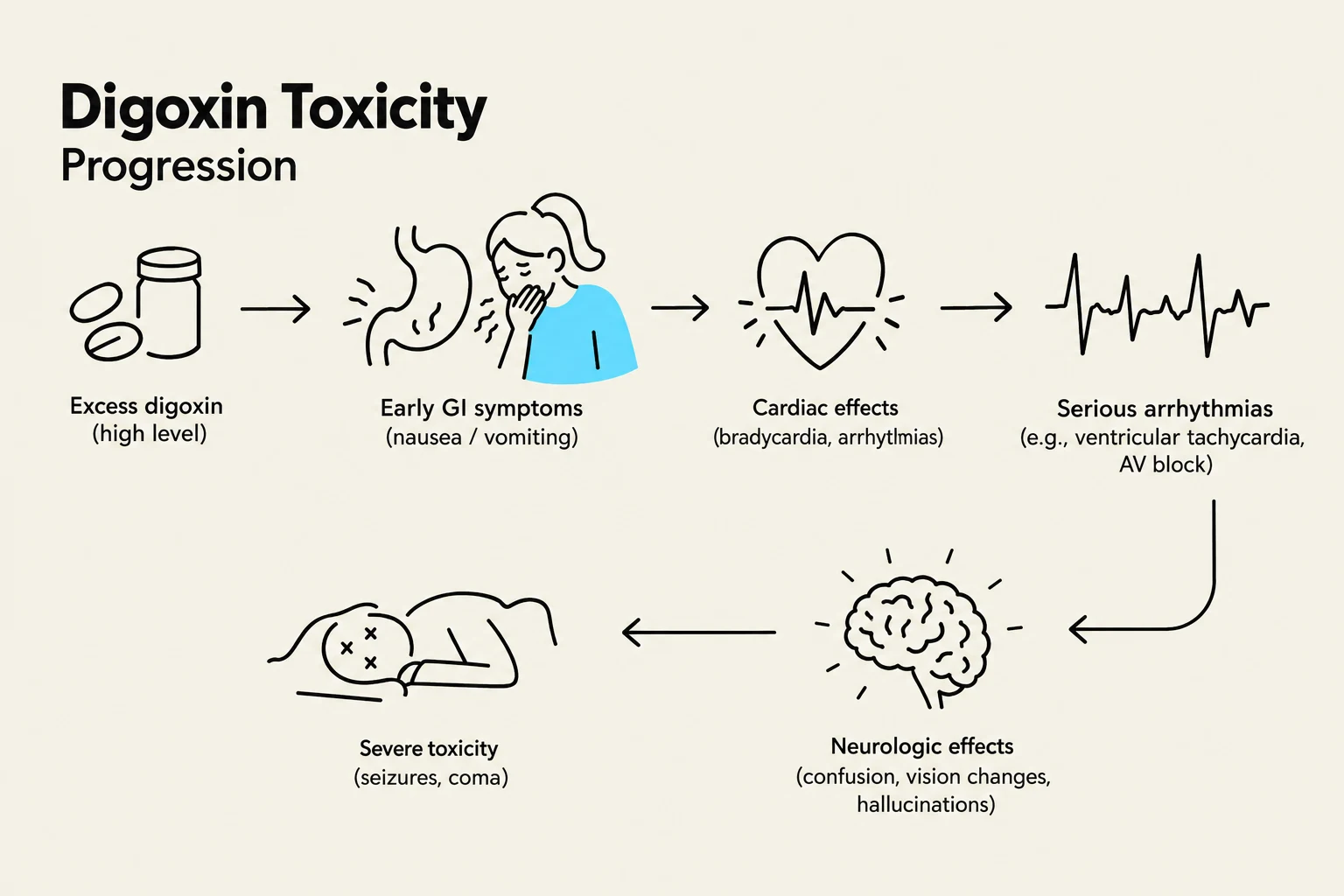
This diagram illustrates the progression of digoxin toxicity, starting from excess digoxin intake and leading to various symptoms including gastrointestinal issues, cardiac effects, serious arrhythmias, neurologic effects, and severe toxicity.
Management and Digoxin Immune Fab
When a patient presents with confirmed or highly suspected digoxin toxicity—especially if they exhibit life-threatening arrhythmias or severe electrolyte disturbances—immediate intervention is required.
Immediate Steps
Discontinuation: Stop all digoxin administration immediately.
Monitoring: Continuous ECG monitoring is essential to detect worsening arrhythmias.
Electrolyte Correction: Correcting potassium levels is critical, but clinicians must be cautious; while hypokalemia increases toxicity, hyperkalemia (high potassium) in the setting of acute digoxin overdose is a sign of severe toxicity and requires careful management.
Digoxin Immune Fab (Digibind)
The definitive treatment for severe digoxin toxicity is Digoxin Immune Fab (also known as DigiFab). This is a formulation of antibody fragments that bind specifically to digoxin molecules in the bloodstream.
When Digoxin Immune Fab is administered, it sequesters the digoxin, preventing it from binding to the Na+/K+-ATPase pumps. This effectively "neutralizes" the drug, allowing the kidneys to clear the bound complex.
This diagram illustrates how digoxin immune Fab fragments bind to digoxin molecules in the bloodstream, neutralizing the digoxin and preventing it from acting on the heart.
Worked Example: Clinical Application
Scenario:
A 75-year-old female with a history of congestive heart failure is admitted to the emergency department. She has been taking digoxin and furosemide for several months. She complains of nausea, loss of appetite, and states that "the lights in the hallway look like they have yellow rings around them." Her ECG shows a heart rate of 42 bpm (bradycardia).
Step 1: Identify the Clues
Medications: Digoxin (potential toxicity) and Furosemide (causes potassium loss/hypokalemia).
Symptoms: Nausea/anorexia (GI toxicity) and yellow halos (visual xanthopsia).
ECG: Bradycardia (cardiac toxicity).
Step 2: Determine the Likely Cause
The combination of furosemide use and visual halos strongly suggests digoxin toxicity exacerbated by hypokalemia.
Step 3: Formulate Management
The patient requires immediate discontinuation of digoxin, electrolyte assessment (specifically checking $K^+$ levels), and potentially the administration of Digoxin Immune Fab due to the symptomatic bradycardia.
Keep reading for free.
Create an account to finish this reading and make it part of your study routine.