


The primary goal of the digestive system is to take the complex macromolecules found in the food we eat and break them down into small, absorbable subunits. These subunits—such as monosaccharides, amino acids, and fatty acids—are then transported via the bloodstream or lymphatic system to cells throughout the body to provide energy and building blocks for life. This process involves a sophisticated coordination of mechanical movement, chemical reactions, and specialized cellular transport mechanisms.
Mechanical and Chemical Digestion
Digestion is categorized into two distinct but complementary processes: mechanical and chemical.
Mechanical digestion involves the physical breakdown of food into smaller pieces. This occurs through actions like chewing in the mouth and the vigorous churning of the stomach. In the stomach, an extra layer of smooth muscle called the inner oblique layer allows the organ to contract forcefully, mixing food with gastric juices to create a semi-liquid substance called chyme. In the small intestine, a process called segmentation further mixes chyme to ensure thorough contact with digestive enzymes.
Chemical digestion uses specific enzymes to perform hydrolysis, a process where water is used to break the chemical bonds of macromolecules. This transforms large, complex molecules into their simplest forms, such as turning proteins into amino acids or polysaccharides into monosaccharides.
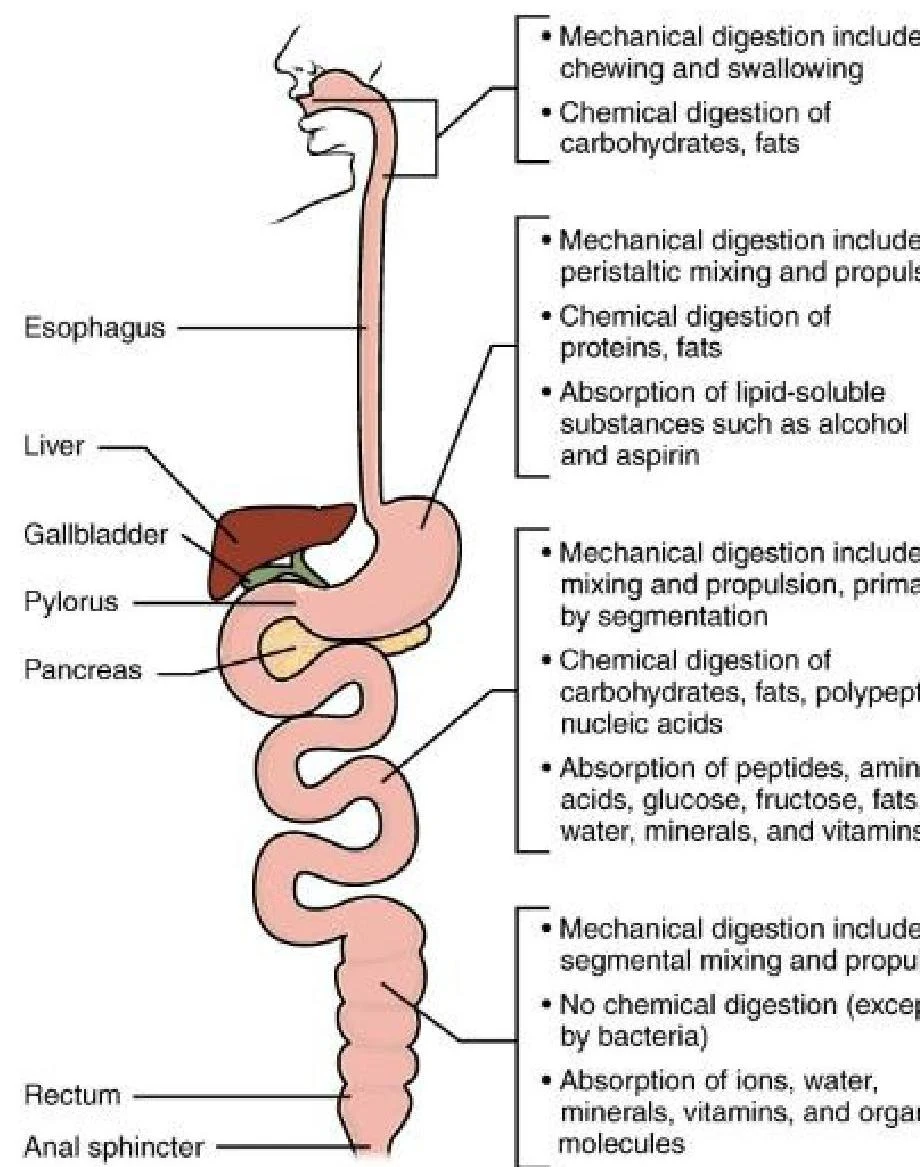
The Breakdown of Macromolecules
Different nutrients require specific enzymes to undergo hydrolysis. The digestion of these molecules occurs in stages across the alimentary canal.
Carbohydrate Digestion
Carbohydrate digestion begins in the mouth, where salivary amylase starts breaking down starches into the disaccharide maltose. Once the food reaches the small intestine, pancreatic amylase continues this process, and brush border enzymes (like maltase and lactase) complete the breakdown into monosaccharides such as glucose, galactose, and fructose.

Keep reading for free.
Create an account to finish this reading and make it part of your study routine.
Continue reading freeAlready have an account? Log in
Updated