


Understanding how substances move in and out of living cells is fundamental to biology. Whether it is a nutrient entering a cell or water leaving a plant during a drought, these movements are governed by the laws of physics and chemistry. By studying processes like diffusion and osmosis, we can determine the internal solute concentration of living tissues and observe the dramatic physical changes that occur when a cell's environment changes.
The Basics of Diffusion
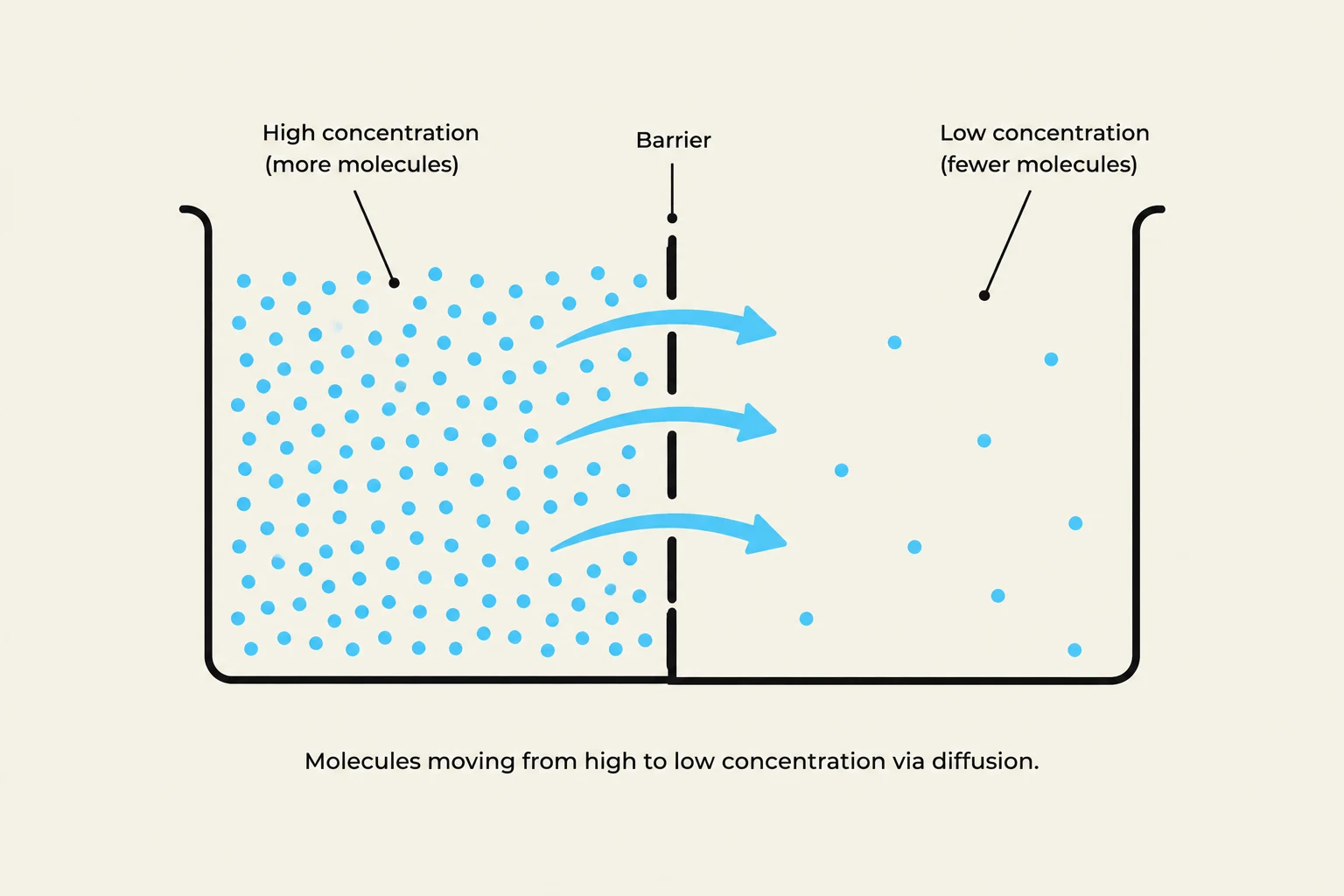
Diffusion is the passive, directional movement of molecules across membranes or through solutions without the expenditure of energy. Molecules naturally move from an area of high concentration to an area of low concentration. This movement continues until the molecules are distributed homogeneously throughout the solution.
Several factors influence how quickly diffusion occurs:
- Concentration Gradient: The "steepness" of the difference in concentration between two areas.
- Molecular Characteristics: The size, polarity, and solubility of the molecule. For example, smaller, uncharged, nonpolar, and lipid-soluble molecules pass through the lipid core of a membrane most easily.
- Temperature and Pressure: Higher heat increases random motion, thereby affecting the rate of dispersal.
Exam Tip: While temperature and pressure affect the rate, the concentration gradient is generally considered the best predictor of the direction in which a substance will diffuse.
Keep reading for free.
Create an account to finish this reading and make it part of your study routine.
Continue reading freeAlready have an account? Log in
Updated