


In the study of chemistry and biology, understanding how substances move is fundamental to understanding how life functions. Whether it is oxygen entering a red blood cell or a salt solution affecting the shape of a cell, these processes are governed by the principles of concentration gradients and molecular movement. This article explores the mechanics of diffusion and osmosis, the nature of solutions, and the critical impact of tonicity on cellular health.
The Fundamentals: Solutes and Solvents
To understand how substances move, we must first define what is being moved. A solution is a homogeneous mixture, meaning its components are uniformly distributed. Every solution consists of two primary components:
- Solvent: The component present in the greatest amount. Water is the most common solvent in biological systems.
- Solute: The component that is dissolved in the solvent.
The ability of a solute to dissolve in a solvent is known as solubility. A helpful rule of thumb in chemistry is "like dissolves like": polar substances (like water) tend to dissolve other polar substances, while nonpolar substances (like oils) tend to dissolve other nonpolar substances.
Diffusion: Moving Down the Gradient
Diffusion is the process by which substances move from an area of higher concentration to an area of lower concentration. This movement continues until the substances are evenly distributed, a state known as equilibrium.
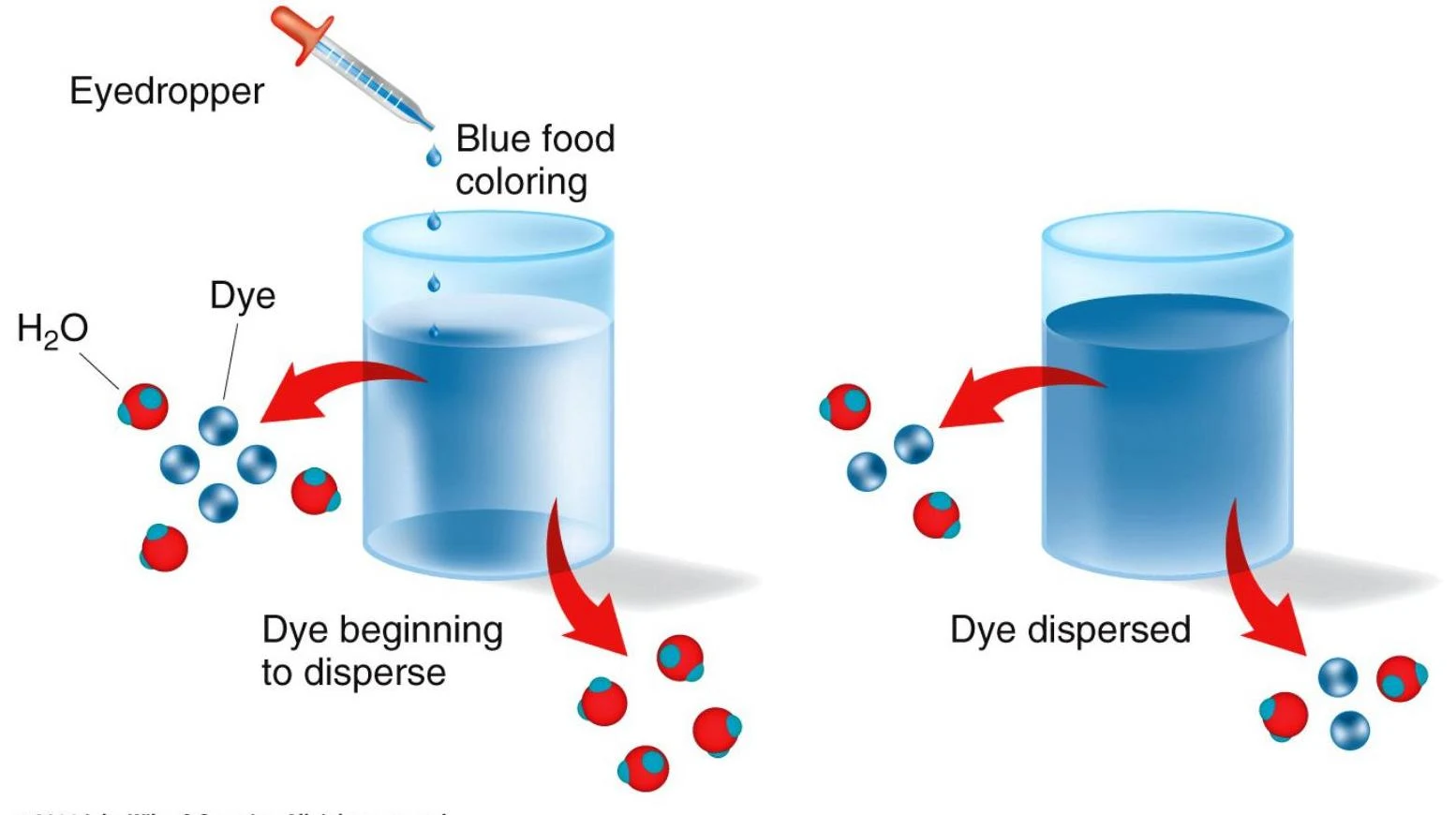
Diffusion is driven by the kinetic energy of particles. In a gas or liquid, particles are in constant motion, colliding with one another and spreading out into available space.
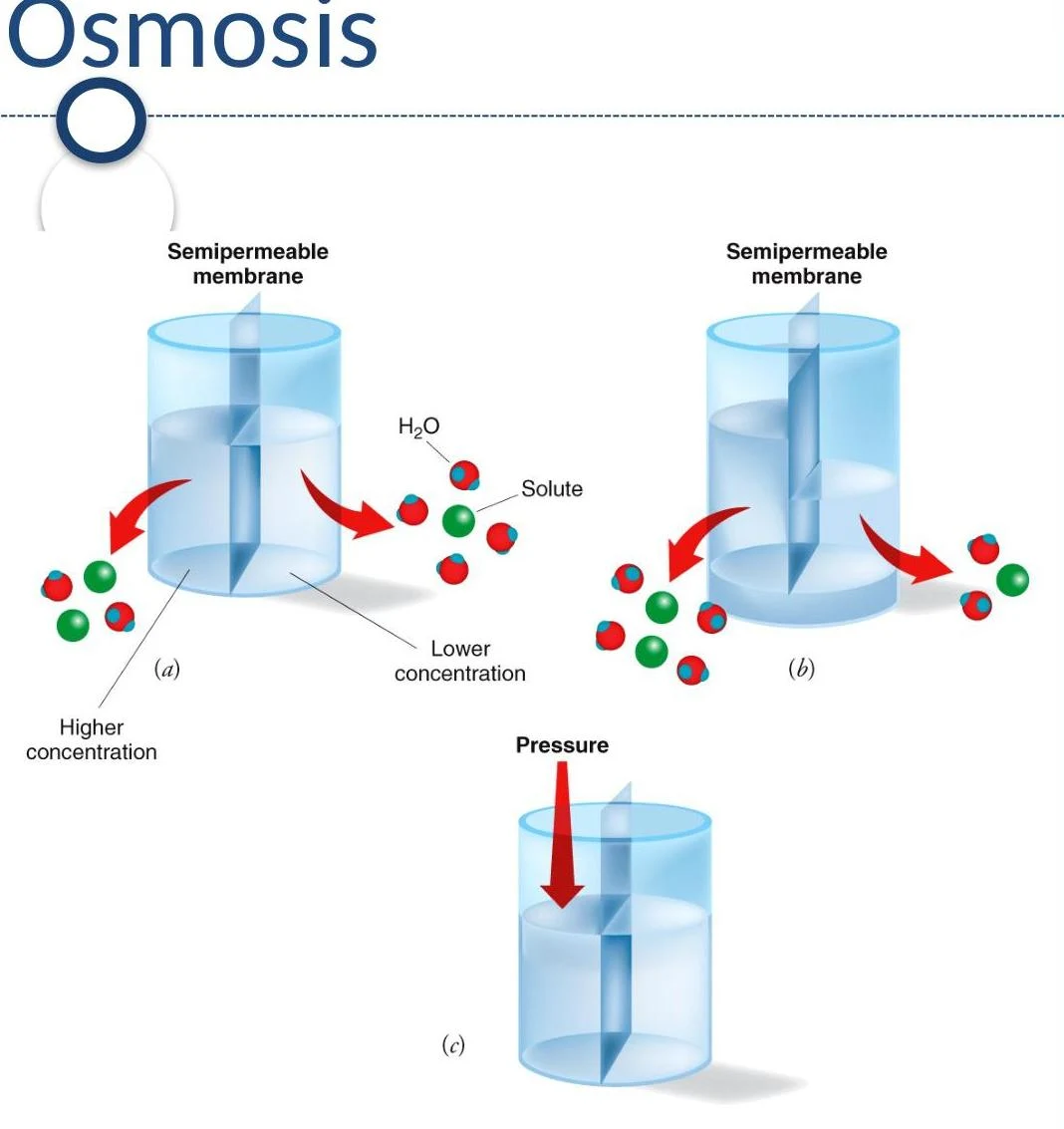
Keep reading for free.
Create an account to finish this reading and make it part of your study routine.
Continue reading freeAlready have an account? Log in
Updated