Explores how nutritional needs change throughout the human lifespan, from adulthood to older age, and the broad influences on dietary choices and assessments.
Nutritional requirements are not static; they shift significantly across the human lifespan due to changing physiological needs, metabolic rates, and lifestyle factors. Understanding these developmental considerations is essential for maintaining optimal health and preventing chronic conditions. While the fundamental concept of nutrition—the study of how nutrients are handled by the body and the impact of behavior and environment on nourishment—remains constant, the application of nutritional science must be tailored to the specific stage of life an individual is experiencing.
Adult Nutritional Needs
In the stage of adulthood, the human body has transitioned out of its primary growth phase. Because the rapid physical development seen in childhood and adolescence has ceased, there is a marked decrease in the metabolic rate. Consequently, adults generally require fewer total calories to maintain their physiological functions compared to younger populations.
However, nutritional needs in adulthood are highly dynamic and fluctuate based on lifestyle choices and external pressures. On one hand, many adults become increasingly aware of the preventive role of nutrition and regular exercise in maintaining long-term health. On the other hand, the stressors of work and family responsibilities can lead to a decline in physical activity.
Clinical Alert: If caloric intake is not carefully adjusted to match this decreased energy expenditure, progressive weight gain may occur.
Older Adults: Energy and Nutrient Requirements
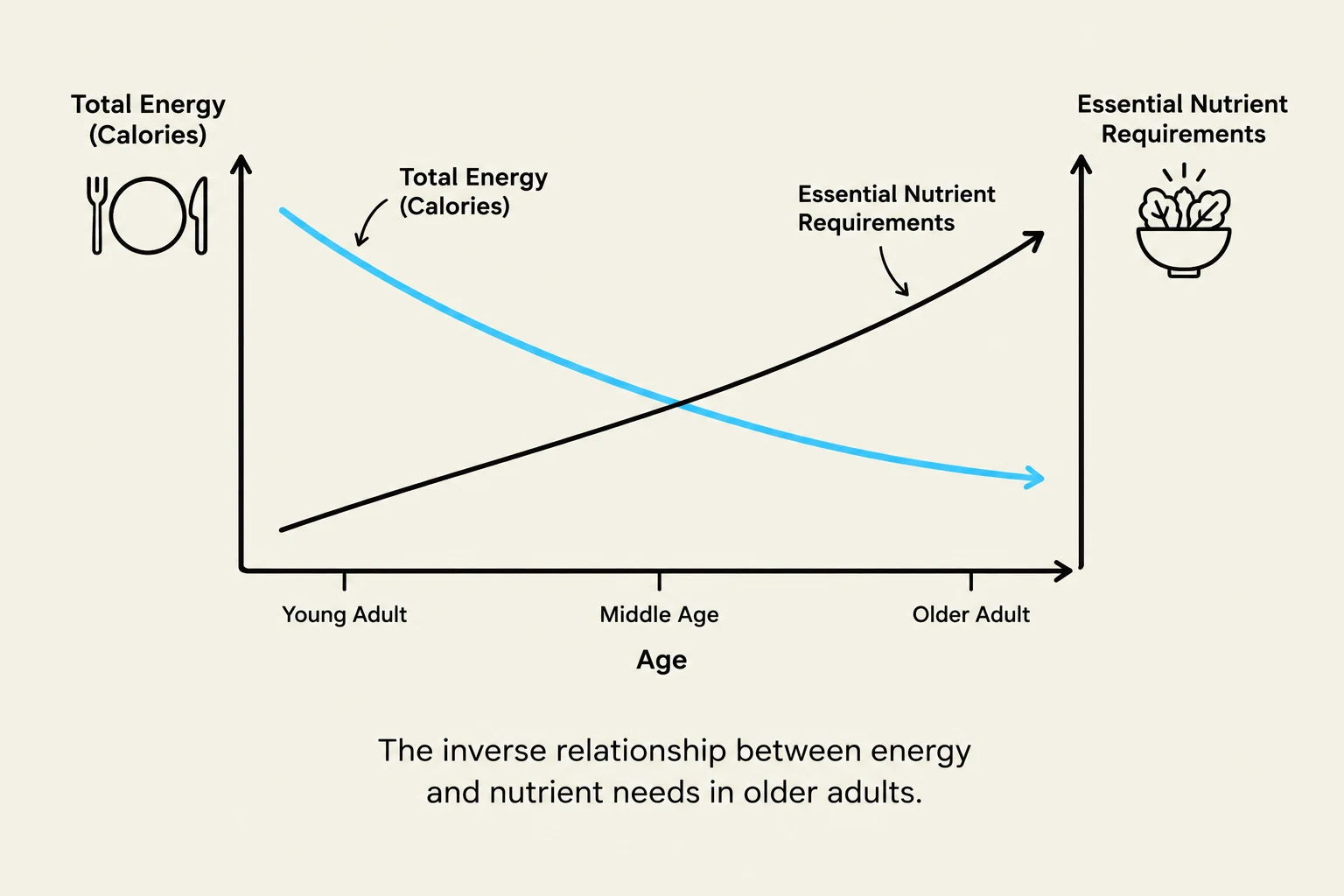
This graph illustrates the inverse relationship between total energy (calorie) needs and essential nutrient requirements across different age groups, from young adulthood to older adulthood.
As individuals transition into the older adult stage, nutritional requirements undergo complex shifts that require careful management.
Metabolic Rate and Energy Requirements
Due to a naturally slower metabolic rate, older adults have decreased total energy requirements. This means that the total number of calories (kilocalories) consumed should generally be lower than in younger, more active years to avoid obesity.
Shifting Nutrient Needs
While total energy needs go down, the actual need for specific nutrients often increases to maintain physiological function and prevent deficiencies. Older adults require high-quality, nutrient-dense foods to compensate for potentially lower overall food intake. Key areas of focus include:
Nutrient Density: A focus on foods rich in essential vitamins and minerals.
Gastrointestinal Function: To maintain healthy GI function and prevent constipation, older adults may need to increase their intake of fiber and water.
Exam Tip: Remember the distinction in older adults—Energy (calories) requirements decrease, but nutrient requirements often increase.
Broad Influences on Nutrition
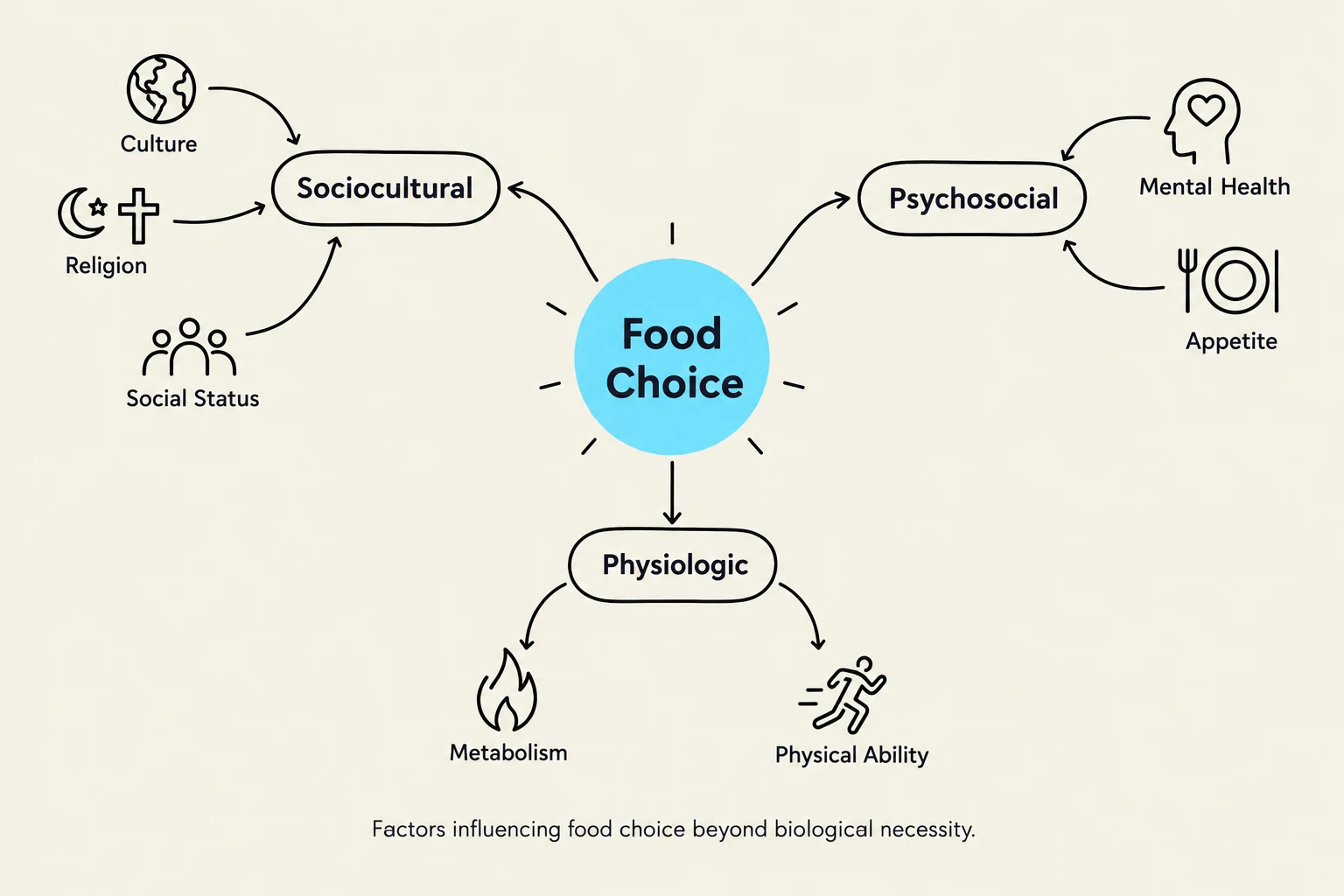
This diagram illustrates the multifaceted factors influencing food choices, categorizing them into Sociocultural, Psychosocial, and Physiologic influences.
Beyond the biological milestones of aging, nutrition is shaped by a variety of intersecting factors that healthcare providers must consider during a nutritional assessment.
Physiologic and Physical Considerations
Physiologic factors involve how the body processes nutrients and maintains homeostasis. This includes the body's basal metabolism and the physical ability to consume food. For example, physical limitations or medical conditions may necessitate "Modified Consistency" diets, such as pureed or mechanically altered diets, to assist with swallowing.
Sociocultural and Psychosocial Considerations
Food choice is rarely a purely biological decision; it is deeply influenced by the social and psychological environment. These factors include:
Social Status and Economics: Access to nutritious food is often dictated by socioeconomic data.
Culture and Religion: These can dictate food availability, acceptable food groups, and eating patterns.
Psychological State: Mental health can significantly impact appetite and the drive to eat.
Clinical Application: The Nutritional Assessment
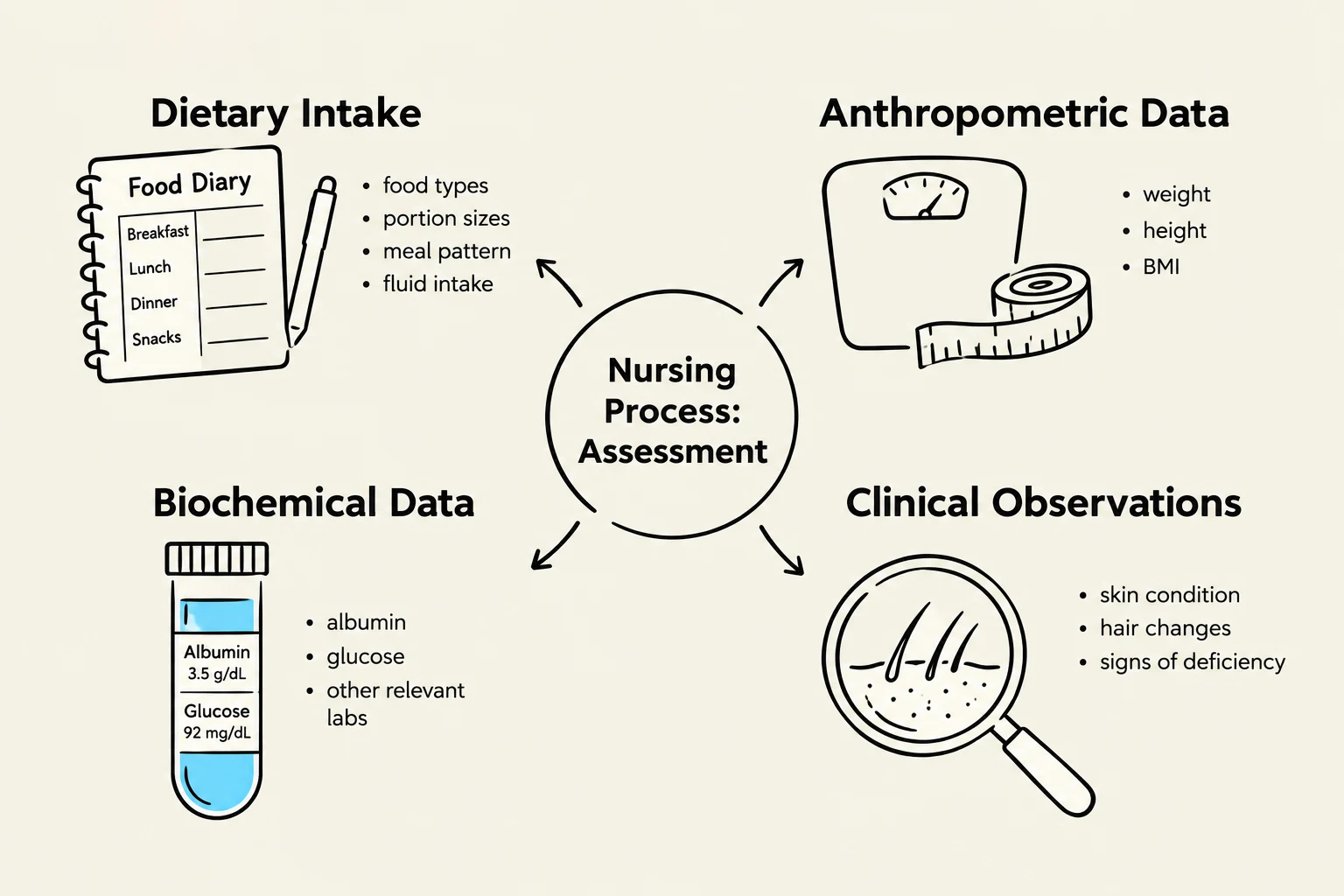
This diagram illustrates the four key components of the nursing process assessment: Dietary Intake, Anthropometric Data, Biochemical Data, and Clinical Observations.
To manage these developmental and sociocultural dimensions, nurses use the nursing process to perform a comprehensive nutritional assessment. This involves looking at:
Dietary Intake: What the patient is actually eating.
Anthropometric Data: Measurements such as height and weight, which are used to calculate the Body Mass Index (BMI).
Formula for BMI (US):
BMI=height (in)2weight (lbs)×703
Biochemical Data: Laboratory values that provide an objective look at nutritional status.
Albumin/Prealbumin: Low levels may indicate protein depletion or malnutrition.
Glucose: Used to monitor for hypoglycemia or hyperglycemia.
Clinical Observations: Looking for physical signs of good or poor status, such as skin integrity, hair luster, and muscle tone.
By balancing the decreasing need for energy (calories) with the potentially increasing need for high-quality nutrients, healthcare providers can support the aging physiological systems and promote long-term wellness.
Keep reading for free.
Create an account to finish this reading and make it part of your study routine.