


In the field of social work, research is not just an academic exercise; it is a vital tool for ensuring that interventions are effective, resources are allocated wisely, and client needs are met with evidence-based practices. Designing a study requires moving from a broad area of concern to a specific, measurable plan. This guide will walk you through the fundamental components of research design, from defining your purpose to selecting the right measurement tools.
Starting with the Research Problem and Question
Every study begins with a Research Problem. This is the gap in knowledge or the real-world issue that needs addressing. For example, an agency might notice that clients are dropping out of a program, but they don't know why. Identifying this problem is the first step toward creating a Research Question—a clear, focused question that your study intends to answer.
A common pitfall in research design is failing to establish a baseline. Consider a scenario where an agency claims an anger-management program is successful because clients reported improvement after completion, yet no data were collected before the program began. This is a significant research problem: without "pre-test" data, you cannot scientifically prove that the program caused the improvement.
Exam Tip: When evaluating a research scenario, always look for a "baseline" or "pre-intervention" measurement. If a study only looks at the end result, it cannot accurately measure change.
Defining the Purpose of Your Study
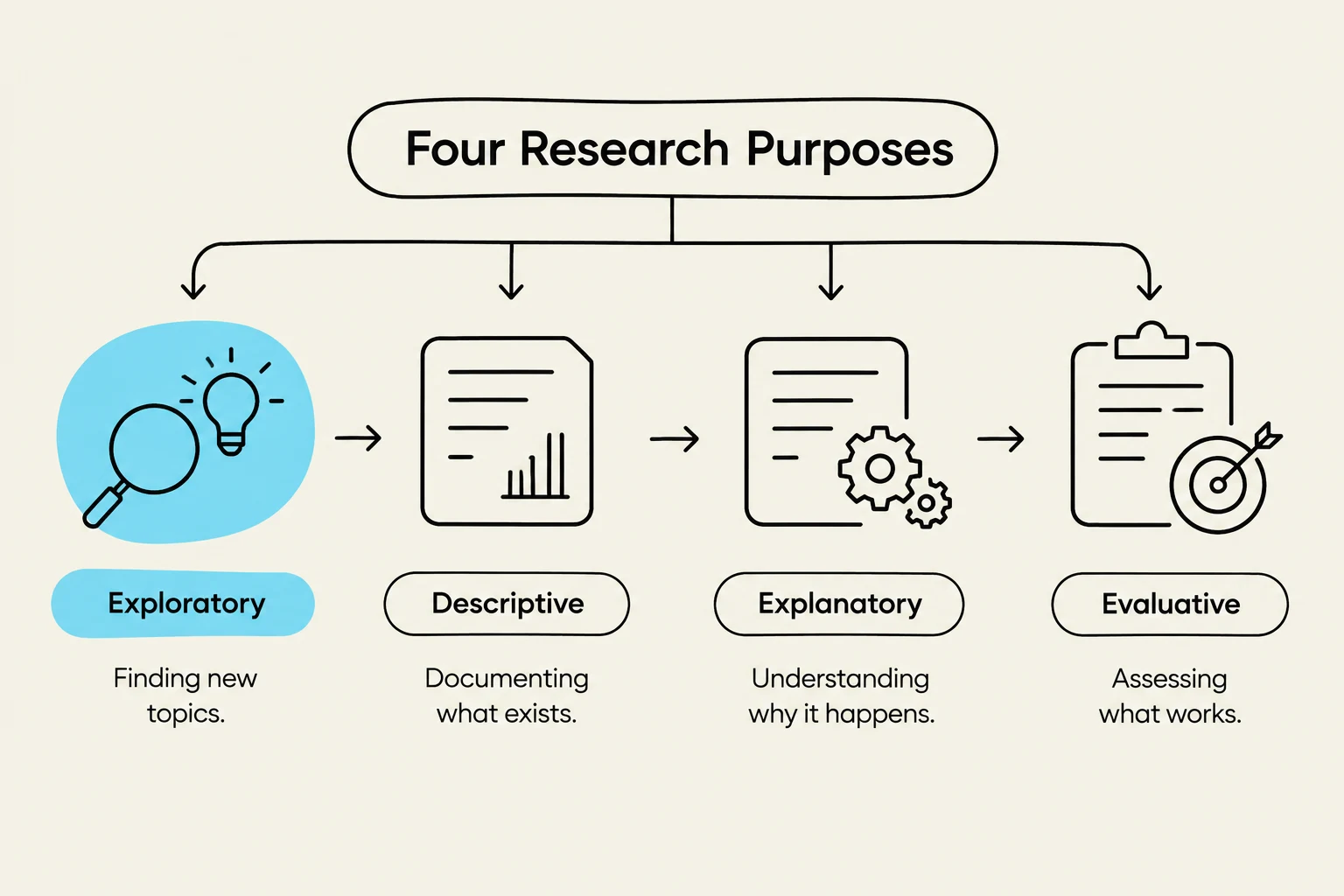
Once you have a question, you must decide the primary purpose of your research. The purpose dictates your methodology and how you will interpret your findings. There are four primary purposes in social work research:

Keep reading for free.
Create an account to finish this reading and make it part of your study routine.
Continue reading freeAlready have an account? Log in
Updated