A comprehensive guide to resistance training, covering its physiological benefits, different training types (static, isokinetic, dynamic), program variables (exercise order, intensity, volume, frequency, rest), periodization models, and considerations for special populations.
Resistance training is a cornerstone of physical health, offering a wide array of physiological benefits that extend far beyond simple muscle growth. By engaging in structured resistance exercise, individuals can improve neural and biochemical functions, such as increasing motor unit activation and corticospinal excitability. Furthermore, it plays a critical role in morphological changes, including increased muscle hypertrophy, fat-free mass, and bone density. From a health perspective, resistance training is associated with decreased all-cause mortality and increased connective tissue strength.
Types of Resistance Training
Resistance training can be categorized based on the nature of the muscle contraction and the equipment used.
Static (Isometric) Training
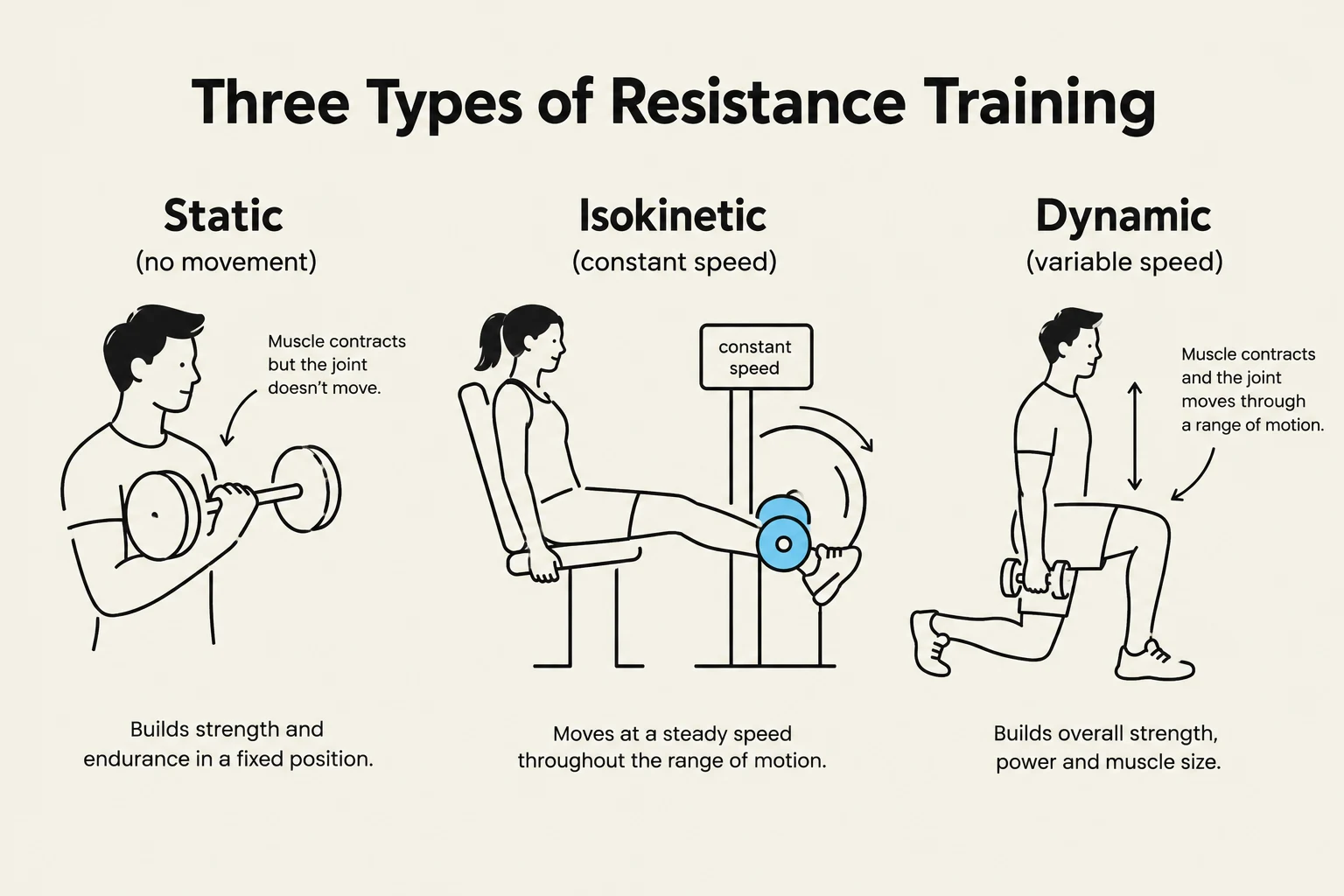
Static or isometric training involves muscle contraction without a change in muscle length or joint angle.
Advantages: It requires minimal to no equipment, can be performed anywhere, and is an effective way to exercise while immobilized. It is also effective for increasing muscle hypertrophy and maximal force.
Disadvantages: The primary limitation is that strength gains are restricted to the specific joint angle at which the training was performed.
Isokinetic Training
Isokinetic training involves movements performed at a constant speed.
Advantages: It provides accommodating resistance, allows for controlled speed, and can increase strength, power, and endurance with minimal soreness.
Disadvantages: This method typically requires expensive isokinetic dynamometers and does not specifically target hypertrophy.
Dynamic Resistance Training
Dynamic training involves muscle changes in length through concentric (shortening) and eccentric (lengthening) actions. This is the most common form of training and utilizes various modes, including free weights, machines (constant, variable, or pneumatic), kettlebells, resistance bands, and bodyweight calisthenics.
This illustration depicts and explains three types of resistance training: static, isokinetic, and dynamic, along with their characteristics and benefits.
Program Variables for Dynamic Training
To design an effective program, one must manipulate several key variables.
Exercise Order and Mode
When selecting exercises, it is essential to include all major muscle groups and maintain muscle balance. The conventional order is to perform multijoint (compound) exercises and large muscle groups first, followed by single-joint (isolation) exercises and smaller muscles.
Novices: Should alternate muscle groups to minimize fatigue.
Advanced trainees: May utilize compound sets or supersets to increase intensity.
Intensity, Volume, and Sets
Intensity refers to the load or weight used. It is inversely related to the number of repetitions performed.
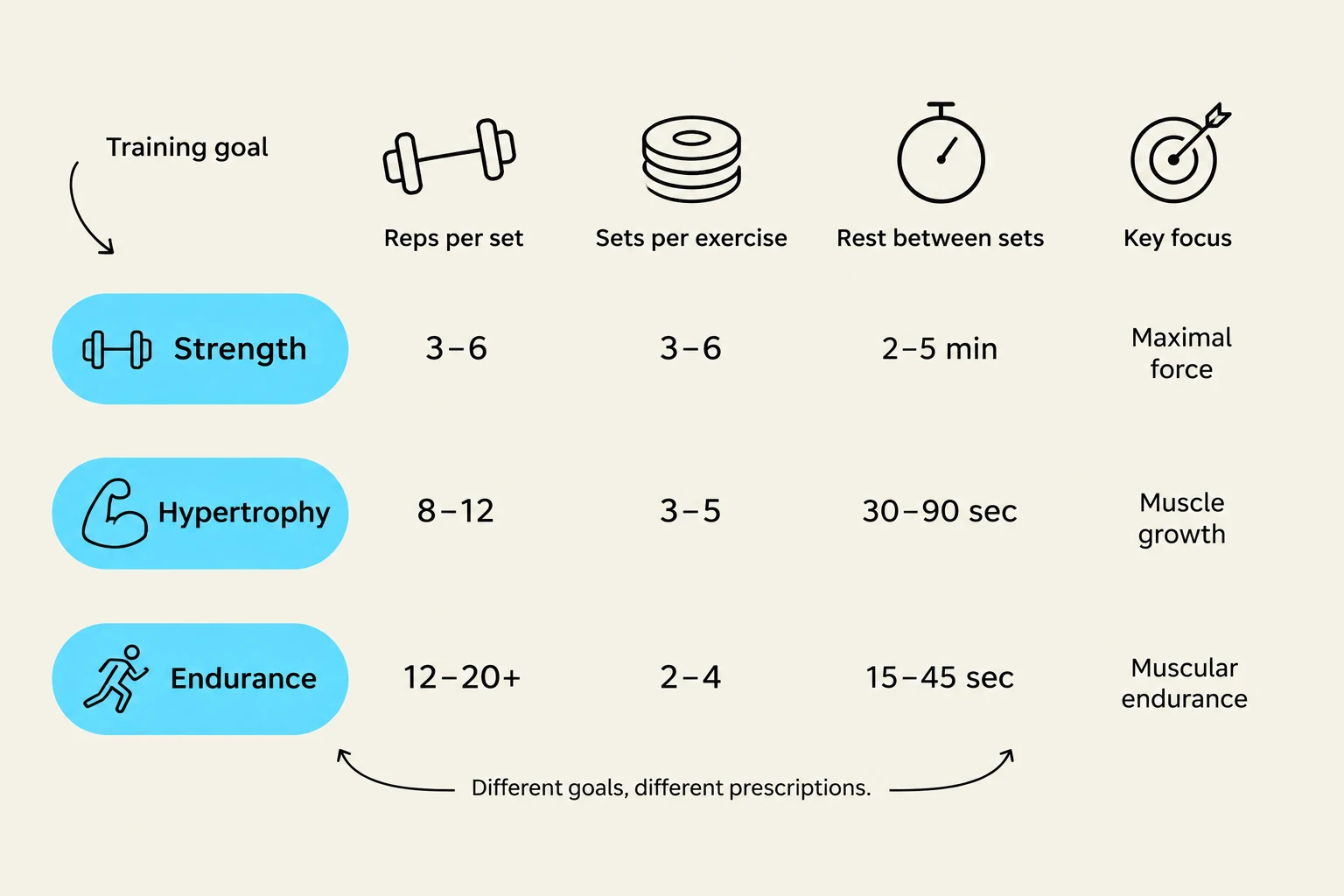
Strength: High intensity (high load) and low repetitions.
Endurance: Low intensity (low load) and high repetitions.
Hypertrophy: Can be achieved across a wide range of loads.
Intensity is often quantified as a percentage of a one-repetition maximum (1-RM) or via the Repetition Maximum (RM) method. For example, an advanced trainee seeking strength might train at 80% to 100% of their 1-RM.
Volume is a measure of the total work performed, often expressed as:
Volume=Sets×Reps×Load
Alternatively, it can be viewed as sets per week. The ACSM defines volume as follows:
Low volume: < 5 sets per muscle group per week
Medium volume: 5 to 9 sets per muscle group per week
High volume:≥10 sets per muscle group per week
Sets are the number of consecutive repetitions performed. While a single set can increase strength, it is not optimal. For optimal strength, novices and intermediates may require four sets per muscle group, while advanced trainees may need eight.
Frequency and Rest
Frequency refers to how often one trains. While often discussed, weekly volume is generally considered more important than frequency. A common recommendation is training each muscle group twice per week, ensuring at least 48 hours of rest between sessions.
Rest intervals between sets are dictated by the training goal:
Muscular endurance: < 1 minute
Hypertrophy: 2 to 3 minutes
Strength and Power: 3 to 5 minutes
This chart outlines different training goals (Strength, Hypertrophy, Endurance) and provides general guidelines for reps per set, sets per exercise, rest between sets, and key focus for each.
Periodization Models
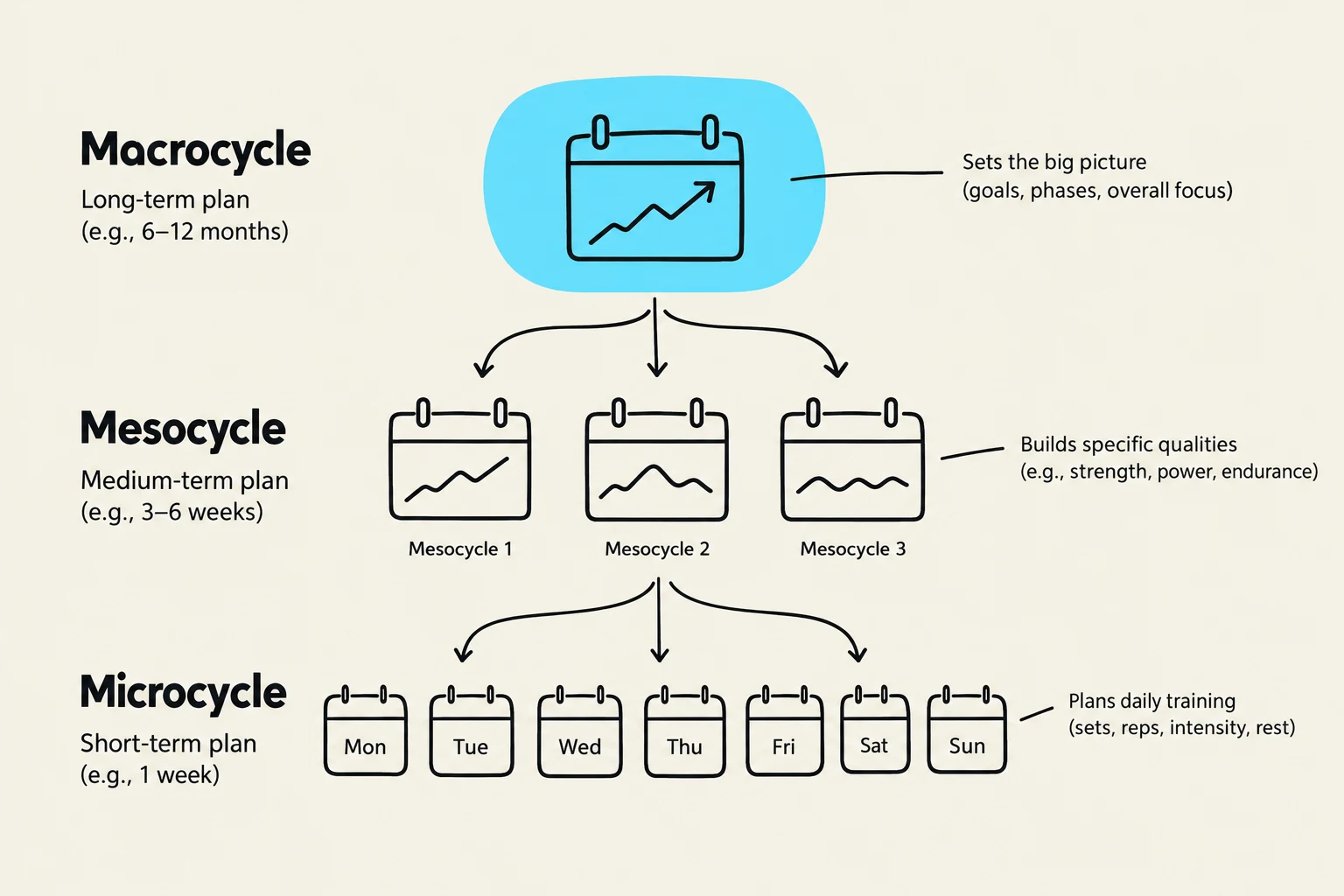
Periodization is the systematic and planned manipulation of training variables to maximize gains and minimize the risk of overtraining. Training is organized into cycles:
Macrocycle: The long-term yearly plan (9 to 12 months).
Mesocycle: Intermediate blocks (3 to 4 months), such as off-season or pre-season.
Microcycle: The short-term weekly plan (1 to 4 weeks).
Common models include:
Linear Periodization: Gradually increasing intensity while decreasing volume.
Undulating Periodization: Frequent changes in intensity and volume within short training cycles.
Block Periodization: Concentrating on specialized workouts for specific goals, such as technique or sport-specific drills.
Special Populations and Considerations
Children and Older Adults
Resistance training is safe and beneficial for children, provided there is qualified, individualized instruction focusing on technique. It can improve bone health and reduce sport-related injuries.
For older adults, the goal is often to maintain functional independence and counteract sarcopenia (muscle loss) and dynapenia (strength loss). Programs should include power training (fast-velocity efforts) to improve balance and reduce fall risk.
Advanced Strategies and Interference
Blood Flow Restriction (BFR): Allows for strength and hypertrophy increases using only light loads.
Concurrent Training: This involves training both resistance and aerobic capacities. To minimize "interference" between the two, it is recommended to perform resistance exercise before aerobic exercise.
Nutritional Supplements: High-quality protein intake (>1.6 g/kg/day) is vital. Creatine is effective for increasing lean mass, and HMB may offer anticatabolic effects.
Exam Tip: If asked about the relationship between intensity and repetitions, remember they are inversely related. As intensity (load) goes up, the number of possible repetitions goes down.
This diagram illustrates a hierarchical training plan structure, breaking down long-term goals (Macrocycle) into medium-term objectives (Mesocycle) and further into daily training schedules (Microcycle).
Muscle Soreness
Delayed-onset muscle soreness (DOMS) typically occurs 24 to 48 hours after exercise, often as a result of eccentric muscle actions. While various theories exist regarding its cause, the most effective way to prevent DOMS is through a well-designed, progressive resistance training program.
Keep reading for free.
Create an account to finish this reading and make it part of your study routine.