


Dermatology encompasses a wide range of conditions, from highly contagious parasitic infestations to chronic inflammatory disorders and life-threatening malignancies. Understanding the distinction between these categories is vital for effective management, particularly regarding hygiene protocols, contagion risks, and activity exclusion for athletes or students. This article provides a clinical overview of key skin infestations, inflammatory conditions, and the identification of melanoma.
Skin Infestations
Infestations are often caused by parasites such as mites, lice, or bugs. These conditions are frequently contagious through direct or intimate contact. When managing infestations, hygiene is paramount; patients should be advised to wash all clothing and bedding and treat all personal contacts, household members, or teammates to prevent recurrence.
Scabies
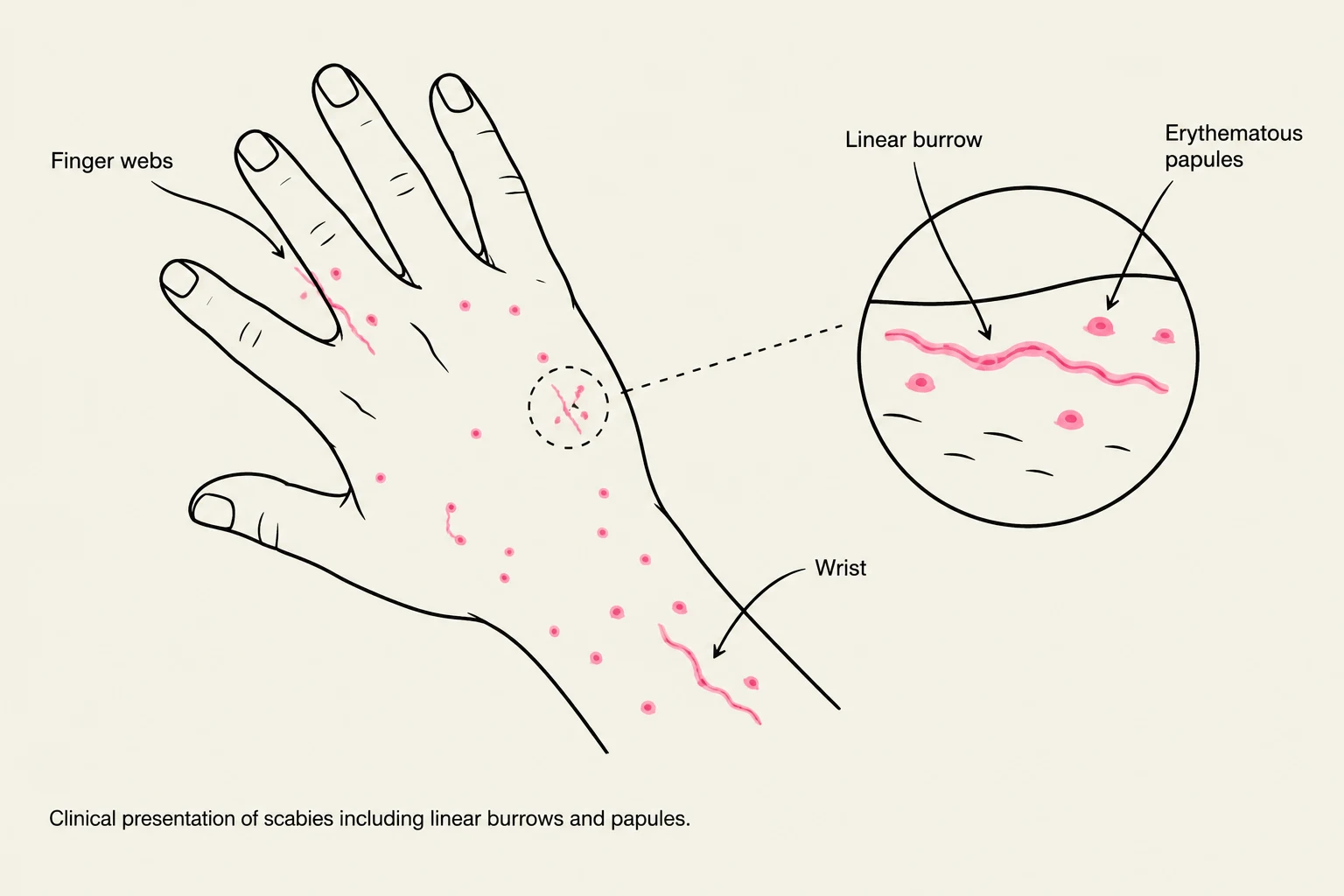
- Presentation: Patients often present with small erythematous papules (small, red, raised bumps). A hallmark sign is the development of linear burrows.
- Distribution: Common sites include the finger webs, lower abdomen, axilla (armpit), and pubic areas.
- Therapy: The primary treatment is Permethrin cream. Environmental cleaning of all surfaces and clothing is necessary.
- Exclusion: Individuals should be excluded from contact sports until 24 hours after treatment has been completed.
Lice
Lice result from a louse bite and are highly contagious through direct contact.
- Presentation: Clinical signs include erythematous maculopapular lesions (flat or raised red spots), hyperpigmentation, and excoriations (skin abrasions from scratching).
- Distribution: Lesions are typically found in the hair, trunk, neck, and pubic areas.
- Therapy: Management involves specialized shampoos, creams, or lotions, alongside thorough cleaning of the environment.
- Exclusion: Patients should be excluded from contact sports until the infestation is eradicated.
Keep reading for free.
Create an account to finish this reading and make it part of your study routine.
Continue reading freeAlready have an account? Log in
Updated