


In the practice of dental anesthesia, the selection and manipulation of the needle are as critical as the choice of the anesthetic agent itself. A needle is not merely a conduit for medication; its physical properties—diameter, length, and bevel design—dictate the ease of tissue penetration, the risk of deflection, and the overall comfort of the patient. Understanding these specifications and mastering precise handling techniques are essential skills for minimizing trauma and ensuring clinical success.
Needle Specifications: Gauge and Length
Dental needles are standardized by two primary dimensions: gauge and length. These specifications determine how the needle interacts with biological tissues and the syringe apparatus.
Needle Gauge (Diameter)
The gauge refers to the diameter of the needle. It is important to remember the inverse relationship inherent in the gauge system: as the gauge number increases, the diameter of the needle decreases.
- 25-gauge: These are the thickest needles commonly used. Due to their rigidity, they are the preferred choice for injections with a high risk of positive aspiration, such as the inferior alveolar or mental nerve blocks. Their larger diameter makes it easier to detect the presence of blood in the cartridge during aspiration.
- 27-gauge: This is the "workhorse" needle, commonly used for most techniques where moderate tissue penetration depth is required.
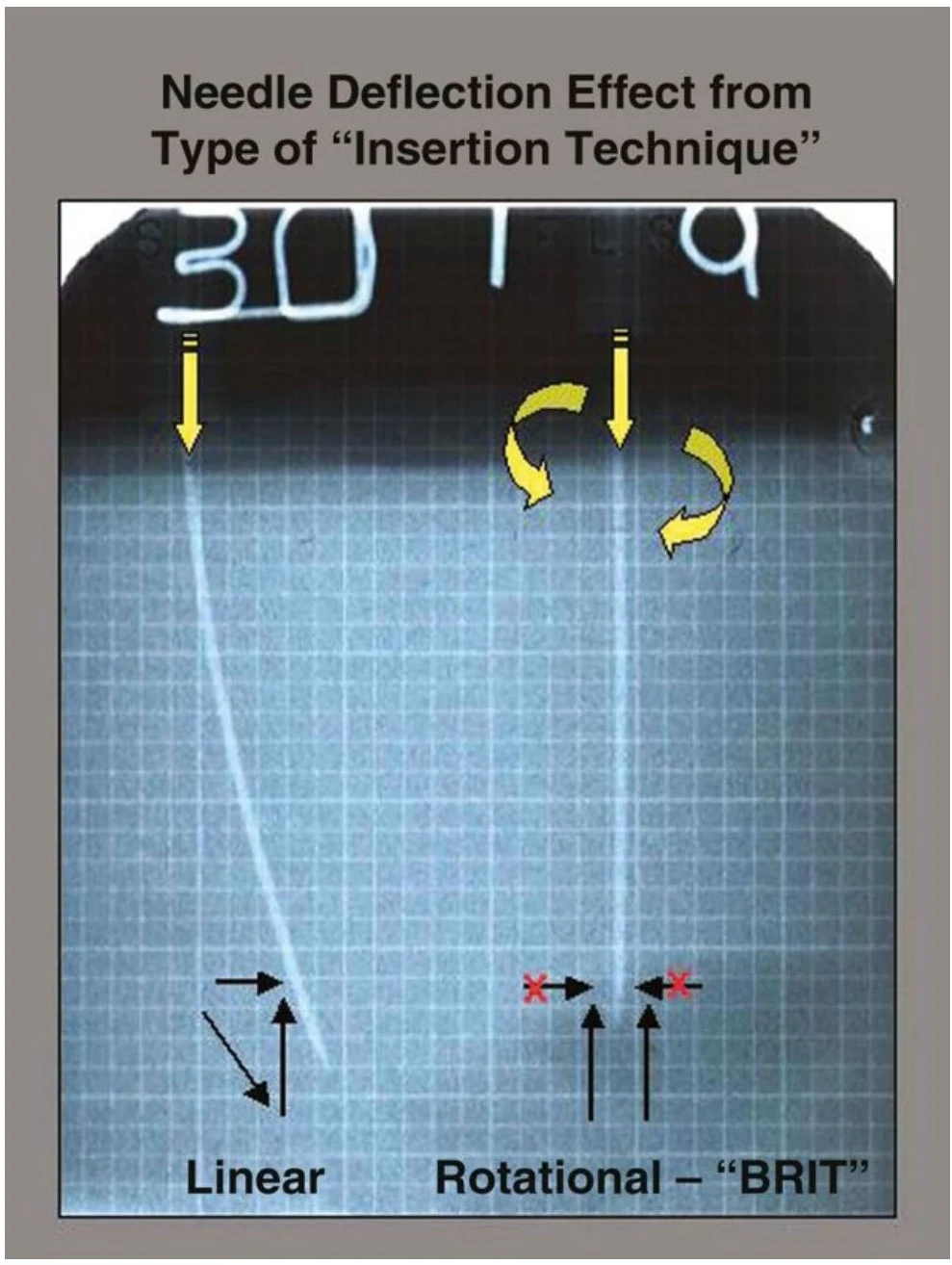
- 30-gauge: These are very thin needles used for localized infiltrations or for achieving hemostasis. However, their small diameter makes them highly susceptible to deflection during insertion.
Needle Length
The length of the needle must be matched to the anatomical site of injection to ensure the anesthetic is deposited at the correct depth.
Keep reading for free.
Create an account to finish this reading and make it part of your study routine.
Continue reading freeAlready have an account? Log in
Updated