


What exactly is a video game? To a casual observer, the answer seems obvious: it is something you play on a screen. However, for scholars in the field of game studies, this question is deceptively complex. Depending on whether you are looking through a technical, social, or psychological lens, the definition of a "game" shifts significantly. Because there is no single, universal standard, understanding video games requires navigating a landscape of overlapping definitions and constant negotiation.
The Technical Foundation: Games as Software
At its most basic level, a video game can be defined as a form of content hosted on an electronic device designed to entertain an individual who acts as an interactor. This distinguishes games from passive media, such as film or music, where the viewer simply observes.
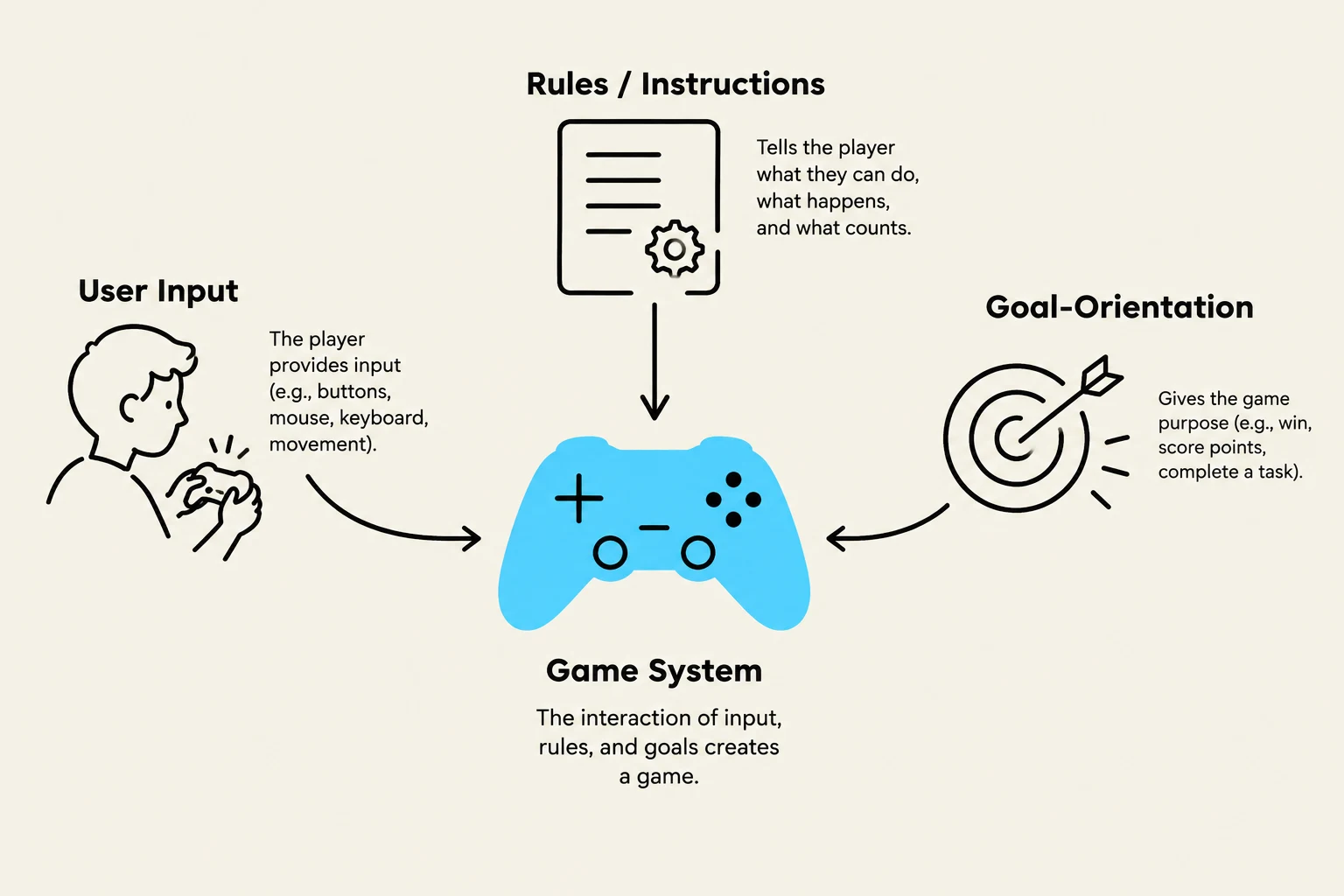
To move from "software" to "game," several structural components are typically present:
- User Input and Interactivity: The player must actively participate by providing input to the system.
- Tutorialization and Instruction: Games often provide explicit instructions or "tutorialization" to teach the player how to navigate the system's rules.
- Goal-Orientation and Friction: Unlike productivity software (such as Microsoft Word), which is designed to fulfill a user's intent with as little resistance as possible, games are driven by specific objectives. Games intentionally introduce "friction"—challenges or failure states—that the player must overcome to succeed.
Exam Tip: If asked to distinguish a game from general-purpose software, focus on the concept of "intentional friction." In productivity software, a system that prevents you from typing is "broken"; in a game, a system that prevents you from progressing is "challenging".

Keep reading for free.
Create an account to finish this reading and make it part of your study routine.
Continue reading freeAlready have an account? Log in
Updated