


When beginning a journey into speech pathology, it is common to view the field as a toolkit—a collection of exercises, games, and techniques used to help people communicate. However, true professional practice is far more complex than the mere application of these tools. Professional practice in speech pathology is a structured, reflective, and evidence-driven discipline. It requires the integration of scientific knowledge, clinical reasoning, and ethical decision-making to provide high-quality care to diverse populations.
Beyond the Toolkit: What is Professional Practice?
To understand professional practice, one must distinguish between "doing" a task and "practicing" a profession. A technician might follow a manual to implement a specific swallowing exercise, but a speech pathologist understands why that exercise is chosen, how it interacts with the patient's unique anatomy, and how to adjust it if the patient's condition changes.
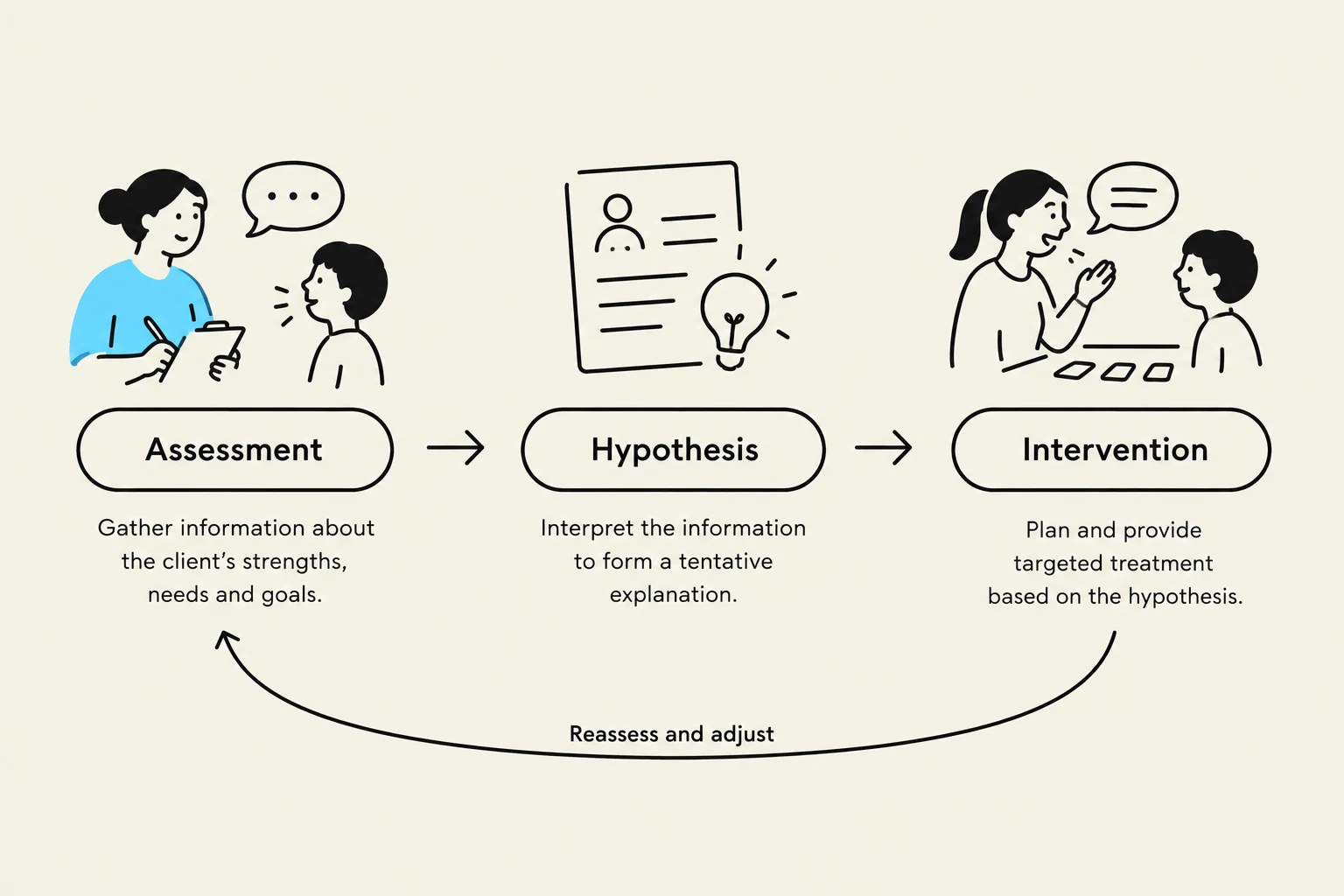
Professional practice is defined by a framework that moves beyond simple task completion. It involves a continuous cycle of assessment, intervention, and evaluation, all underpinned by a deep understanding of human communication and swallowing processes.
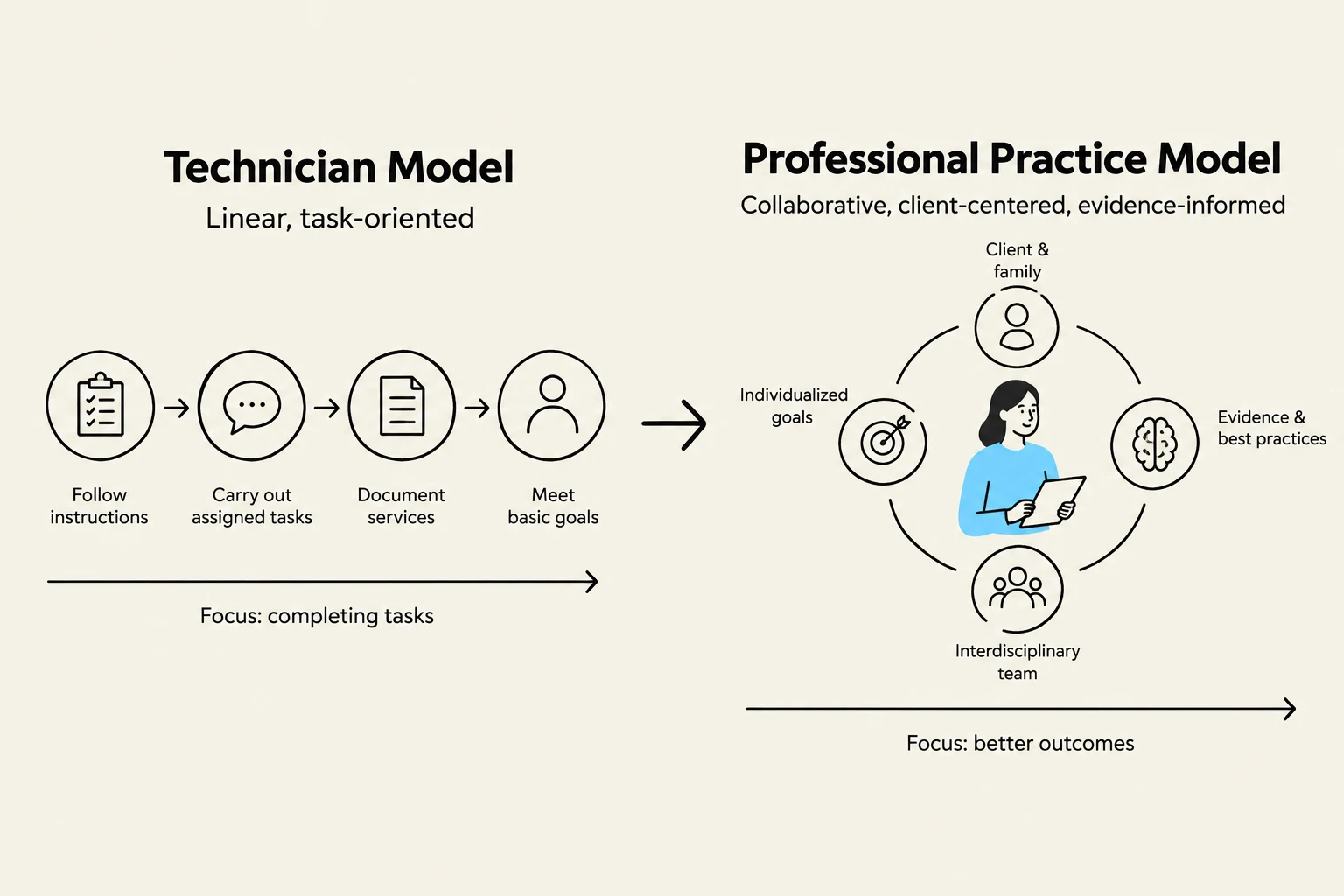
Exam Tip: If asked to define professional practice, avoid saying it is "the application of speech therapy techniques." Instead, describe it as the "integration of evidence-based knowledge, clinical reasoning, and ethical standards to support communication and swallowing needs."
The Three Pillars of Practice
To function as a professional, a clinician must balance three fundamental pillars: Evidence-Based Practice (EBP), Clinical Reasoning, and Reflective Practice.
1. Evidence-Based Practice (EBP)
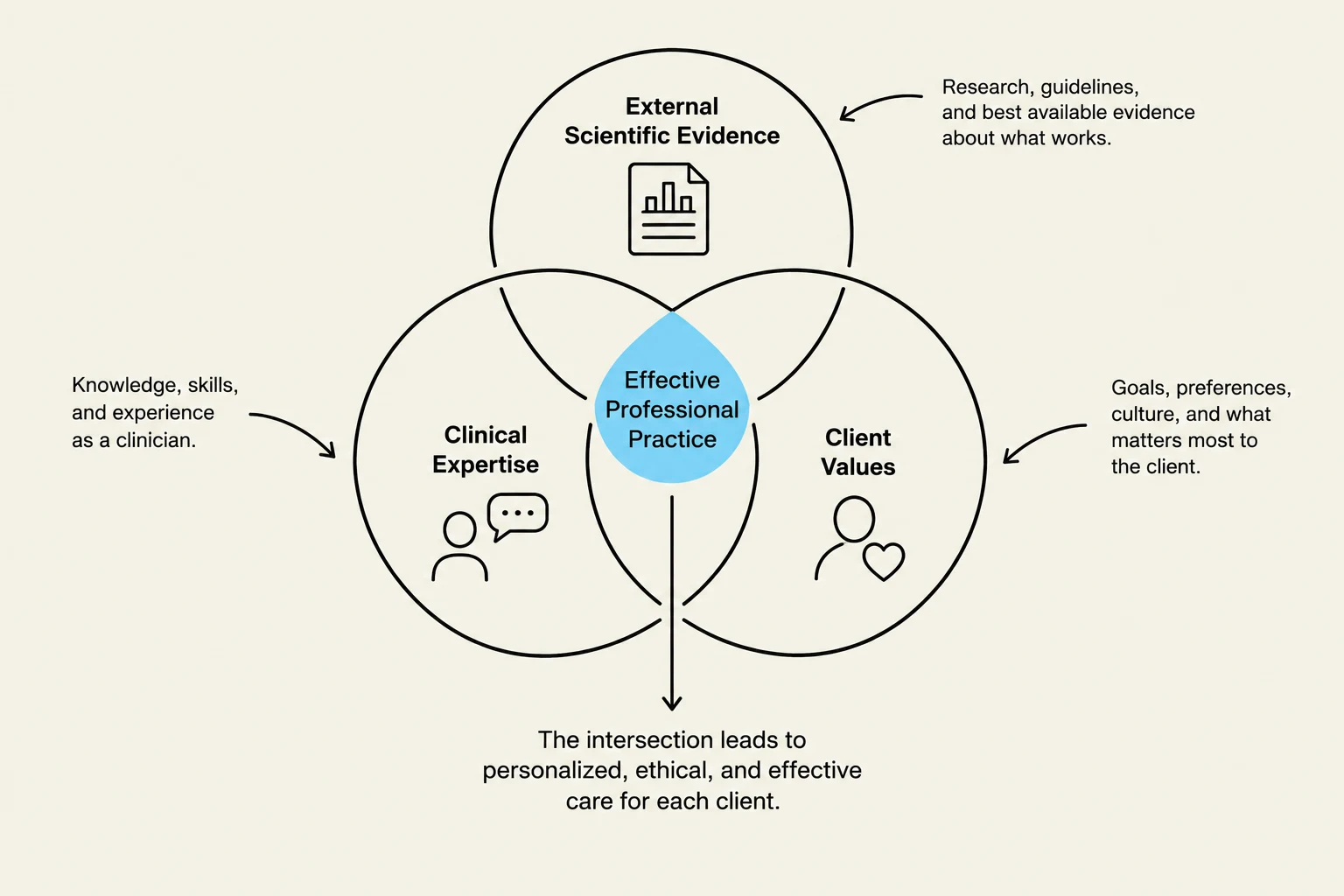
EBP is the foundation of modern healthcare. It ensures that clinicians are not relying on intuition or outdated traditions, but on the best available scientific data. EBP is often represented as a triad of three intersecting components:
Keep reading for free.
Create an account to finish this reading and make it part of your study routine.
Continue reading freeAlready have an account? Log in
Updated