


Medical terminology can often feel like a foreign language. When a clinician uses a word like "gastroenterology" or "subcutaneous," it may seem intimidating to a student. However, these complex terms are not random strings of letters; they are highly structured "Lego sets" of meaning. By learning to identify and define the individual components—roots, prefixes, and suffixes—you can deconstruct almost any medical term to understand its precise meaning.
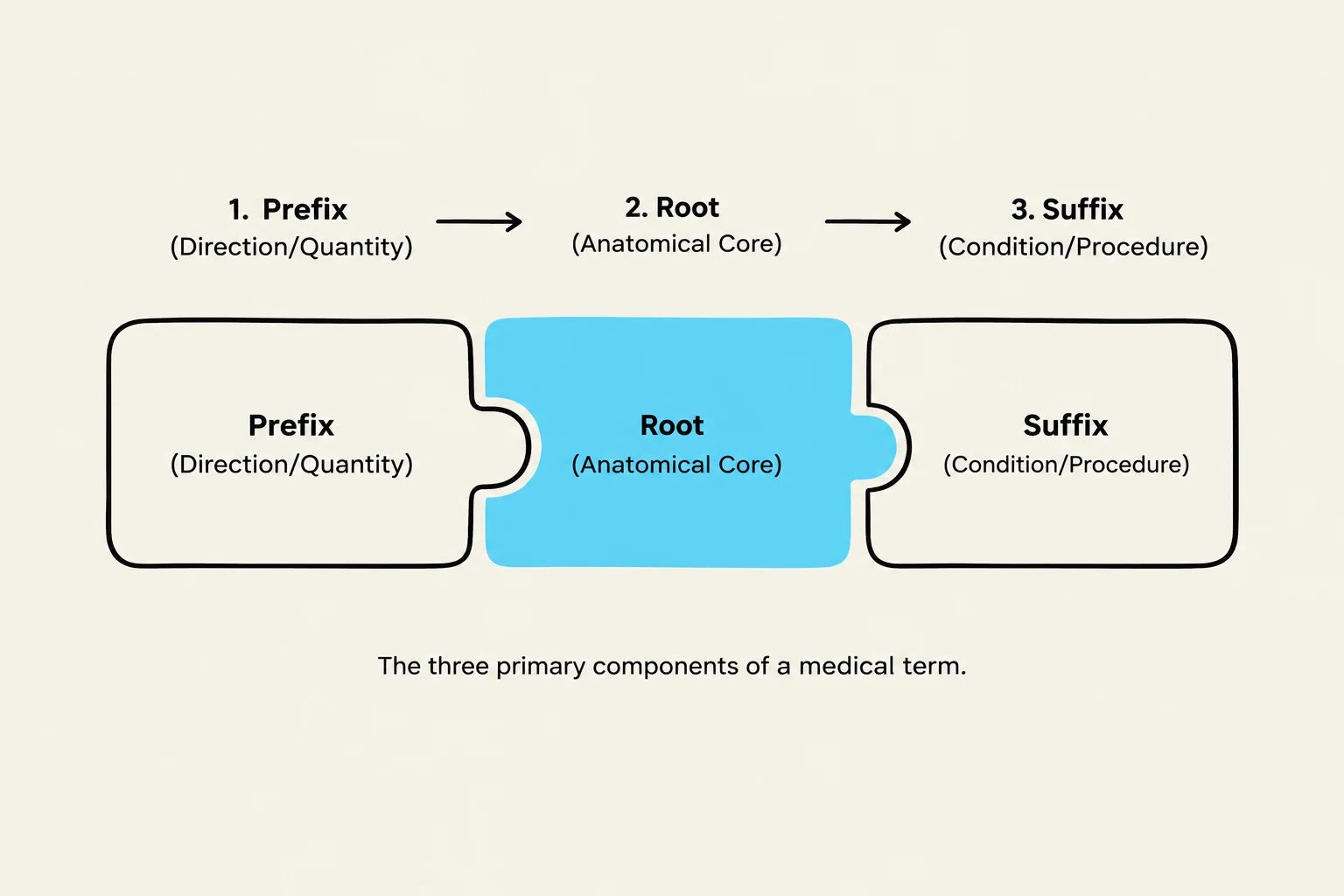
The Building Blocks of Medical Words
To master medical language, you must first understand its three primary components: the word root, the prefix, and the suffix. Think of these as the structural elements that provide the foundation, the direction, and the conclusion of a term.
1. The Word Root
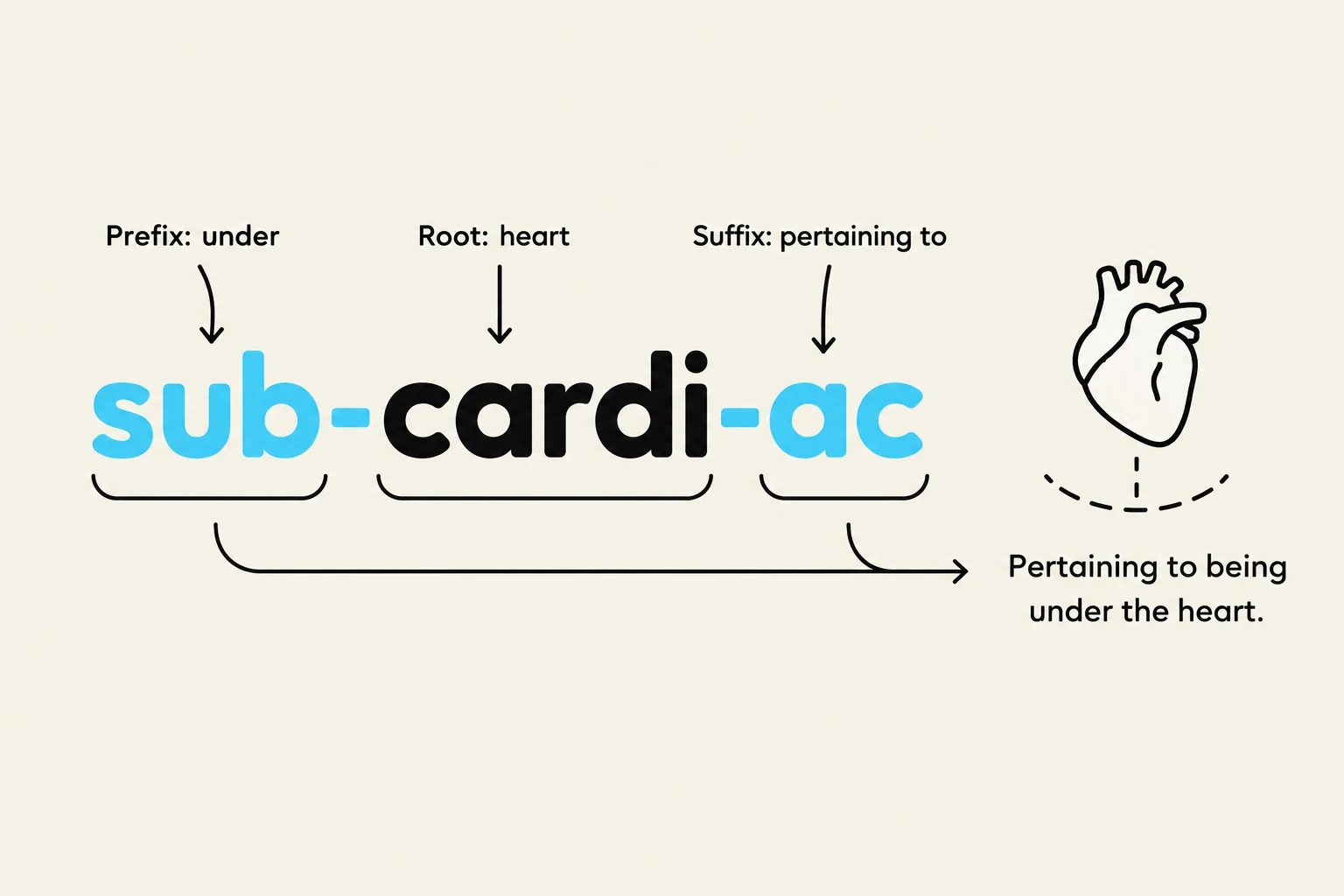
The word root is the core of the term. It provides the fundamental meaning and usually refers to a body part, an organ, or a system. For example, the root cardi- refers to the heart, while derm- refers to the skin. Without the root, the word has no anatomical or physiological anchor.
2. The Prefix
A prefix is an element added to the beginning of a word root to modify its meaning. Prefixes typically indicate:
- Location or Direction: (e.g., sub- meaning under, peri- meaning around).
- Number or Quantity: (e.g., poly- meaning many, bi- meaning two).
- Time or Status: (e.g., pre- meaning before, post- meaning after).
3. The Suffix
The suffix is an element added to the end of a word root. Suffixes often change the word's grammatical function or provide critical clinical information, such as:
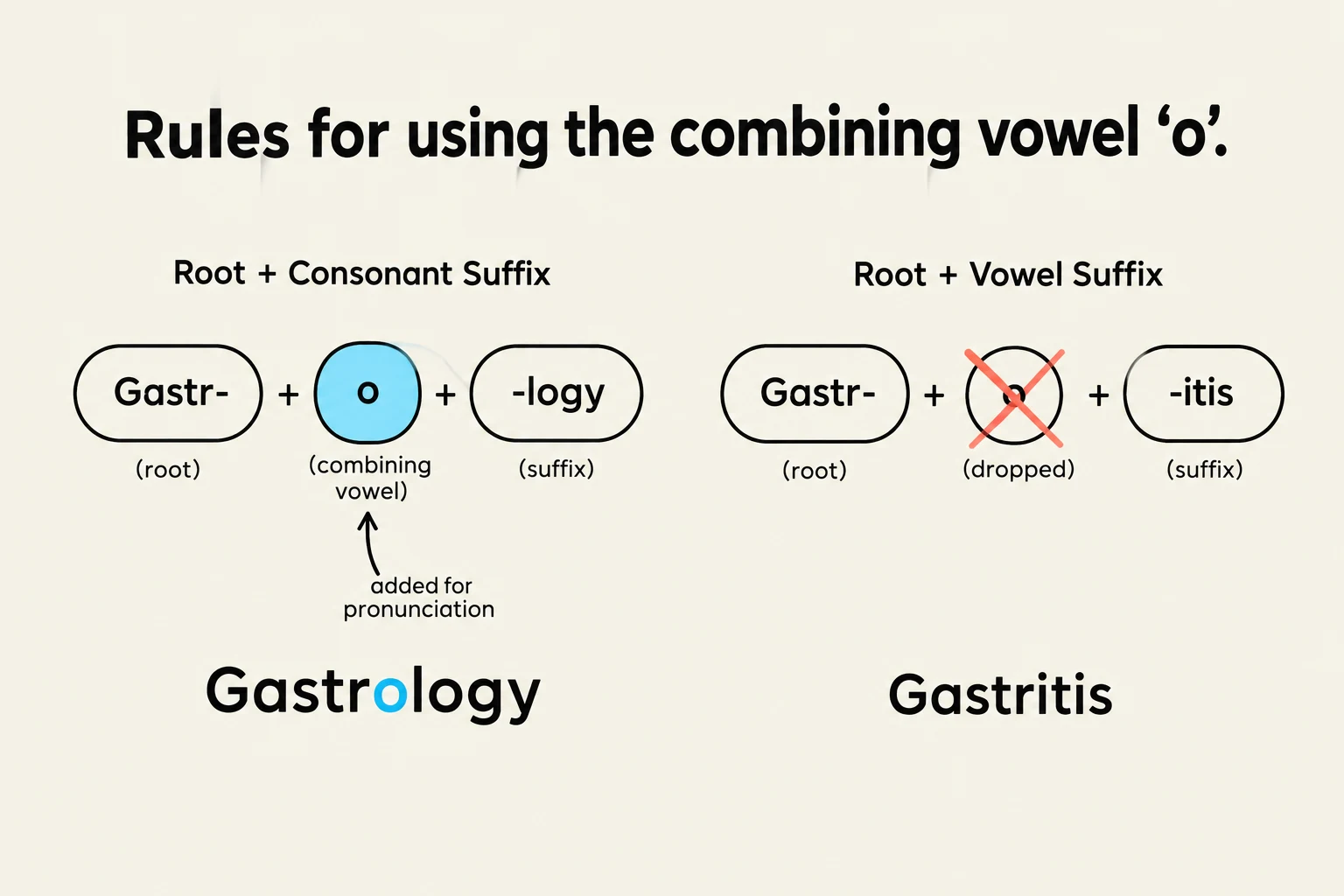
Keep reading for free.
Create an account to finish this reading and make it part of your study routine.
Continue reading freeAlready have an account? Log in
Updated