


In a crowded marketplace, companies cannot appeal to all buyers in all ways. To succeed, a firm must decide which customers it can serve best and how it will create superior value for them. This process is known as developing a customer value-driven marketing strategy. Rather than trying to be everything to everyone, effective marketers focus on identifying specific segments of the market, selecting which ones to pursue, and then differentiating their offerings to stand out from the competition.
The Foundation: Segmentation and Targeting
The journey toward a value-driven strategy begins with two critical steps: deciding whom to serve and how to serve them.
Market Segmentation
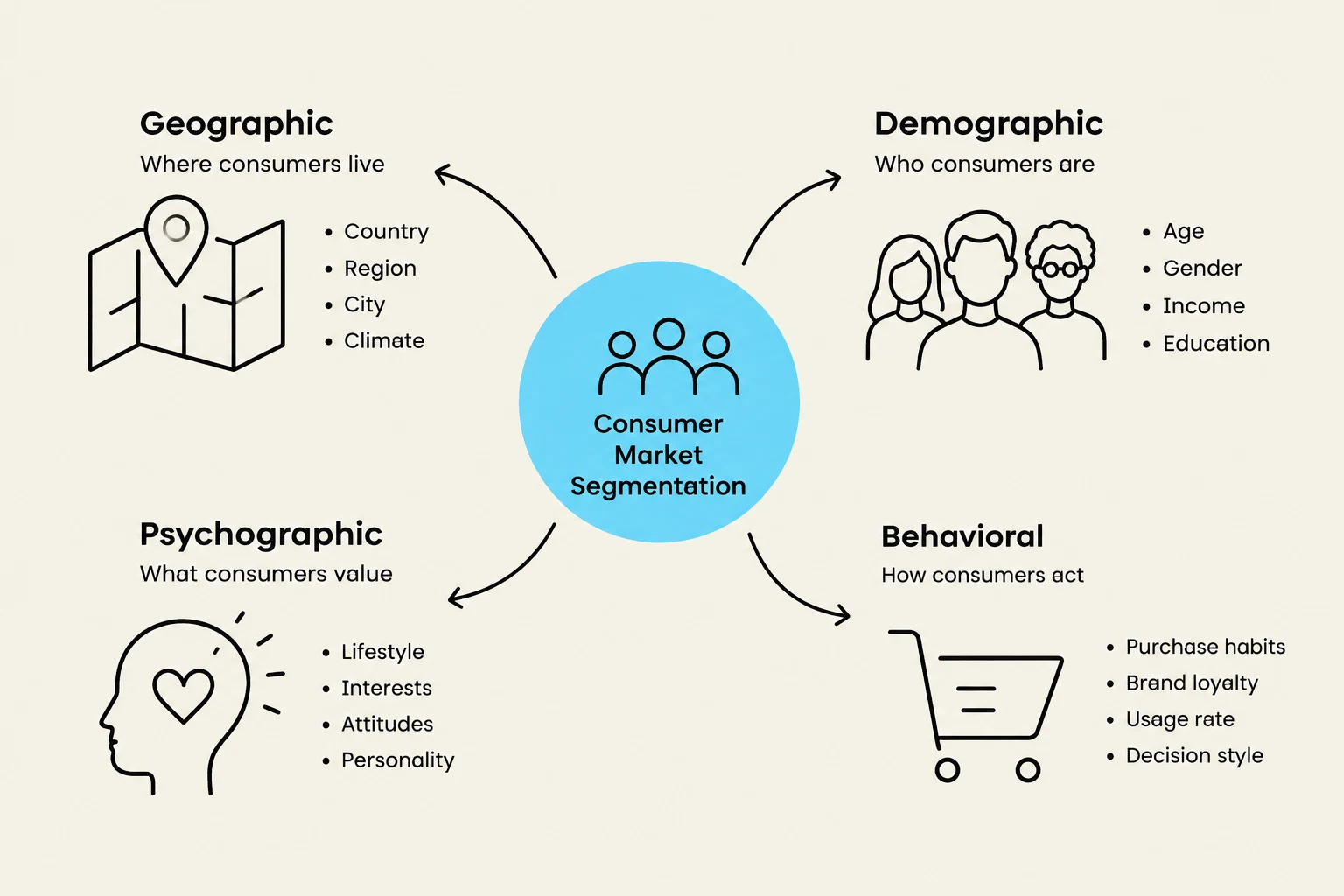
Market segmentation involves dividing a diverse market into distinct groups of buyers who have different needs, characteristics, or behaviors. Marketers generally categorize these segments based on several variables depending on whether they are addressing consumer markets or business markets.
For consumer markets, segmentation typically falls into four categories:
- Geographic: Dividing the market by nations, regions, states, cities, or even neighborhoods.
- Demographic: The most common base, using variables like age, life-cycle stage, gender, income, occupation, education, and religion.
- Psychographic: Grouping people based on social class, lifestyle, or personality characteristics. For example, Panera Bread targets a "healthy-eating lifestyle" segment.
- Behavioral: Segmenting based on occasions (when people buy), benefits sought (what they want from the product), user status, usage rate, or loyalty status.
In contrast, business markets use similar variables but also include operating characteristics, purchasing approaches, situational factors, and personal characteristics.
Exam Tip: For segmentation to be effective, the segments must be measurable, accessible, substantial, differentiable, and actionable. If a segment is too small to be profitable or cannot be reached via communication channels, it is not a viable target.

Keep reading for free.
Create an account to finish this reading and make it part of your study routine.
Continue reading freeAlready have an account? Log in
Updated