In an era of unprecedented global connectivity, the ability to conduct business across borders is no longer a luxury—it is a necessity. However, moving a product or service from one country to another involves much more than overcoming logistical hurdles or currency fluctuations. It requires a deep understanding of the invisible forces that shape human interaction: culture. For international business professionals, success is often determined by how well they can navigate the complex web of values, behaviors, and social norms that define different societies.
Understanding Culture and the Need for Literacy
At its core, culture is defined as a set of values, beliefs, rules, and institutions held by a specific group of people. It is the lens through which individuals view the world and interact with others. As globalization progresses, we often see cultural convergence, where different cultures begin to share similar traits—such as the global spread of pop culture trends like skateboarding or the widespread influence of international media franchises.
To succeed in this environment, professionals must develop cross-cultural literacy. This is the detailed knowledge of a culture that allows an individual to work effectively and harmoniously within it. Without this literacy, managers risk falling into the trap of ethnocentricity, which is the belief that one's own ethnic group or culture is superior to those of others.
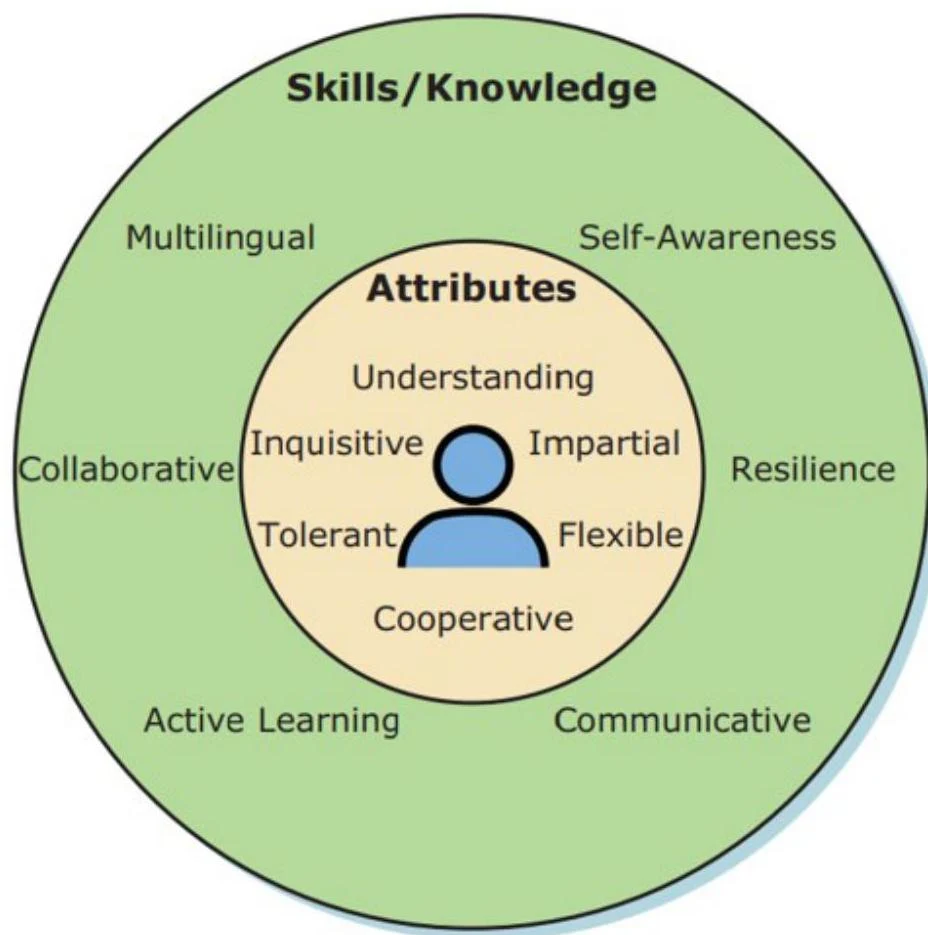
Exam Tip: When studying for international business exams, remember that cross-cultural literacy is not just about knowing facts; it is about developing the skills and attributes necessary to function in a diverse environment.
A diagram illustrating personal attributes and skills/knowledge, including concepts like understanding, resilience, and communication.
The Layers of Culture
Culture is not a monolithic entity; it is composed of several overlapping layers that influence how business is conducted.
National Culture and Subcultures
National culture is often supported and promoted by nation-states. Governments may work to preserve their cultural legacy by building museums and monuments or by regulating culturally sensitive sectors of the economy. Within these larger national identities, however, exist subcultures. These are groups of people who share a unique way of life—characterized by different languages, lifestyles, or values—within a larger, dominant culture. Notably, subcultures can exist across national borders, such as the global community of skaters or surfers.
Physical and Material Environments
The physical environment, including land features, climate, and geography, plays a significant role in shaping culture. For example, climate can influence work habits, and land features can affect how people communicate.
Complementing the physical environment is material culture, which encompasses all the technology used within a culture to manufacture goods and provide services. It is important to note that material culture is often unevenly distributed; for instance, a single nation may have highly advanced technological hubs alongside regions with much less industrial development.
Psychological Drivers: Values, Attitudes, and Aesthetics
To understand why consumers behave the way they do, or why employees approach tasks differently, one must look at the psychological drivers of culture.
Values: These are deeply held ideas, beliefs, and customs to which people are emotionally attached, such as honesty, freedom, or responsibility. Values are critical to business because they directly influence a person's work ethic and their desire for material possessions.
Attitudes: These are learned positive or negative evaluations and tendencies toward objects or concepts. Attitudes are shaped by the cultural context and learned from role models like parents, teachers, or religious leaders.
Aesthetics: This refers to a culture's perception of "good taste," including the symbolism of colors, imagery, and art. For international brands, aesthetics are vital—not just in physical products, but in digital presence and internet marketing.
Behavioral Norms: Manners and Customs
The outward expression of culture is found in social norms, which dictate how people act in specific situations.
Manners and Customs
Manners are the appropriate ways of behaving, speaking, and dressing within a culture. Customs are habits or ways of behaving that are passed down through generations. These can be further categorized:
Folk Customs: Behaviors practiced by a relatively homogeneous group of people, often dating back many generations.
Popular Customs: Behaviors shared by a more heterogeneous group or by several different groups.
Business Implications: Gift-Giving
In a professional setting, understanding gift-giving customs is essential. What is considered a polite gesture of goodwill in one country might be viewed as an inappropriate bribe or an insult in another. Navigating these nuances is a key component of maintaining long-term professional relationships.
Frameworks for Analyzing Cultural Differences
Because culture is so complex, scholars have developed frameworks to help managers categorize and understand these differences.
The Kluckholn-Strodtbeck Framework
This framework studies cultural differences along six dimensions, such as whether a culture focuses on past or future events, or whether it emphasizes individual or group responsibility. For example, applying this to Japanese culture reveals an emphasis on the future and a strong sense of individual responsibility to the group.
The Hofstede Framework
One of the most widely used models in international business is Geert Hofstede's framework, which analyzes culture along six key dimensions:
Individualism vs. Collectivism
Power Distance (the degree to which less powerful members accept unequal distribution of power)
Uncertainty Avoidance
Masculinity vs. Femininity
Long-Term Orientation
Indulgence vs. Restraint
Worked Example: If a manager is moving from the United States (a high-individualism culture) to a country like China (which often scores higher on power distance and long-term orientation), they must adjust their management style from encouraging individual initiative to respecting hierarchical structures and long-term relationship building.
By mastering these frameworks and developing genuine cross-cultural literacy, business professionals can transform cultural differences from obstacles into competitive advantages in the global marketplace.
Keep reading for free.
Create an account to finish this reading and make it part of your study routine.