


In the fast-paced environments of acute care, behavioral health, and community settings, nurses frequently encounter individuals facing moments of profound instability. A crisis is not merely a difficult event; it is a critical or crucial period in an individual's life that threatens their existing equilibrium. While a crisis poses a significant danger to an individual's personality organization, it also holds the potential for personal growth and improved coping mechanisms if managed effectively.
Understanding the Crisis
A crisis is defined by how a person perceives a precipitating event, the availability of their situational supports, and the effectiveness of their existing coping mechanisms. Because a crisis is subjective, two people experiencing the same event (such as a natural disaster) may react in vastly different ways based on these three factors.
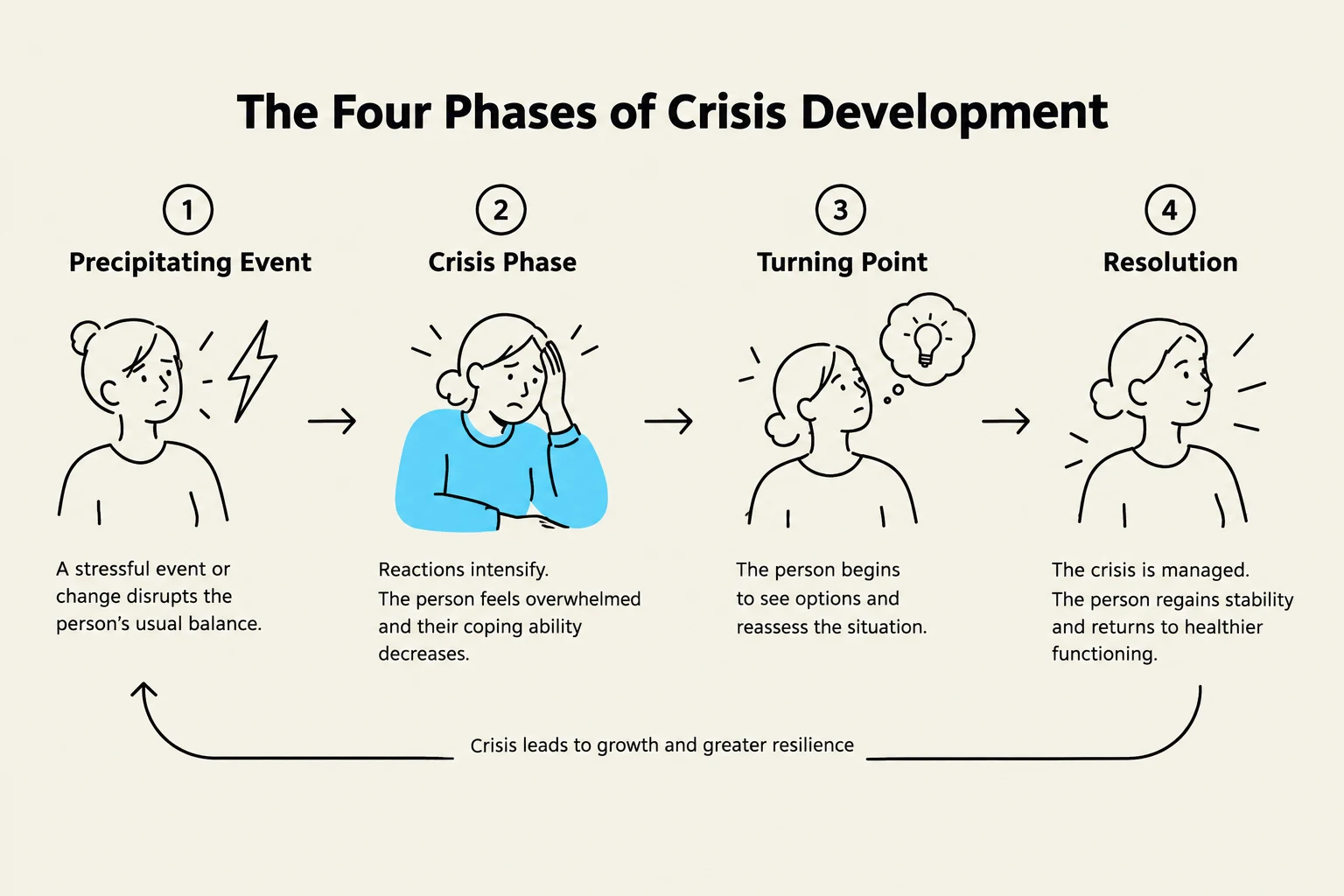
Phases of Crisis Development
Crisis development typically follows a predictable progression. While the specific details may vary, understanding these phases allows nurses to intervene before the individual reaches a point of total decompensation.
Types of Crises
Crises can be categorized based on their origin. They may be maturational (related to developmental milestones), situational (unexpected life events like a job loss or sudden illness), or existential/societal (large-scale events affecting communities).
Goals and the Nurse's Role
The primary goal of crisis intervention is to facilitate healthy coping, promote adaptation to change, loss, or stress, and minimize the negative impact of the situation on the individual.
Keep reading for free.
Create an account to finish this reading and make it part of your study routine.
Continue reading freeAlready have an account? Log in
Updated