


When a dispute arises—whether it is a breach of contract, a personal injury, or a disagreement over property—the parties involved must find a way to resolve it. In the legal world, there are two primary paths: the formal, structured environment of the court system (litigation) and the more flexible, private methods known as Alternative Dispute Resolution (ADR). Choosing the right path depends on the nature of the dispute, the desired level of privacy, the budget available, and the need for a final, binding decision.
Litigation: The Formal Court Process
Litigation is the process of resolving disputes through the public court system. In Canada, the court hierarchy is structured to handle different levels of complexity and seriousness. At the base are the Provincial Courts (such as the Alberta Court of Justice), which handle less serious criminal matters and small claims. Above them are the Superior Courts (such as the Court of King’s Bench), which have unlimited monetary jurisdiction in civil matters and handle serious criminal issues. If a party believes a legal error was made during a trial, they may take the case to a Provincial Court of Appeal, which reviews questions of law rather than questions of fact.
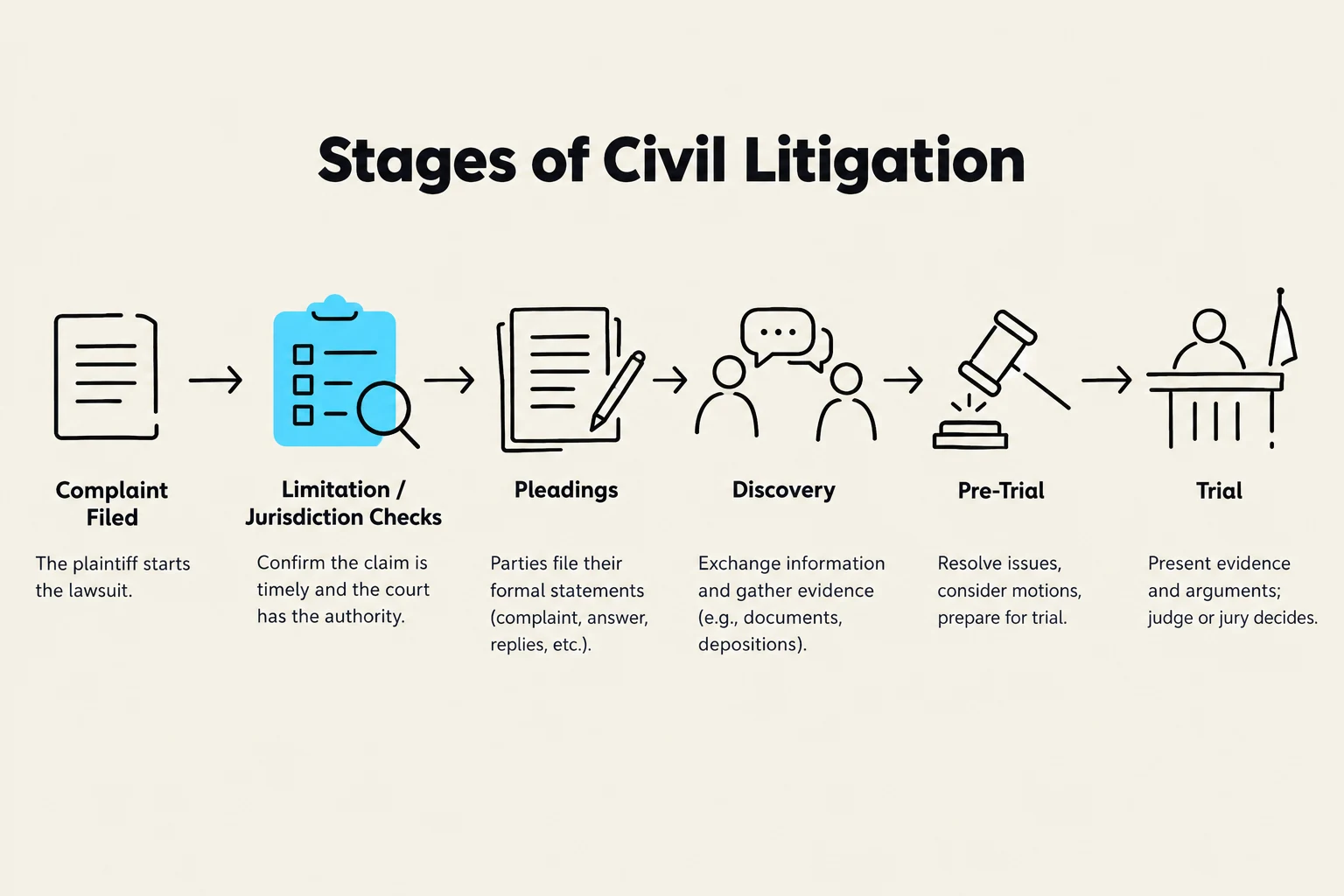
Before a case even reaches a courtroom, several critical legal hurdles must be cleared:
- Limitation Periods: A plaintiff cannot wait forever to sue. In Alberta, for example, there is a two-year "discoverability" period (from when the claim was discovered) and a ten-year "ultimate" period (from when the claim arose).
- Jurisdiction: The parties must ensure they are in the correct court. This is determined by a "real and substantial connection," such as where the contract was signed or where the harm occurred.
- Pleadings: This is the formal exchange of documents, starting with the Statement of Claim from the plaintiff and the Statement of Defence from the defendant.

Keep reading for free.
Create an account to finish this reading and make it part of your study routine.
Continue reading freeAlready have an account? Log in
Updated