


Deep within the brainstem lies a critical hub for sensory integration and motor response: the midbrain (mesencephalon). One of the most distinctive anatomical features of the posterior midbrain is a pair of paired swellings known as the corpora quadrigemina. These structures act as specialized relay stations that allow our bodies to react instinctively to sudden changes in our environment, such as turning our heads toward a sudden flash of light or a loud bang.
Anatomical Overview
The term corpora quadrigemina is Latin for "fourfold bodies," which perfectly describes the anatomy. These four rounded elevations are located on the dorsal (posterior) surface of the midbrain. They are organized into two distinct pairs: the superior colliculi and the inferior colliculi.
These structures are not merely passive bumps; they are dense clusters of neurons that process incoming sensory information and coordinate rapid, involuntary motor outputs. While the higher processing of sight and sound occurs in the cerebral cortex, the corpora quadrigemina handle the "reflexive" side of these senses—the immediate, subconscious reactions that occur before you even consciously realize what you are seeing or hearing.
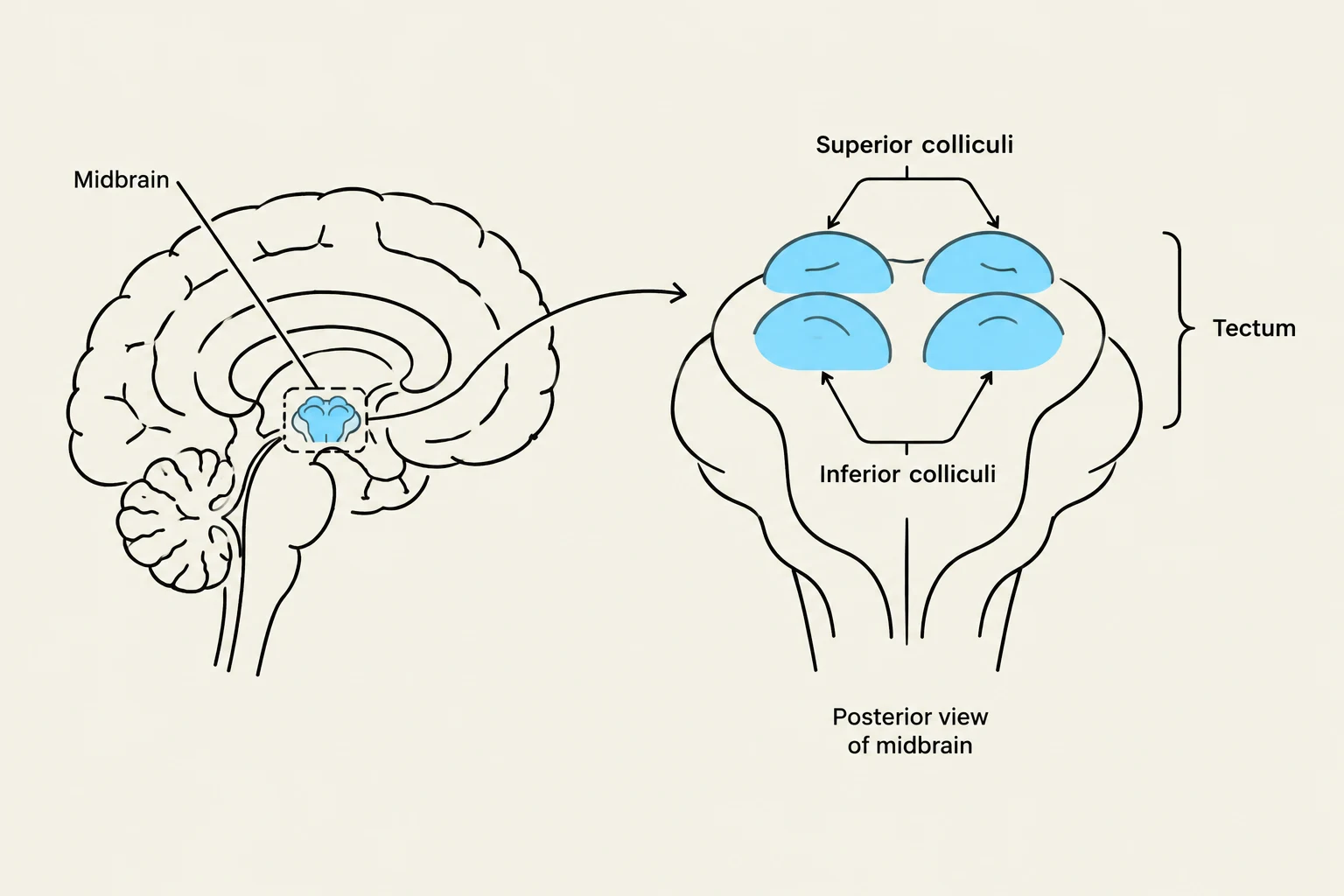
Exam Tip: When studying the brainstem, remember that the corpora quadrigemina are part of the tectum (the "roof" of the midbrain). If a question asks about the tectum, they are referring to these four colliculi.
The Superior Colliculi: Visual Reflexes
The superior pair of swellings is known as the superior colliculi. These structures are primarily involved in visual processing and the coordination of eye and head movements.

Keep reading for free.
Create an account to finish this reading and make it part of your study routine.
Continue reading freeAlready have an account? Log in
Updated