Coronary Artery Disease: Risk Factors and Nursing Management
An overview of Coronary Artery Disease (CAD), including its progression, risk factors (modifiable and non-modifiable), and nursing management strategies focusing on health promotion, dietary interventions, behavioral changes, and pharmacological support.
Coronary Artery Disease (CAD) is the most common heart disease and stands as the leading cause of death in the United States, accounting for one in four deaths. It is a progressive condition characterized by the narrowing or occlusion of the coronary arteries due to atherosclerosis—the abnormal accumulation of lipids and fibrous tissue within the arterial walls. Because the clinical manifestations of CAD are often absent in its early stages, nursing management must focus on a lifelong, proactive approach centered on early identification and aggressive risk modification.
Understanding the Progression of CAD
CAD does not occur overnight; it is a chronic process that develops over many years. The progression typically follows three distinct stages of atherosclerosis:
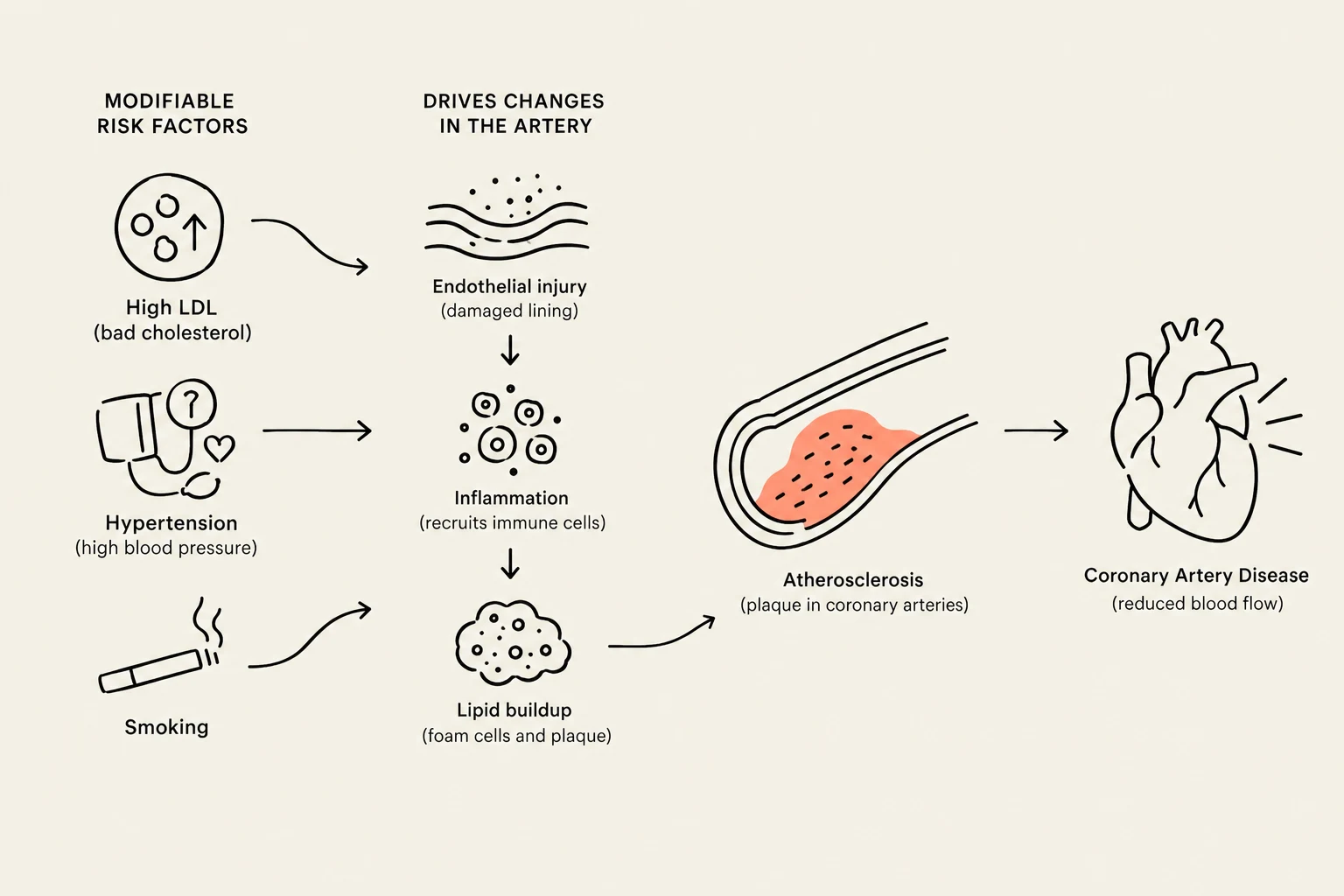
Endothelial Injury: The process begins when the inner lining of the vessel (the endothelium) is damaged by factors such as smoking, high cholesterol, hypertension, or diabetes.
Fatty Streaks and Fibrous Plaque: Lipid-filled smooth muscle cells create "fatty streaks," which can appear as early as age 18. As lipoproteins transport cholesterol into the arterial intima, collagen covers these streaks, forming a grayish or whitish fibrous plaque. This plaque narrows the vessel lumen, reducing blood flow to distal tissues.
Complicated Lesions: This is the most dangerous stage. Inflammation or plaque instability can lead to rupture, causing platelets to accumulate and form a thrombus (clot). This can result in total occlusion of the artery.
Clinical Note: Angina vs. MI
When blood flow is insufficient to meet myocardial oxygen demand, ischemia occurs, manifesting as angina (chest pain). If ischemia is prolonged and not reversed, it can progress to Acute Coronary Syndrome (ACS), which includes unstable angina and Myocardial Infarction (MI).
Risk Factor Assessment and Categorization
Nurses play a critical role in screening patients to identify those at high risk. A thorough assessment must look beyond simple vital signs to include a comprehensive history.
Non-Modifiable Risk Factors
These are inherent characteristics that cannot be changed by medical or lifestyle interventions:
Age: Incidence is highest among middle-aged men; however, after age 75, mortality rates equalize between men and women.
Gender: Women often present with atypical signs of angina and are more likely to have comorbidities like diabetes.
Ethnicity: African Americans often experience earlier onset and more severe cases of CAD.
Genetics/Family History: A family history of heart disease (parents or siblings) is a significant predictor. Genetics can contribute 40% to 60% to the risk of CAD and MI.
Modifiable Risk Factors
These are behaviors and physiological conditions that can be altered to decrease risk:
Lipid Levels: High LDL (low-density lipoprotein) is strongly correlated with atherosclerosis, while high HDL (high-density lipoprotein) is protective.
Hypertension: Blood pressure consistently above 140/90 mmHg increases the workload on the heart and accelerates atherosclerosis.
Tobacco and Substance Use: Smoking increases catecholamine release (raising heart rate and BP), decreases HDL, and reduces oxygen-carrying capacity via carbon monoxide. Illicit drugs like cocaine can cause coronary spasms.
Obesity and Diabetes: A BMI > 30 or significant abdominal fat increases risk. Diabetes increases CAD risk by 2 to 4 times due to endothelial dysfunction.
Psychosocial Factors: Chronic stress, anxiety, and depression are linked to increased catecholamines and inflammation.
This diagram illustrates how modifiable risk factors such as high LDL cholesterol, hypertension, and smoking can lead to endothelial injury, inflammation, lipid buildup, atherosclerosis, and ultimately coronary artery disease, characterized by reduced blood flow.
Nursing Management and Health Promotion
The primary goal of nursing management is to encourage lifestyle changes that reduce the progression of the disease.
Dietary Interventions
Following National Heart, Lung, and Blood Institute guidelines, nurses should educate patients on LDL cholesterol reduction through specific dietary modifications:
Reduce Saturated Fats: Limit red meats and egg yolks.
Increase Complex Carbohydrates: Focus on whole grains, fruits, and vegetables.
Increase Fiber: High-fiber diets help manage cholesterol levels.
Manage Triglycerides: If triglycerides are high, reduce simple sugars and alcohol; consider Omega-3 fatty acids (e.g., from flaxseed or soy).
Behavioral Strategies and Physical Activity
Nurses must tailor their approach based on the patient's motivation level:
For Highly Motivated Patients: Provide the tools to begin structured programs immediately.
For Less Motivated Patients: Set short, realistic, and incremental goals (e.g., "one change at a time").
For Resistant Patients: Respect autonomy but continue to provide education, even if they only change habits after an acute event like an MI.
Physical activity can be structured using the FITT formula:
Frequency (How often)
Intensity (How hard)
Type (e.g., Isotonic exercise like brisk walking or swimming)
Time (Duration)
Nurses should encourage at least 30 minutes of moderate activity on as many days as possible to improve HDL levels and reduce blood pressure.
Pharmacological Support
When lifestyle changes alone are insufficient, medical management is required:
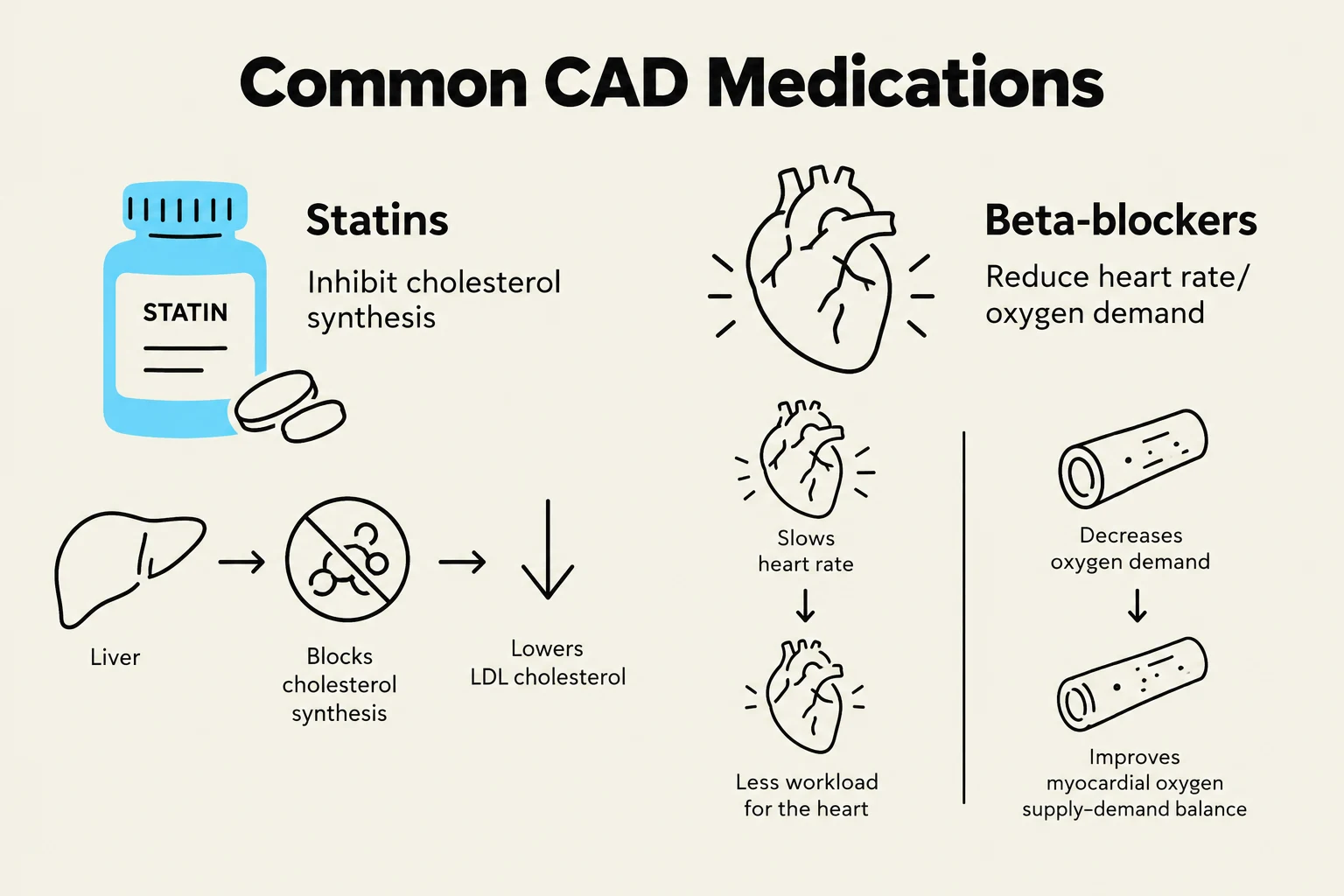
Statins (e.g., Atorvastatin): Inhibit cholesterol synthesis in the liver.
Antiplatelets (e.g., Aspirin): Low-dose aspirin (81 mg) is recommended for high-risk individuals to prevent clots.
Nitrates (e.g., Nitroglycerin): Used to manage angina by causing vasodilation.
This illustration depicts common medications for Coronary Artery Disease (CAD), including Statins and Beta-blockers, and their mechanisms of action on the body.
Exam Tip: Beta-Blocker Safety
Always monitor heart rate and blood pressure in patients taking beta-blockers. Be cautious with patients who have asthma (risk of bronchospasm) or diabetes (as beta-blockers can mask the signs of hypoglycemia).
Keep reading for free.
Create an account to finish this reading and make it part of your study routine.