


Coronary Artery Disease (CAD) is a primary manifestation of impaired perfusion, occurring when the blood supply to the heart muscle is insufficient to meet the body's metabolic demands. To understand CAD, one must first understand the concept of perfusion: the process of delivering oxygenated blood to the body's tissues through the circulatory system. When this process is disrupted in the coronary arteries—the network of vessels that supplies the myocardium with oxygen-rich blood—the heart muscle itself becomes at risk of injury and death.
The Pathophysiology of Atherosclerosis
The fundamental driver of CAD is atherosclerosis, a progressive inflammatory process within the arterial walls. This process does not happen overnight; it follows a predictable sequence of plaque development that can take decades to reach a critical stage.
It begins with the formation of fatty streaks, which are early accumulations of lipids and inflammatory cells within the inner lining of the artery. As the condition progresses, these fatty deposits undergo structural changes to become fibrous plaques. These plaques consist of a core of lipids covered by a stable fibrous cap. While a stable plaque may only narrow the vessel slightly, it creates a permanent alteration in the vessel's diameter and elasticity.
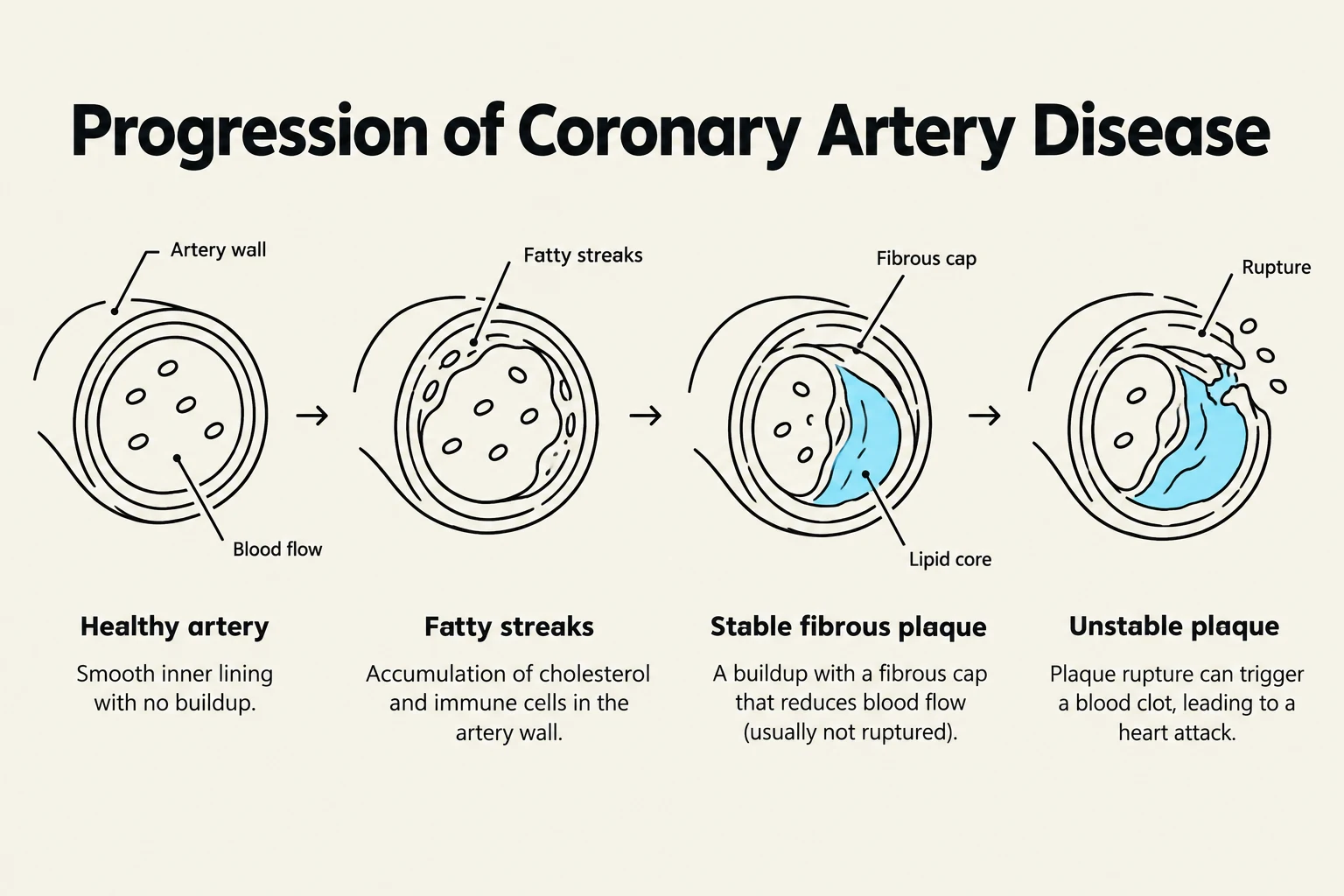
The most dangerous stage occurs when a plaque becomes unstable and ruptures. This rupture triggers thrombosis, the formation of a blood clot at the site of the injury. This clot can partially or completely occlude the artery, leading to a sudden and severe reduction in blood flow to the myocardium.
Keep reading for free.
Create an account to finish this reading and make it part of your study routine.
Continue reading freeAlready have an account? Log in
Updated