Examines the digital disruption of traditional media, the rise of the platform-agnostic audience, and the five forces reshaping mass communication: concentration of ownership, globalization, audience fragmentation, hypercommercialism, and media convergence.
The traditional media landscape is currently undergoing a period of profound digital disruption. Driven by the rapid evolution of internet technologies, the historical boundaries that once separated different forms of media are dissolving, fundamentally reshaping how media industries operate and how audiences interact with information. While it might seem that media is becoming more chaotic, media consumption is actually at an all-time high; the difference lies not in how much we consume, but in how we consume it.
The Rise of the Platform Agnostic Audience
One of the most significant shifts in modern communication is the emergence of the platform agnostic audience. In the past, audiences were often tied to specific mediums—you read a newspaper, watched a television broadcast, or listened to the radio. Today, consumers prioritize content access over the specific device or medium used to reach them.
Whether a person watches a film on a high-end television, a handheld gaming console, or a tablet, the priority is the content itself. This shift toward platform agnosticism is a primary driver of media convergence, where the lines between different media types erode due to digital technology and the way audiences behave.
Five Forces Reshaping Mass Communication
The transition from traditional broadcasting to a digital-first environment is being propelled by five major economic and social forces.
1. Concentration of Ownership and Conglomeration
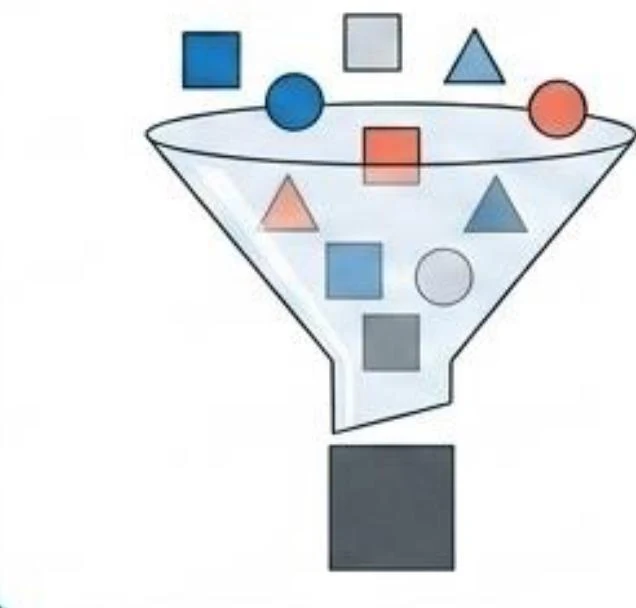
Media ownership is increasingly centralized. Concentration of ownership occurs when the ownership of various media companies is held by a small number of massive corporations.
A funnel diagram illustrating the process of filtering various shapes.
This often leads to an oligopoly, where a few giant firms dominate the entire industry. Furthermore, we see the rise of conglomeration, where non-media companies acquire media outlets to expand their reach.
The Democratic Risk: Critics argue that when media is controlled by a few profit-driven entities, the goal of public education and diverse perspectives may be sacrificed for corporate interest. This can lead to the creation of news deserts—communities that lack local journalistic resources—and ghost papers, which exist in name only but have had their reporting capacity stripped away to maximize profit.
2. Globalization
As multinational conglomerates acquire media outlets across the globe, concerns regarding cultural diversity arise. There is a risk that foreign entities may use their media power to influence local political or economic interests, potentially overshadowing local cultural expressions.
3. Audience Fragmentation
The era of the "mass audience"—a single, large, homogenous group—is over. Instead, we see audience fragmentation, where the audience is split into small, highly specific segments.
A grey circle disintegrates into numerous smaller colored dots, representing dispersal or fragmentation.
To reach these segments, media companies have moved from broadcasting (aiming at everyone) to narrowcasting. This involves niche marketing, where content is tailored to specific demographics or interests, such as a radio station dedicated solely to a specific music genre.
4. Hypercommercialism
As media companies struggle to find new revenue streams, the boundary between commercial and non-commercial content has blurred. This phenomenon, known as hypercommercialism, involves integrating brand endorsements directly into the content itself to maximize advertising revenue.
5. Media Convergence
Convergence is the erosion of traditional boundaries between different media types. This is driven by three main elements:
Technology: The spread of digital computers, algorithms, and high-speed broadband.
Audience Character: The rise of the platform agnostic consumer.
Audience Fragmentation: The need for communicators to reach split audience segments through various different channels.
A New Model of Communication
The traditional one-way model of mass communication—where a central authority sends a message to a passive audience—has evolved into an interactive, conversational process.
The Evolving Content Producer
In the past, the content producer was a large, hierarchical organization, such as a major television network or a film studio.
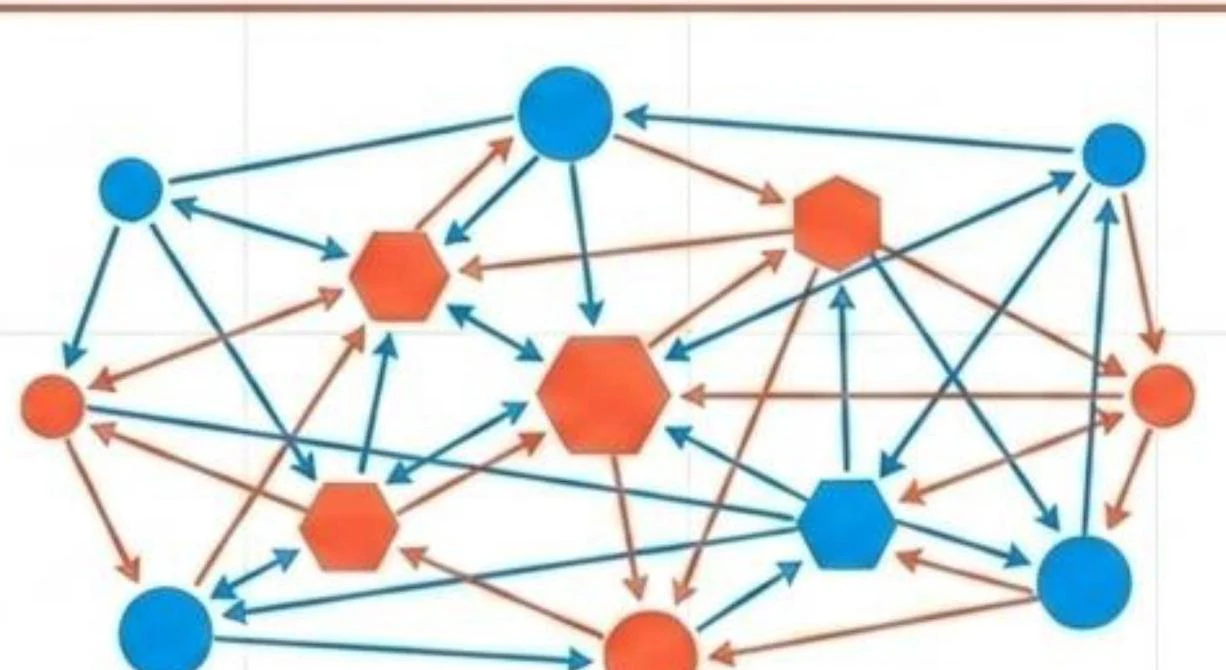
Today, the barrier between consumer and producer has collapsed. Anyone with an internet connection can become a content producer via social media or blogs. This has given rise to citizen journalists, who both challenge and complement professional journalism.
A diagram illustrating a network with nodes represented by blue circles and orange hexagons, connected by directed arrows indicating relationships or flows.
Flexible Messages and Instant Feedback
The message itself has changed; rather than being identical for everyone, it is now more flexible, interactive, and personalized.
Perhaps most importantly, the nature of feedback has been transformed. While feedback used to be delayed and indirect, digital technology allows for consumption on demand—the ability to access content whenever and wherever one chooses. This enables the audience to provide instant, interactive, and direct feedback to the content producers.
Study Tip: When analyzing modern media, remember that the "Mass" in Mass Communication is no longer a single block. It is a fragmented, interactive, and highly commercialized network of individual consumers who control the timing and the platform of their own experiences.
Keep reading for free.
Create an account to finish this reading and make it part of your study routine.