


In many traditional views of the built environment, marketing was often dismissed as "unprofessional" or unnecessary. Many contractors believed that focusing solely on production was sufficient and that work would naturally follow. However, as competition increases and procurement processes evolve, the need for a strategic marketing orientation has become essential. Construction marketing is not just about selling a product; it is about managing relationships, communicating value, and maintaining a positive image within a complex environment of diverse publics.
Communicating with Publics
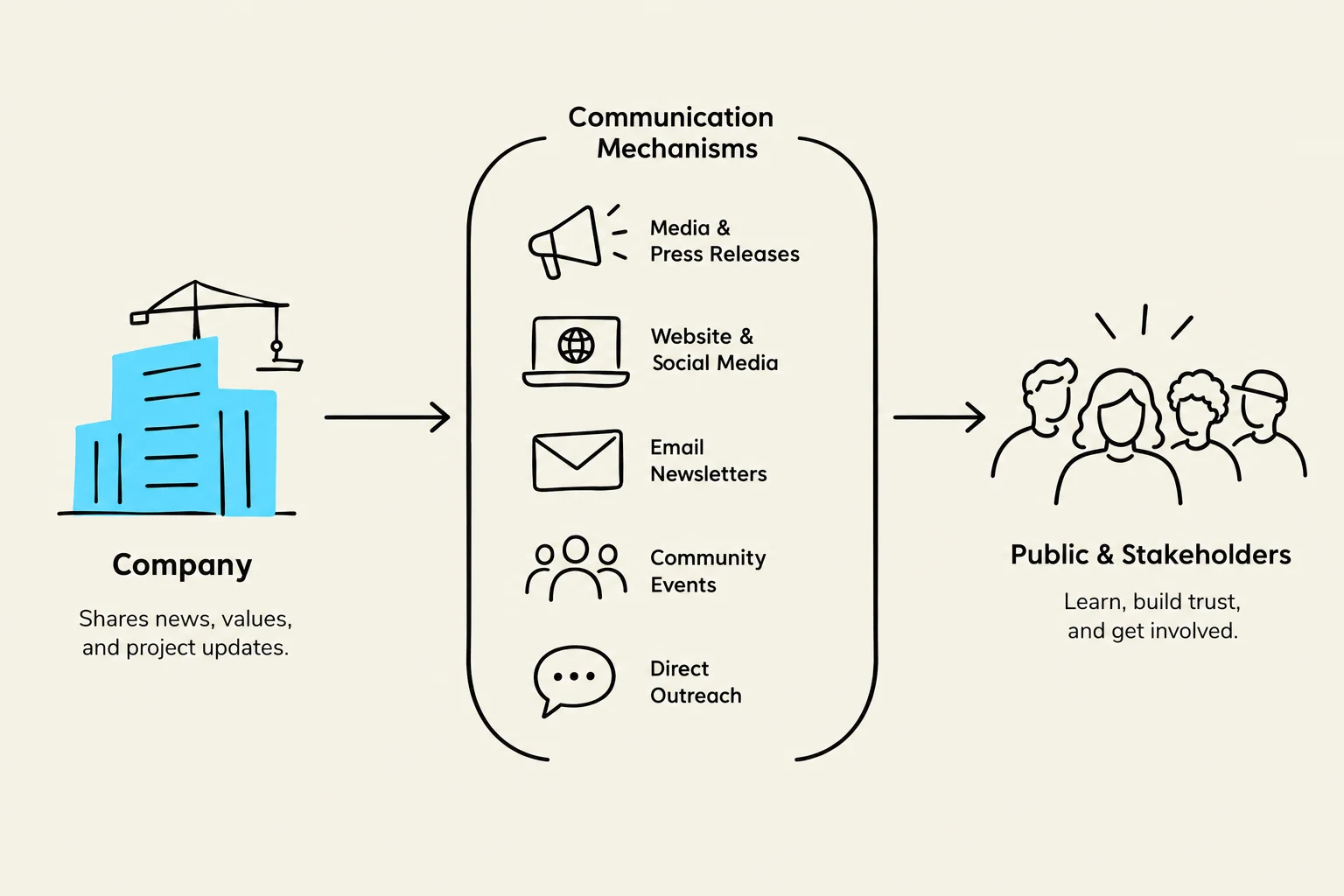
Organizations do not operate in a vacuum; they are surrounded by various "publics"—groups that have an interest in or an impact on the organization's ability to achieve its goals. These include financial institutions, the media, government agencies, local communities, and internal employees.
Effective communication involves more than just broadcasting information; it requires understanding the needs and wants of these different groups to create mutually beneficial exchanges. In construction, this might mean communicating safety records to local residents or financial stability to potential investors.
Exam Tip: Remember that "Public Relations" is the specific enterprise function dedicated to studying and managing the interaction between the organization and these various publics.
Overcoming Construction Industry Image Problems
Historically, the construction industry has faced several marketing challenges:
- Conservatism: A long-standing belief that advertising is unsuitable for professional services.
- Lack of Control: Unlike manufacturers, contractors often have little control over the design or quality specifications set by the client.
- Perception of Commodity: A belief that construction is merely a matter of "lowest price" through open tendering, leaving little room for brand differentiation.

Keep reading for free.
Create an account to finish this reading and make it part of your study routine.
Continue reading freeAlready have an account? Log in
Updated