


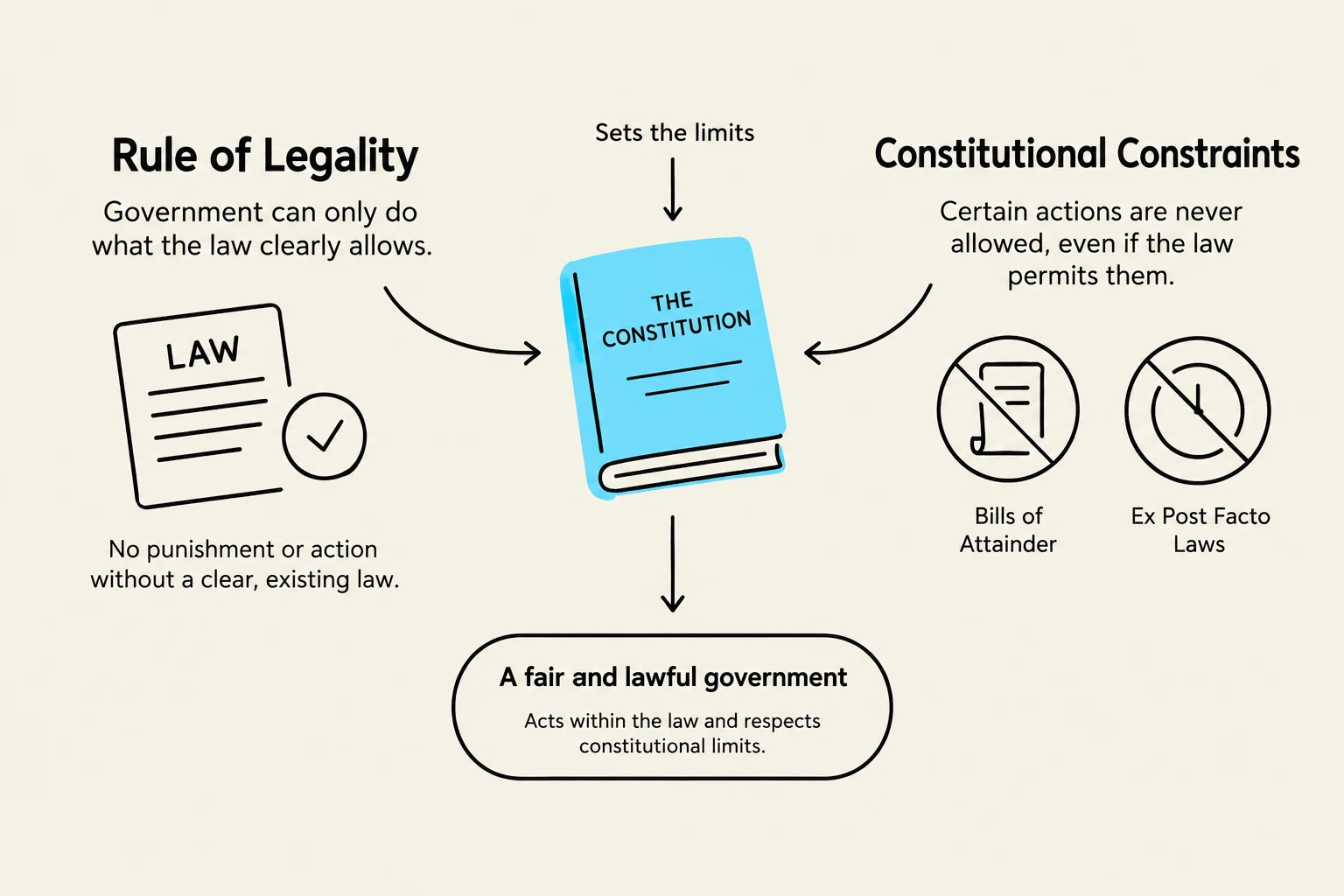
In the American democratic system, the power of the government to enact criminal statutes is not absolute. The Founding Fathers, influenced by the perceived harshness of British colonial rule, designed a constitutional framework intended to protect individual rights against the "tyrannical tendencies of government". One of the most critical ways the Constitution limits legislative power is by preventing lawmakers from using the law as a weapon to target specific individuals or to punish people for actions that were legal when they were performed.
To ensure fairness and predictability in the legal system, the U.S. Constitution establishes specific prohibitions against certain types of legislation. These safeguards ensure that the law remains a tool for social order rather than a mechanism for political retaliation.
Constitutional Prohibition: Article I, Sections 9 and 10
The protections against unfair legislative practices are not merely suggestions; they are strict constitutional mandates. Under Article I, Sections 9 and 10 of the U.S. Constitution, both the federal government and individual state legislatures are expressly forbidden from passing bills of attainder and ex post facto laws.
This dual prohibition ensures that neither the national government nor the various states can bypass the judicial process to punish citizens. James Madison, one of the primary architects of the Constitution, famously described these provisions as a “bulwark in favor of personal security and personal rights”. By placing these limits on the legislative branch, the Constitution upholds the principle of the separation of powers, ensuring that the power to define crimes and the power to determine guilt and impose punishment remain in separate, specialized branches of government.


Keep reading for free.
Create an account to finish this reading and make it part of your study routine.
Continue reading freeAlready have an account? Log in
Updated