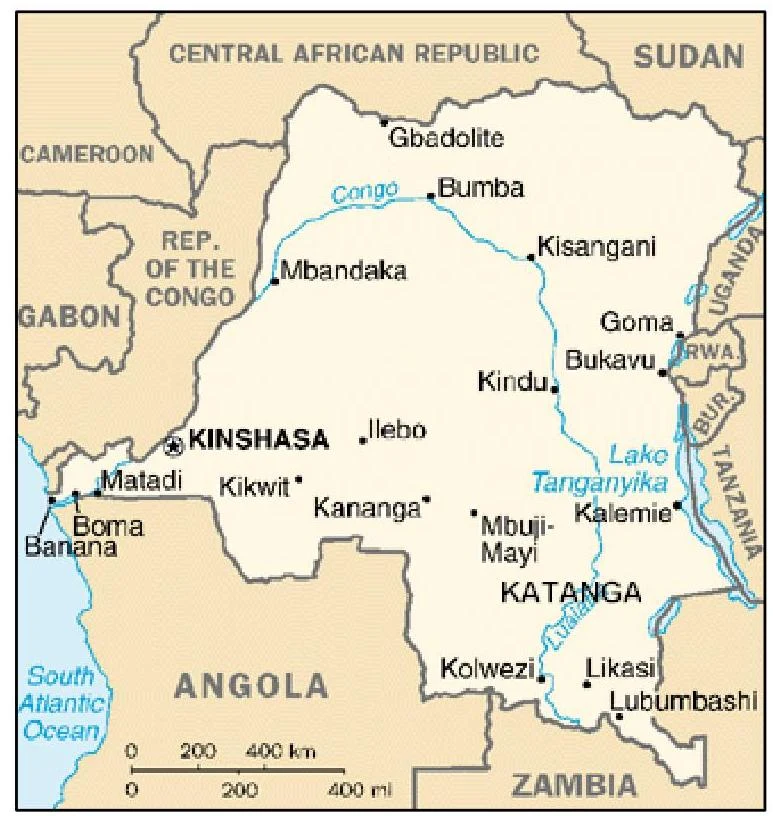
The transition of the Congo from a Belgian colony to an independent nation is one of the most complex and tragic chapters in the history of decolonization. While the 1960s saw a "wind of change" sweeping across Africa, the Congo's path was marked by rapid Belgian withdrawal, intense ethnic divisions, and a descent into a civil war that turned the nation into a central battlefield of the Cold War.
The Legacy of Belgian Colonial Rule
Before independence, the region was known as the Belgian Congo. The history of this period was defined by extreme exploitation and a "paternalistic" approach to governance. Under King Leopold II, the territory was treated as a corporate state where resources like ivory and rubber were extracted through ruthless methods, resulting in the deaths of nearly 10 million people.
When the Belgian government took control in 1908, the exploitation continued through forced labor and high taxes for minerals like copper, tin, and diamonds. Crucially, Belgium failed to prepare the Congolese for self-rule. The colonial administration focused on primary education but neglected secondary and higher education; by 1960, there were only 30 university graduates in the entire country. This lack of trained administrative personnel created a vacuum of leadership that would prove disastrous once the Belgians departed.
The Rise of African Nationalism
In the late 1950s, inspired by nationalist movements across the continent, Congolese leaders began to organize. Although Belgium initially banned political parties, pressure forced them to permit their formation in 1957. This led to the emergence of several key political players, each representing different visions for the future:
Mouvement National Congolais (MNC): Led by Patrice Lumumba, this party sought a strong, centralized government and was the most popular due to its nationalist, pan-Africanist stance.
Alliance des Ba-Kongo (ABAKO): Led by Joseph Kasavubu, this group focused on regional interests.
CONAKAT: Led by Moise Tshombe, this party represented the wealthy, mineral-rich Katanga province.
The tension reached a breaking point in January 1959, when violent riots erupted in Leopoldville (now Kinshasa). Panicked by the unrest, Belgium decided to grant independence within six months.
Independence and the Struggle for Power
The independence elections of May 1960 reflected the deep ethnic and regional divisions within the country. Because there were nearly 120 different political parties representing roughly 200 ethnic groups, no single party won an outright majority.
When independence was officially granted on June 30, 1960, a fragile coalition government was formed: Patrice Lumumba became Prime Minister, while Joseph Kasavubu became President. However, the unity was short-lived. Within a week, the army (the Force Publique) mutinied, demanding the removal of white Belgian officers.
The situation escalated when Moise Tshombe declared the secession of the Katanga province. This was a devastating blow to the new state, as Katanga provided approximately 50% of the Congo's total revenue through its mineral wealth.
Exam Tip: Understanding Political Ideologies
When analyzing the Congo, distinguish between Lumumba's vision (strong central government and pan-Africanism) and Kasavubu's vision (a loose federation with regional autonomy). This fundamental disagreement was a primary driver of the early political instability.
The Congo as a Cold War Proxy
The internal struggle for power quickly drew in the world's superpowers. When the UN refused to help Lumumba suppress the Katanga rebellion, Lumumba turned to the USSR for military assistance. This move alarmed the United States, which feared the establishment of a communist power base in the heart of Africa.
The CIA became involved, and President Eisenhower authorized the "elimination" of Lumumba. In September 1960, Kasavubu deposed Lumumba, and Lumumba responded by dismissing Kasavubu. Amidst this chaos, Joseph Mobutu, the Army Chief of Staff, launched a coup d'état with CIA support. Lumumba was eventually captured and executed in January 1961, becoming a martyr for many across Africa.
The Era of Mobutu: Kleptocracy and "Authenticité"
After a period of instability, Joseph Mobutu seized total control in a military coup in November 1965. He ruled for 32 years, transforming the country (renamed Zaire) into a dictatorship.
Mobutu's rule was characterized by two main pillars:
Authenticité: An ideology designed to rid the country of colonial influence by promoting indigenous customs. This included changing city names (Leopoldville to Kinshasa), forcing citizens to adopt African names, and banning Western attire in favor of the "abacost".
Kleptocracy: Mobutu turned the state into a "rule by thieves". While he promoted a capitalist economy, he and his inner circle looted billions of dollars from the nation's mineral wealth, building luxury palaces while the general population lived in extreme poverty.
Mobutu also maintained a massive personality cult. He was portrayed as the "Father of the Nation," and his image was omnipresent in media and public buildings.
Economic Collapse and Final Legacy
The economic foundations of Zaire were precarious. The nation was heavily dependent on the export of raw materials like copper. When global copper prices collapsed in the 1970s, the economy spiraled into crisis. Mobutu attempted to fix this through "Zairianisation"—seizing foreign-owned businesses and handing them to his political allies—but this resulted in widespread mismanagement and bankruptcy.
By the time the Cold War ended in 1989, the United States no longer saw Mobutu as a necessary anti-communist ally. Without Western financial and military support, his regime collapsed, and he was overthrown in 1997. The Congo's history remains a stark example of how colonial legacies, ethnic fragmentation, and superpower interference can destabilize a nation for decades.
Map of the Democratic Republic of the Congo showing major cities, rivers, and neighboring countries.
Keep reading for free.
Create an account to finish this reading and make it part of your study routine.