An overview of genetic control, chromosomal disorders, and the classification of single-gene, autosomal, and X-linked disorders, including multifactorial and developmental conditions.
Understanding the complexities of human genetics is fundamental to nursing and medical practice. Genetic disorders arise from abnormalities in an individual's genetic makeup, which can manifest as either inherited conditions or developmental anomalies present at birth. To navigate this field, one must distinguish between the underlying genetic code and the physical expression of that code, as well as understand the different mechanisms—ranging from single-gene mutations to large-scale chromosomal shifts—that cause these disorders.
Genetic Control and Terminology
At the core of human biology is genetic control, where information is stored within chromosomes. Humans typically possess 23 pairs of chromosomes: 22 pairs are autosomes, and one pair consists of sex chromosomes (XX for females or XY for males).
To study these patterns, clinicians use a karyotype, which is a visual representation of chromosomes arranged by size. This tool is essential for diagnosing chromosomal anomalies, such as an extra or missing chromosome.
When discussing genetic status, two terms are critical:
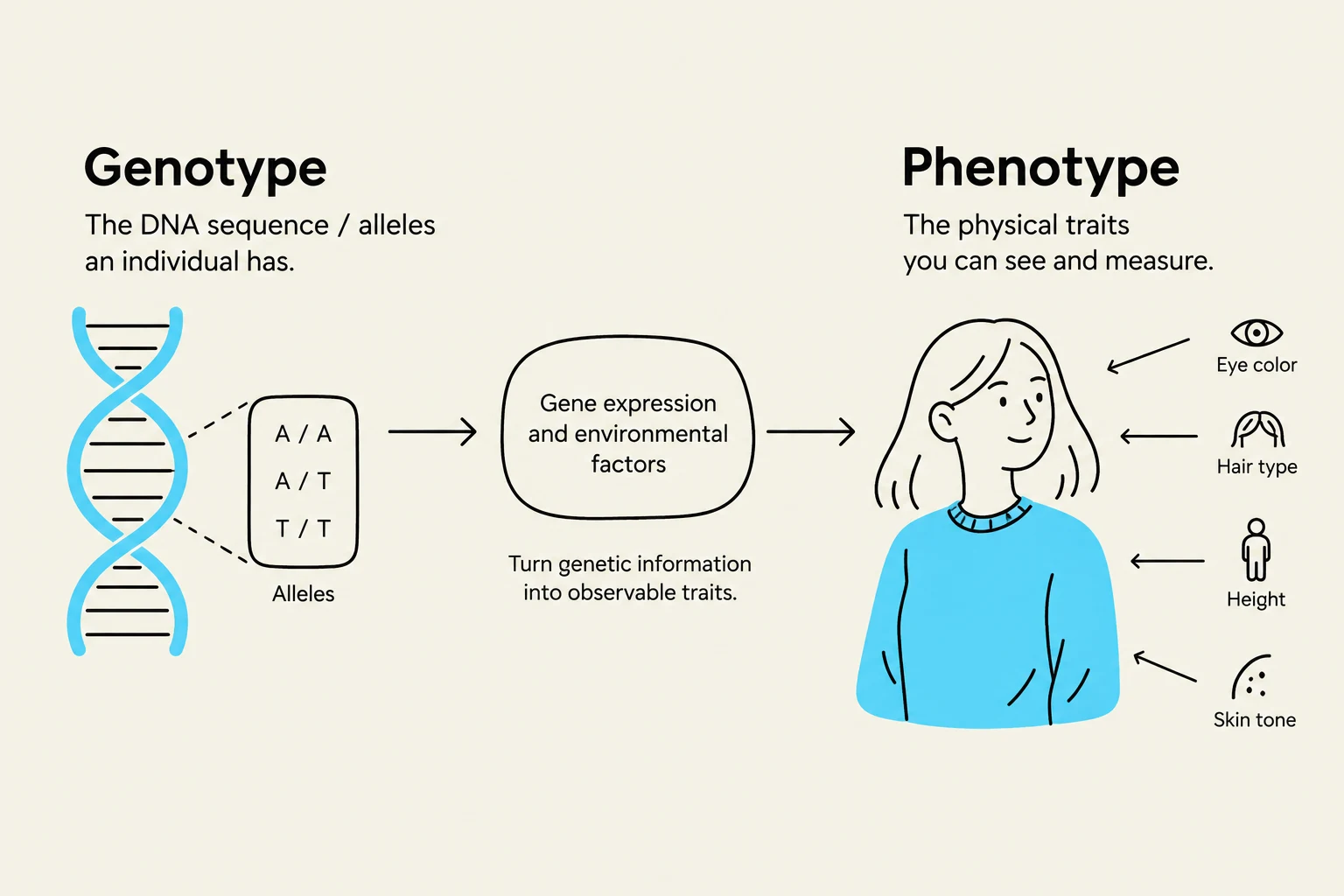
Genotype: The actual genetic information or alleles carried by an individual.
Phenotype: The observable expression of those genes, or the physical characteristics of the individual.
This diagram illustrates the relationship between genotype, which is an individual's DNA sequence or alleles, and phenotype, which are the observable physical traits. It shows how gene expression and environmental factors mediate this transformation, leading to traits like eye color, hair type, height, and skin tone.
Single-Gene Disorders
Single-gene disorders occur when a mutation affects one specific allele. These disorders follow predictable inheritance patterns based on whether the gene is located on an autosome or a sex chromosome.
Autosomal Disorders
Autosomal disorders involve genes located on the non-sex chromosomes. They are categorized by dominance:
Autosomal Dominant: Only one faulty allele is required to express the disorder. If one parent provides the "problem" allele, the child will show the disorder. In these cases, there are no "carriers"—if you have the gene, you have the disease. Examples include Huntington’s disease and Marfan’s syndrome.
Autosomal Recessive: Two faulty alleles are required for the disorder to manifest. If an individual has only one faulty allele, they are a carrier; they do not show clinical symptoms but can pass the allele to their offspring. Common examples include Cystic fibrosis, Phenylketonuria (PKU), and Tay-Sachs disease.
X-Linked Disorders
These mutations occur on the X chromosome. Because males possess only one X chromosome (XY), they are at a significantly higher risk of being affected by recessive traits.
X-Linked Recessive: A male carrying the variant will be affected, whereas a female with one variant gene is typically an unaffected carrier, protected by her second normal X chromosome. Examples include Hemophilia and Color blindness.
X-Linked Dominant: A single copy of the variant is sufficient to cause the disease in both males and females.
Study Tip: The "Gender Rule"
Autosomal = Affects all genders equally.
Dominant = Only one copy needed to show the trait.
X-linked = Extra risk for boys (males).
Chromosomal Disorders
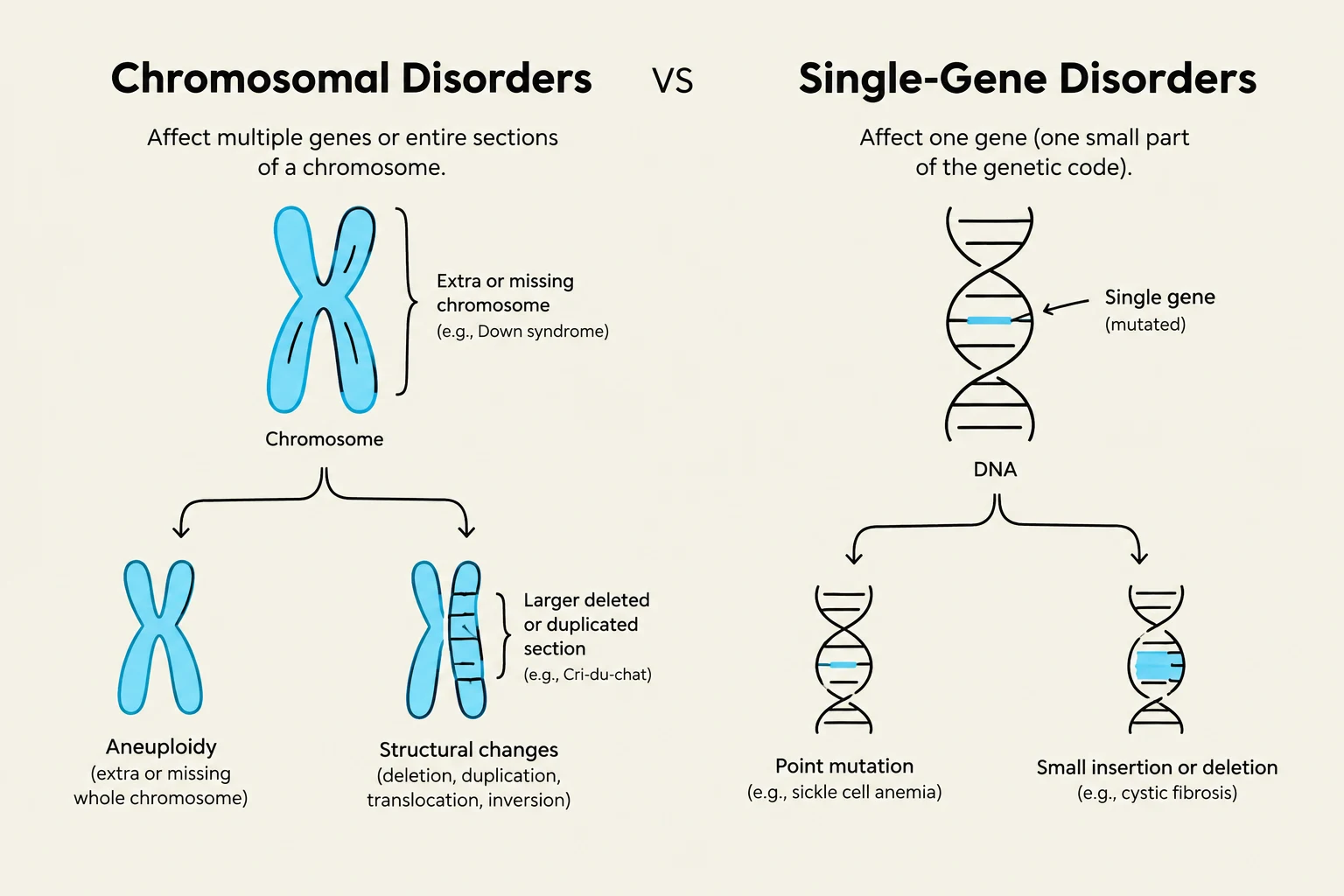
Unlike single-gene disorders, chromosomal disorders involve changes to the structure or number of entire chromosomes. These are typically not inherited from parents but occur as random errors during meiosis (cell division).
Two primary mechanisms cause these errors:
Nondisjunction: The failure of chromosomes to separate properly during cell division.
Translocation: A piece of one chromosome breaks off and attaches to another.
This diagram illustrates the differences between chromosomal disorders and single-gene disorders, providing examples of each.
Common Examples
Disorder
Chromosomal Makeup
Key Characteristics
Down Syndrome
Trisomy 21
Intellectual disability, flat facial profile, hypotonia (loose muscles), and short stature.
Turner Syndrome
XO (Female)
Affects females; results in short stature and infertility.
Klinefelter Syndrome
XXY (Male)
Affects males; results in infertility.
Multifactorial and Developmental Disorders
Not all disorders are caused by a single genetic "glitch." Many arise from a complex interplay of factors.
Multifactorial Disorders
These result from a combination of genetic influences and environmental factors. Examples include cleft palate, congenital heart disease, and Type 2 diabetes mellitus.
Developmental and Congenital Disorders
Congenital disorders are present at birth. While some are genetic, others are caused by teratogenic agents—external substances that damage the embryo or fetus during organogenesis (the formation of organs).
Key risks include:
Teratogens: Drugs, medications (such as acne medications), radiation, or chemicals.
Maternal Infections: Categorized by the TORCH acronym, these infections pose significant risks for fetal anomalies.
Clinical Implications and Diagnostics
Early detection is vital for managing these conditions. Diagnostic tools include:
Prenatal Screening: Alpha-fetoprotein testing, ultrasound, and maternal blood screening.
In Utero Testing: Amniocentesis or chorionic villi sampling to confirm disorders before birth.
Neonatal Testing: Testing newborns for excreted metabolites (e.g., for PKU) or through blood tests.
As science advances, research into gene therapy and proteomics aims to identify specific proteins in metabolic pathways to create "designer drugs." These drugs are tailored to an individual's specific genotype, which may help reduce unwanted side effects and improve treatment efficacy.
Keep reading for free.
Create an account to finish this reading and make it part of your study routine.