


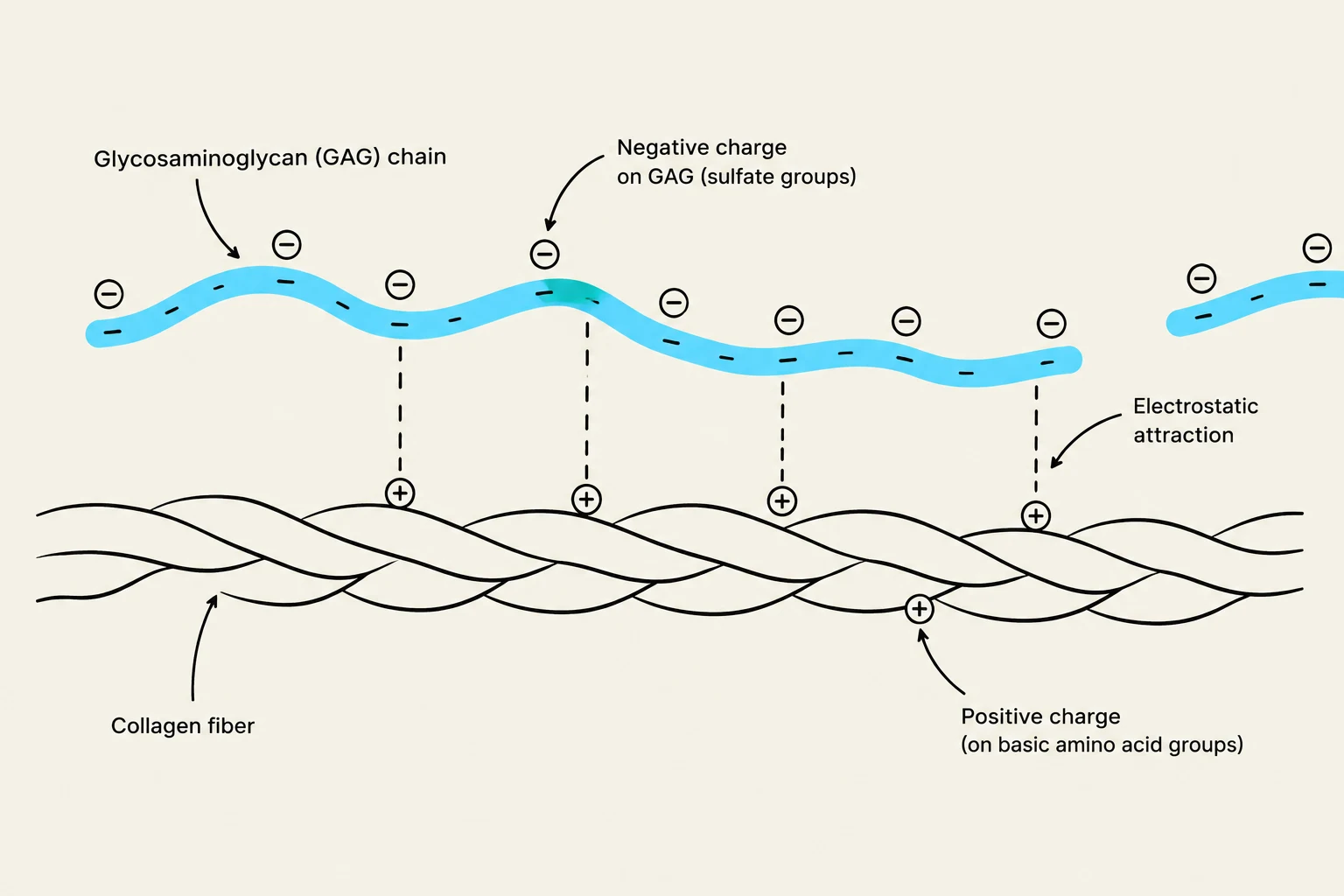
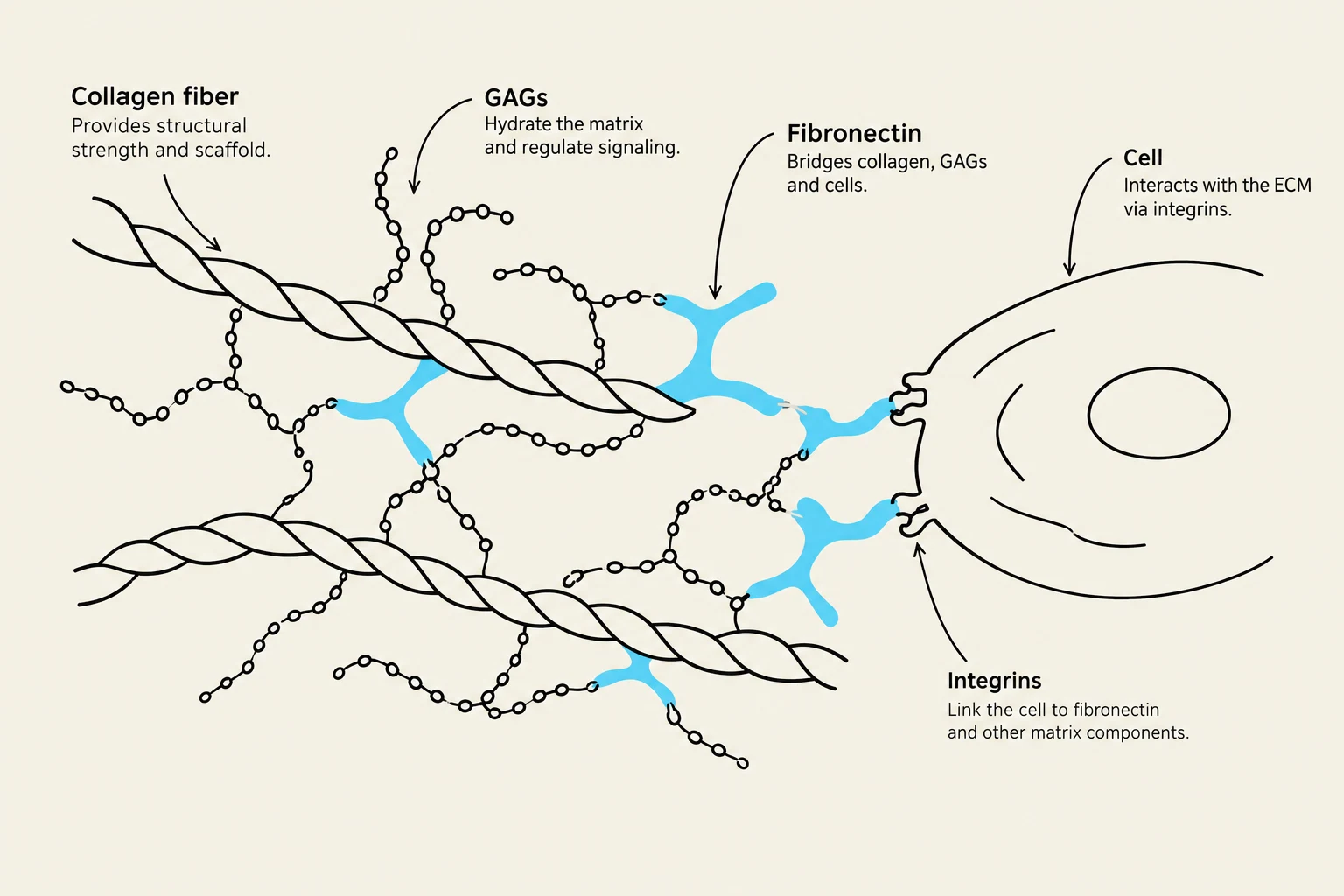
Glycosaminoglycans (GAGs) are essential components of the extracellular matrix (ECM) within connective tissue. These long, unbranched polysaccharide chains play a critical role in providing structural integrity, lubrication, and hydration to various tissues throughout the body. By interacting with other matrix components like collagen, GAGs help define the physical properties of the ground substance, influencing everything from the shock absorption in cartilage to the filtration properties of the basement membrane.
The Molecular Architecture of GAGs
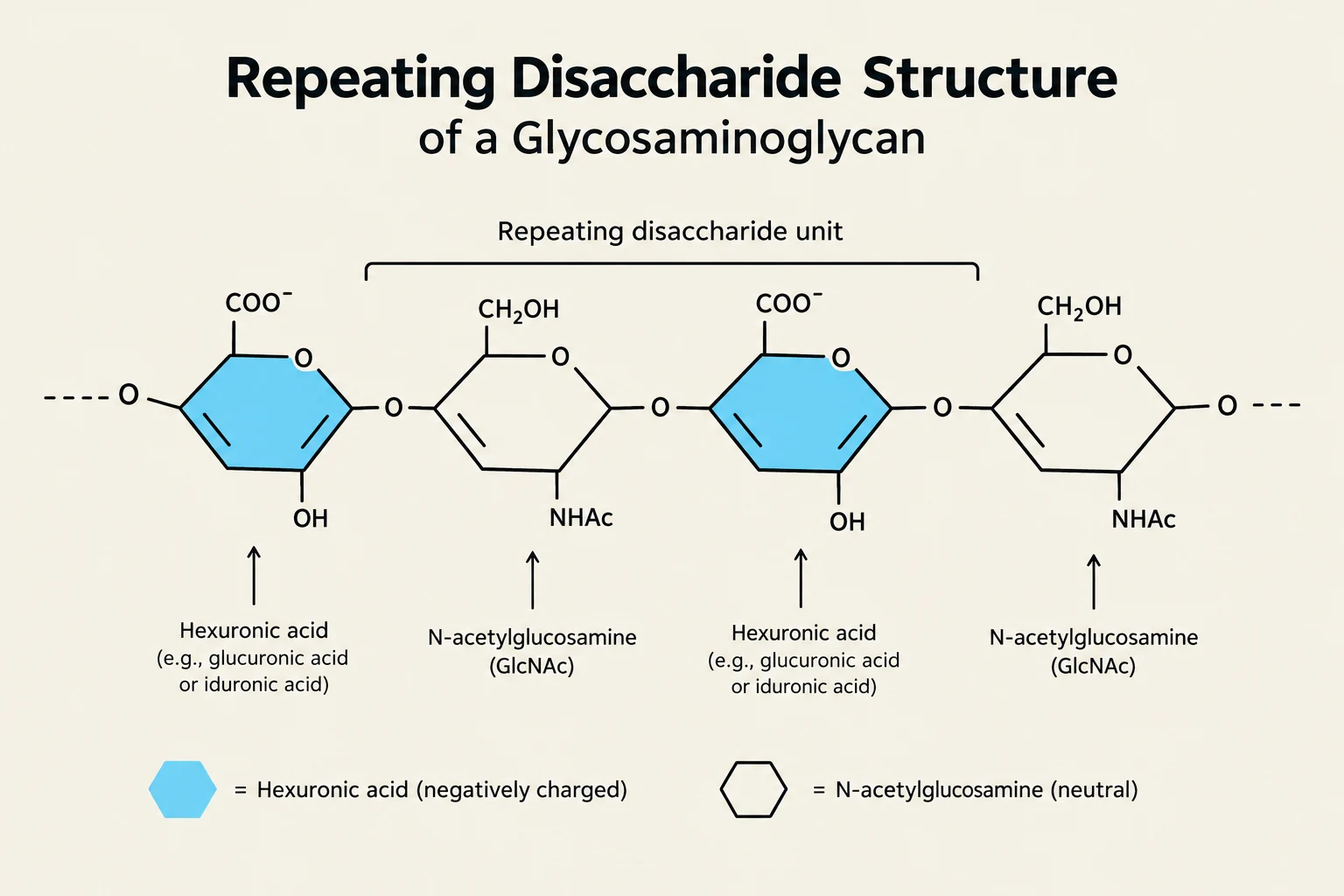
At the most fundamental level, glycosaminoglycans are composed of repeating disaccharide units. This repetitive structure is what allows GAGs to form long, linear chains capable of trapping water and interacting with proteins. Each disaccharide unit typically consists of two different types of sugar molecules:
- A Hexuronic Acid: This is a six-carbon sugar acid, such as -glucuronic acid or -iduronic acid.
- A Hexosamine: This is an amino sugar, such as -glucosamine or -galactosamine.
The specific combination of these two sugars, along with varying degrees of sulfation (the addition of sulfate groups), determines the unique identity, biological function, and distribution of each specific GAG.
Classification and Tissue Distribution
Because of their diverse chemical compositions, different GAGs are specialized for specific physiological roles. The following table summarizes the primary GAGs found in human connective tissue, their chemical makeup, and where they are located:
| Glycosaminoglycan | Hexuronic Acid | Hexosamine | Primary Distribution |
|---|---|---|---|
| Hyaluronic acid | -glucuronic acid | -glucosamine | Umbilical cord, synovial fluid, vitreous humor, cartilage |
| Chondroitin 4-sulfate | -glucuronic acid | -galactosamine | Cartilage, bone, cornea, skin, aorta |
| Chondroitin 6-sulfate | -glucuronic acid | -galactosamine | Cartilage, umbilical cord, skin, aorta (media) |
| Dermatan sulfate | -iduronic or -glucuronic acid | -galactosamine | Skin, tendon, aorta (adventitia) |
| Heparan sulfate | -glucuronic or -iduronic acid | -glucosamine | Aorta, lung, liver, basal laminae |
| Keratan sulfate | -galactose | -glucosamine | Cartilage, nucleus pulposus, annulus fibrosus |
Keep reading for free.
Create an account to finish this reading and make it part of your study routine.
Continue reading freeAlready have an account? Log in
Updated