An introduction to the four major components of fire alarm system reliability: design, equipment, installation, and maintenance. This content explains how these pillars work together to ensure a system's effectiveness in life safety situations.
This diagram illustrates the key components of a fire alarm system and their roles in ensuring reliability, including power supply, control panel, detection devices, and notification devices.
In the field of life safety, there is no room for "mostly functional" equipment. When a fire occurs, a fire alarm system must perform its intended function with absolute certainty. This certainty is what we define as reliability.
According to the 2023 National Electrical Code (NEC) guidelines, reliability is not the result of a single high-quality component or a lucky installation. Instead, it is a synergistic outcome of four interconnected pillars: Design, Equipment, Installation, and Maintenance. If any one of these pillars fails, the entire system's ability to protect life and property is compromised.
The Four Pillars of Reliability
To understand how a system moves from a concept on a blueprint to a life-saving tool in a building, we must examine the four major components of the reliability lifecycle.
1. Design
Reliability begins long before a single wire is pulled. The design phase is the engineering foundation where the system is planned to meet specific safety objectives and building requirements.
A robust design takes into account:
Building Occupancy: Is it a high-rise residential building or a hazardous chemical warehouse?
Detection Requirements: Where are the most likely points of ignition?
Notification Needs: How will occupants be alerted (audible vs. visual)?
Code Compliance: Does the layout meet the legal requirements of the local jurisdiction?
2. Equipment
The second component involves the physical hardware selected for the system. This includes control panels, smoke detectors, heat detectors, pull stations, and notification appliances.
For a system to be reliable, the equipment must be capable of performing its intended functions under various environmental conditions. For example, a smoke detector installed in a dusty industrial environment must be rated for that specific condition to prevent false alarms or failure to detect.
3. Installation
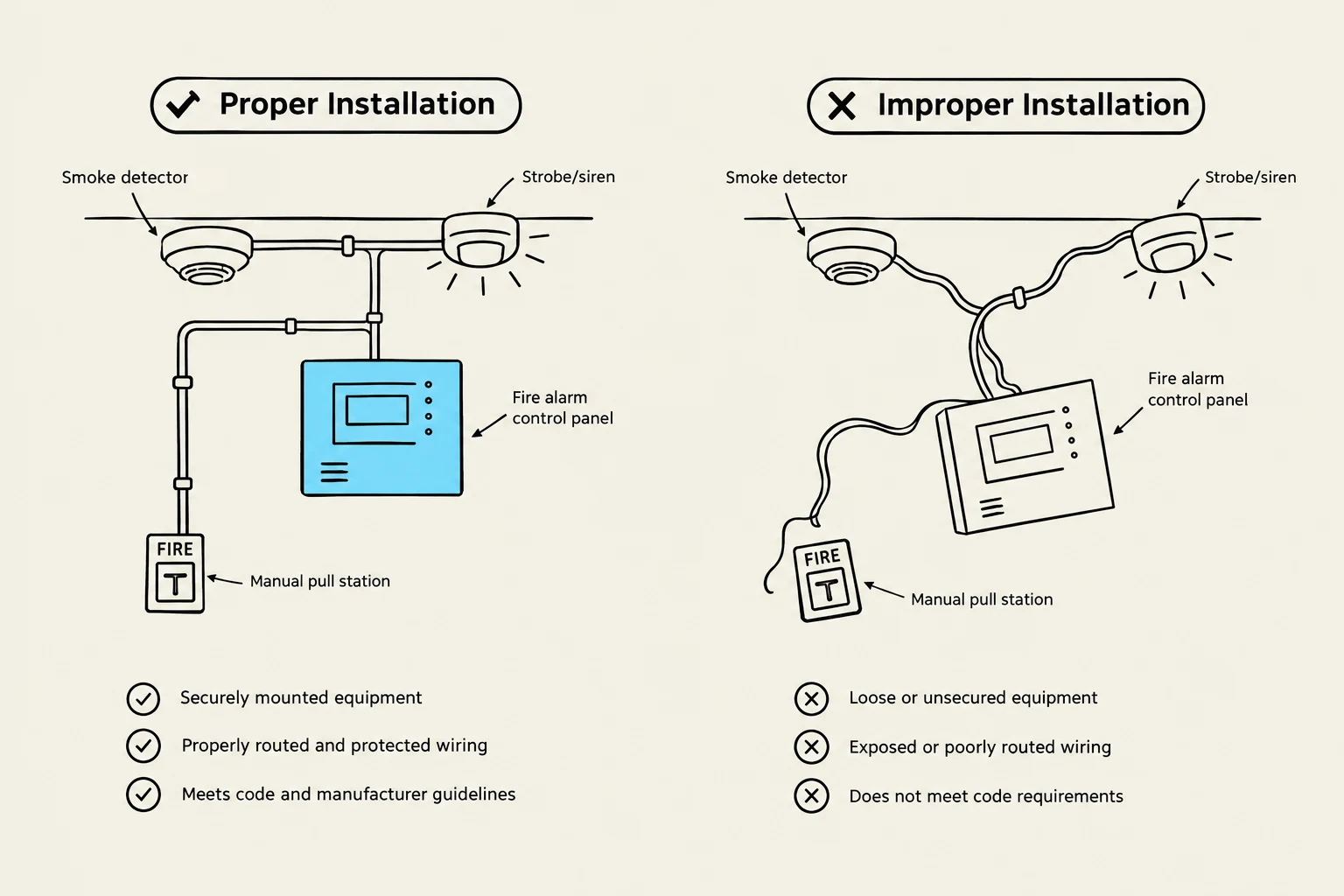
Diagram illustrating proper and improper installation of a fire alarm system, highlighting key differences in equipment mounting, wiring, and adherence to guidelines.
Even the most expensive, high-tech equipment will fail if it is not installed correctly. Installation is the physical implementation of the design and the equipment.
A properly installed system significantly increases the likelihood of correct functionality. This includes:
Proper wire routing and securing.
Correct termination of connections to prevent loose contacts.
Ensuring devices are mounted at the heights and locations specified in the design.
4. Maintenance
Reliability is not a "set it and forget it" achievement; it is a continuous lifecycle process. Maintenance involves the ongoing care, cleaning, and testing of the system to ensure it remains operational and compliant throughout its entire lifespan.
Exam Tip: Remember that reliability is a lifecycle. A system can have a perfect design and premium equipment, but if maintenance is neglected, the system will eventually fail.
Ensuring Compliance: The Framework for Success
To achieve maximum reliability and ensure that a system meets its intended design objectives, practitioners cannot work in a vacuum. They must adhere to several regulatory and technical frameworks.
Codes, Standards, and Specifications
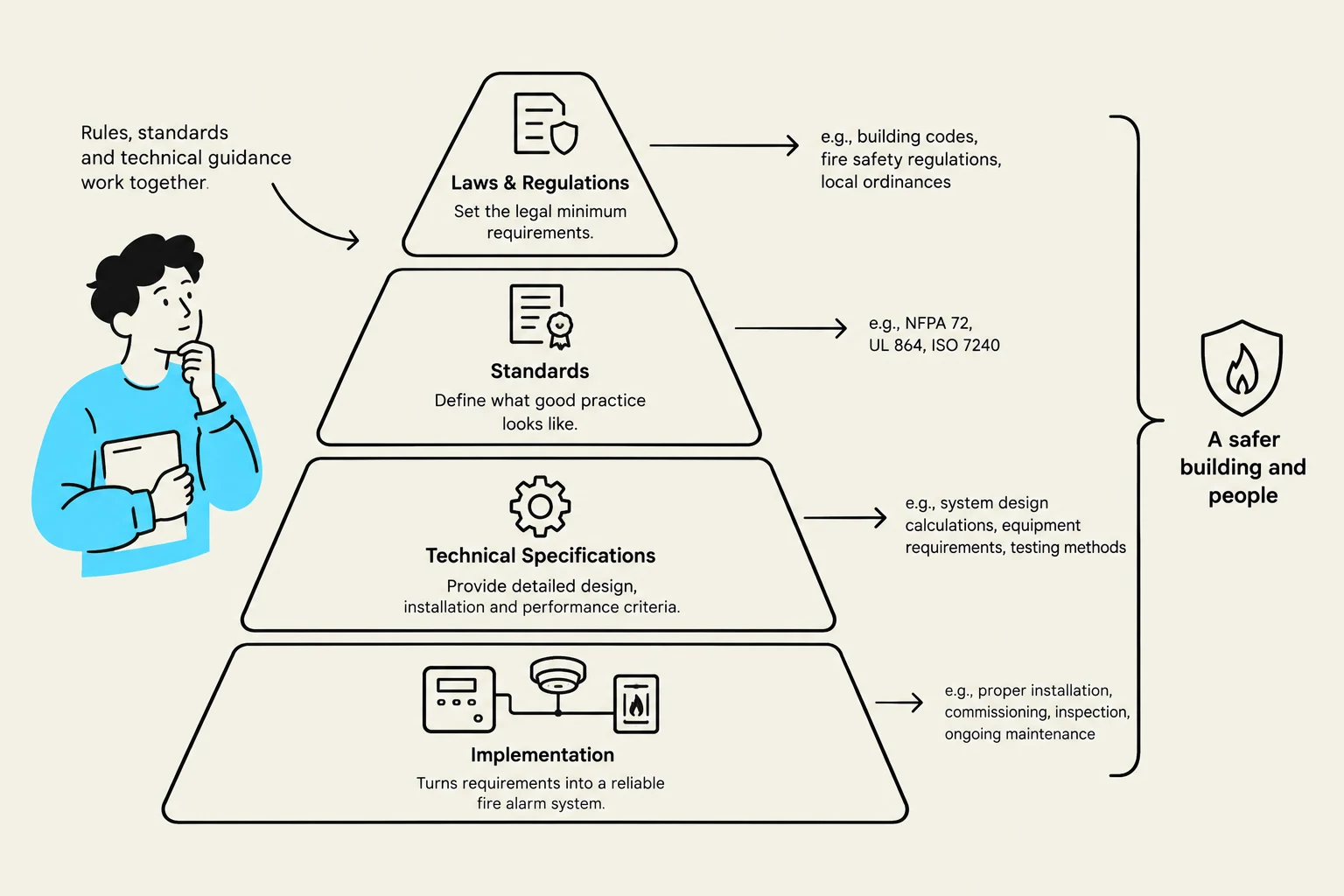
This diagram illustrates the hierarchy of regulations, standards, technical specifications, and implementation for creating a safer building and people, using a fire alarm system as an example.
The "rules of the road" for fire alarm systems are defined by several layers of documentation:
Applicable Codes and Standards: These are the legal and safety frameworks, such as the National Electrical Code (NEC), that dictate how systems must be built to ensure safety.
Specifications: These are the specific technical requirements defined for a particular installation. While a code tells you what is safe, the project specifications tell you exactly how this specific building's system should be built.
Manufacturer's Recommendations
One of the most critical—and often overlooked—aspects of reliability is strict adherence to the manufacturer's instructions. Manufacturers provide specific guidance regarding:
Installation: How to mount, wire, and configure the device.
Maintenance: How to test, clean, and service the device.
Failure to follow these instructions can void warranties and, more importantly, lead to system failures during an actual emergency.
Summary Table: The Reliability Lifecycle
Component
Phase
Primary Goal
Risk of Failure
Design
Planning
Engineering for specific safety objectives
Incorrect coverage or inadequate notification
Equipment
Selection
Choosing hardware capable of the task
Hardware failure or environmental incompatibility
Installation
Implementation
Physical execution of the design
Faulty wiring, loose connections, or improper mounting
Maintenance
Operation
Ongoing testing and care
Component degradation or battery failure
In conclusion, achieving fire alarm system reliability requires a holistic approach. By following applicable codes, standards, specifications, and manufacturer recommendations, technicians and engineers ensure that the system will operate correctly when it is needed most.
Components of Reliability
Keep reading for free.
Create an account to finish this reading and make it part of your study routine.