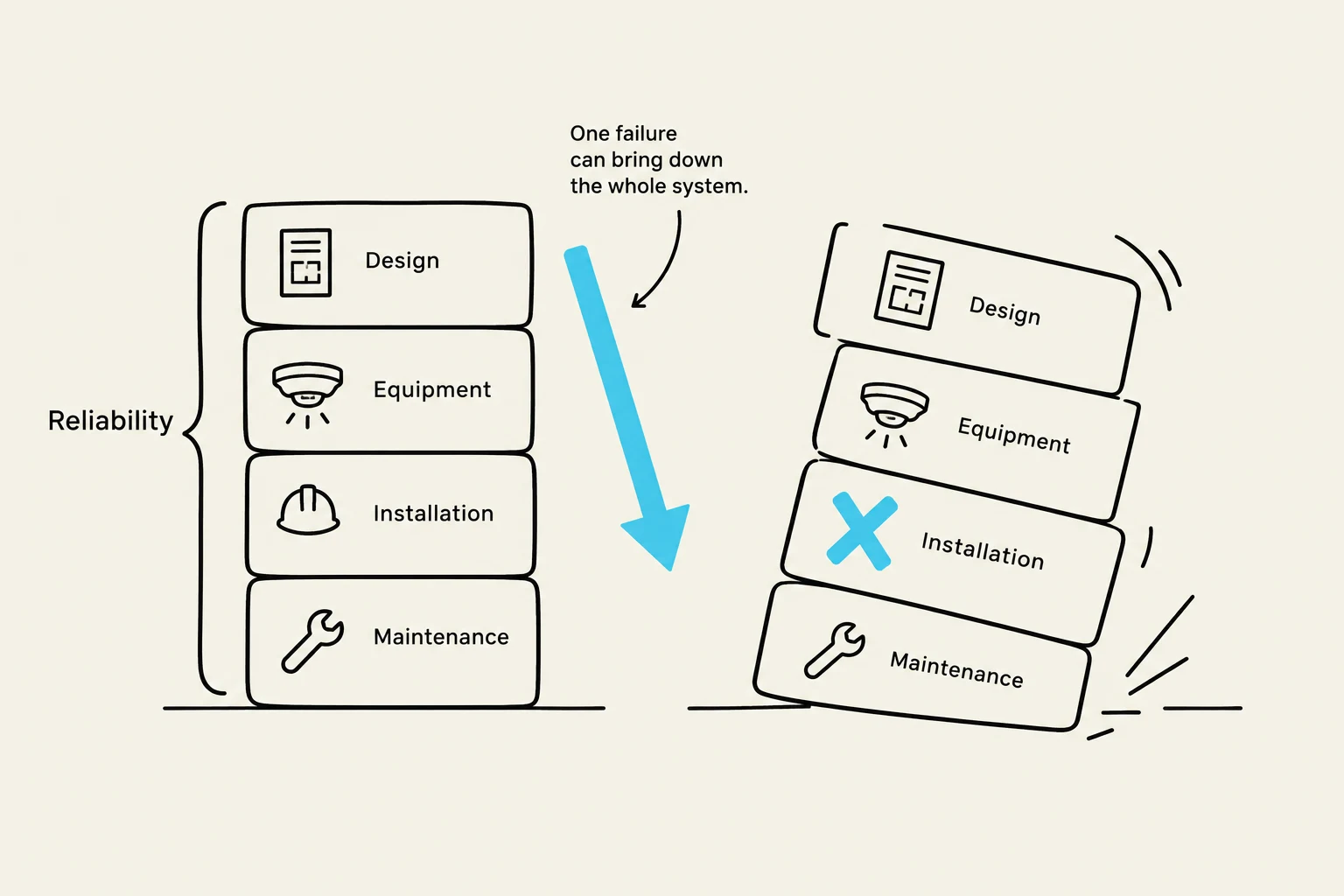
Components of Fire Alarm System Reliability

This content explains the four interconnected pillars of fire alarm system reliability: design, equipment, installation, and maintenance. It emphasizes that all components must function harmoniously throughout the system's lifecycle to ensure correct operation and achieve safety objectives.

Save this reading to your study set

Sign up free

When lives are on the line, the performance of a fire alarm system cannot be left to chance. Fire alarm system reliability is not determined by a single factor; instead, it is the result of four interconnected pillars that must work in harmony. To ensure a system functions correctly and achieves its intended safety objectives, all four components must be addressed throughout the entire lifecycle of the system.

The four interconnected pillars of fire alarm system reliability: Design, Equipment, Installation, and Maintenance.

1. Design

The foundation of reliability begins with the design phase. This is the initial planning stage where the system's architecture is established. A successful design must account for specific safety requirements and the unique environmental conditions of the building it protects. Without a robust design, even the most expensive hardware may fail to provide adequate coverage when needed.

2. Equipment

Diagram illustrating the design and equipment for a fire alarm system, including sensor coverage zones, design requirements, and components like smoke detectors and control panels.
Once the design is set, the physical hardware must be selected to match those requirements. Equipment refers to the technological components used within the system, such as smoke detectors, pull stations, and control panels. The quality and specific technical specifications of these devices are critical to the overall performance of the system.

Keep reading for free.

Create an account to finish this reading and make it part of your study routine.

Continue reading free

Already have an account? Log in

Updated

Study it your way.

Import this reading into your study set to get started with another study mode.

Make it your own.

Keep this reading in a new study set, or add it to one you already use.