


Specific phobia (SP) is a common mental disorder characterized by an excessive, persistent fear of a specific object or situation, leading to active avoidance or intense distress. With a lifetime prevalence of approximately 7.4%, SP can lead to significant functional impairment and may predict the onset of other anxiety disorders, such as panic disorder or OCD. For decades, the gold standard for treating these fears has been exposure therapy. However, a clinical debate persists: is it better to spread exposure over several weeks, or can a single, intensive session achieve the same results?
Understanding Exposure Therapy Approaches
Exposure therapy works by encouraging individuals to systematically confront their feared stimuli to learn that the feared consequences are unlikely to occur, thereby reducing the anxiety response. In clinical practice, this is most effectively delivered via in vivo exposure, which involves direct, real-world confrontation with the feared object or situation.
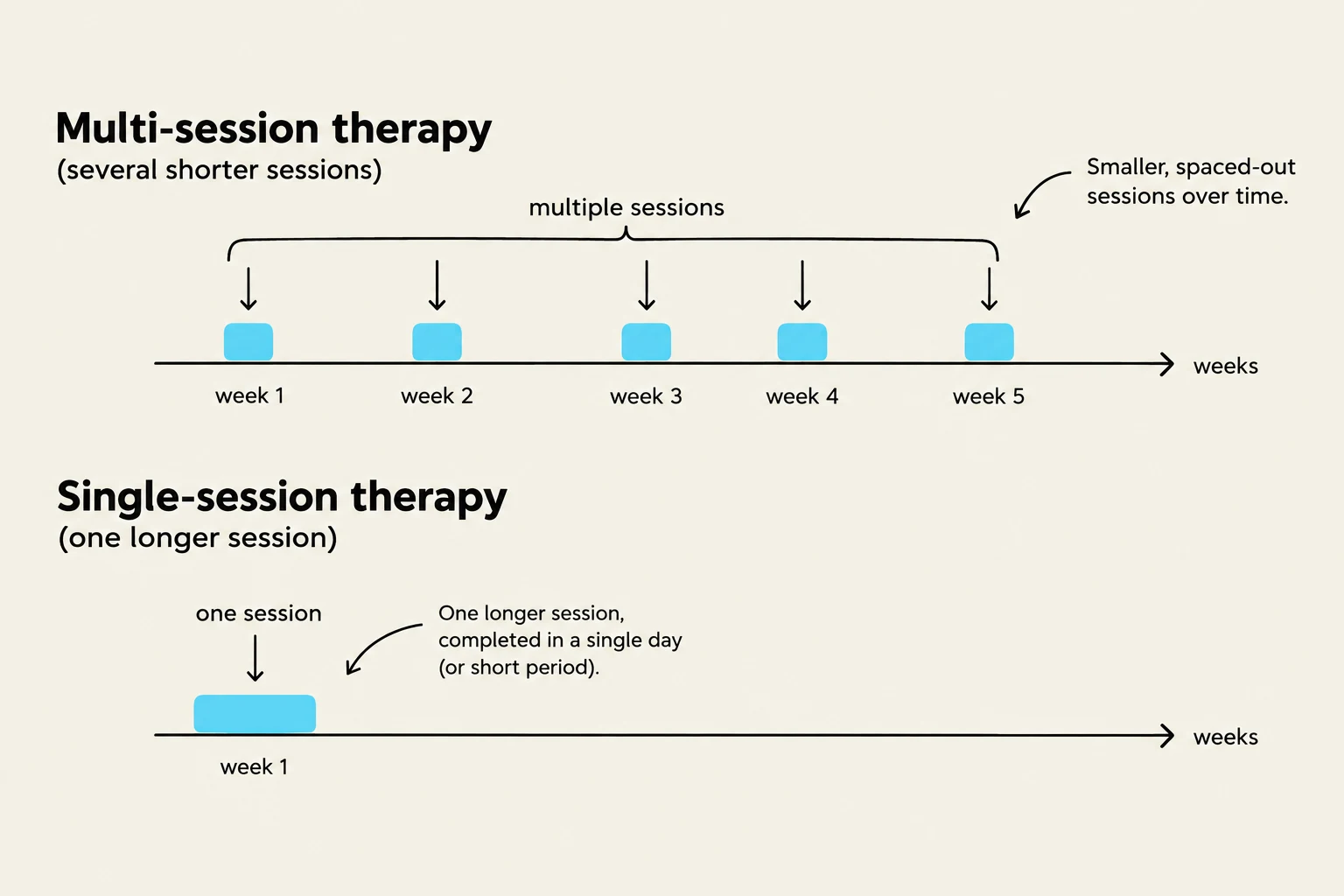
Researchers generally categorize these interventions into two formats:
- Multi-session exposure: This follows a traditional Cognitive Behavioral Therapy (CBT) approach, where exposure tasks are delivered gradually over multiple spaced sessions (e.g., once a week for several weeks).
- Single-session exposure: A prominent example is One-Session Treatment (OST), which involves a series of intensive exposure tasks delivered in a single, prolonged session, typically lasting up to 3 hours.
Student Tip: When distinguishing between these two, focus on the distribution of the stimulus. Multi-session is "spaced," while single-session is "massed" or "concentrated."

Keep reading for free.
Create an account to finish this reading and make it part of your study routine.
Continue reading freeAlready have an account? Log in
Updated