


The formation of a company is a formal legal process that transforms a business concept into a distinct legal entity. This process, known as incorporation, is governed primarily by the Companies Act 2006 (CA 2006) and updated by subsequent legislation such as the Economic Crime and Corporate Transparency Act 2023 (ECCTA 2023). Once a company is incorporated, it gains a separate legal personality, meaning it can own property, enter into contracts, and sue or be sued in its own name.
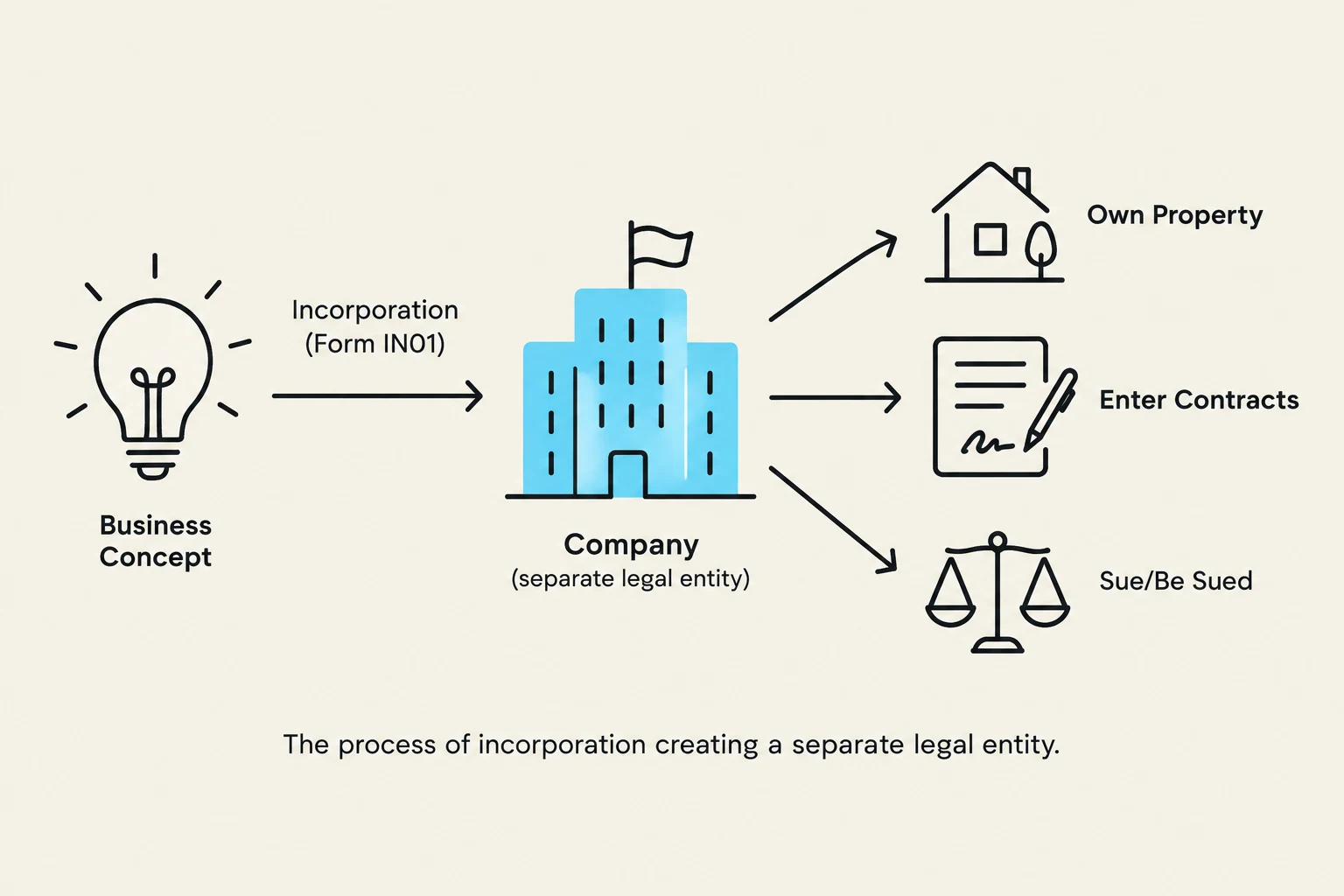
The Incorporation Process
To bring a company into existence, an application must be submitted to Companies House, the UK's registrar of companies. This is typically done using form IN01, which can be filed online, by post, or through authorized software.
The moment the Registrar issues a certificate of incorporation, the company is legally born. This certificate serves as conclusive evidence that all statutory registration requirements have been satisfied.
Key Requirements for Application
During the application process, several critical details must be established:
- Company Name: The proposed name must comply with the Names Regulations 2015. It cannot be identical to an existing name, nor can it be offensive or suggest unauthorized connections to government bodies. Private companies must use endings such as "Limited" or "Ltd," while public companies must use "plc".
- Note on Trading Names: While a company has a registered name, it may also operate under a trading name. However, companies must be careful not to infringe on existing trademarks or engage in "passing off," which occurs when a business misrepresents its goods or services as being those of another.
- Registered Office: Every company must maintain a registered office address within the same part of the UK where it is registered. Under the ECCTA 2023, this must be an "appropriate" address; notably, the use of PO boxes is no longer permitted for this purpose.
- Identity Verification (IDV): Modern regulations have introduced stricter requirements for the individuals behind the company. Directors must now undergo identity verification to enhance corporate transparency and prevent fraud.
Keep reading for free.
Create an account to finish this reading and make it part of your study routine.
Continue reading freeAlready have an account? Log in
Updated