


In the modern business landscape, success is not merely about selling a product; it is about creating a cohesive "game plan" for long-run survival and growth. This process, known as strategic planning, ensures that a company maintains a strategic fit between its internal goals and capabilities and the ever-changing opportunities in the marketing environment. To achieve this, companies must align their high-level corporate vision with specific marketing actions to build deep customer engagement and lasting value.
Strategic Planning and the Mission Statement
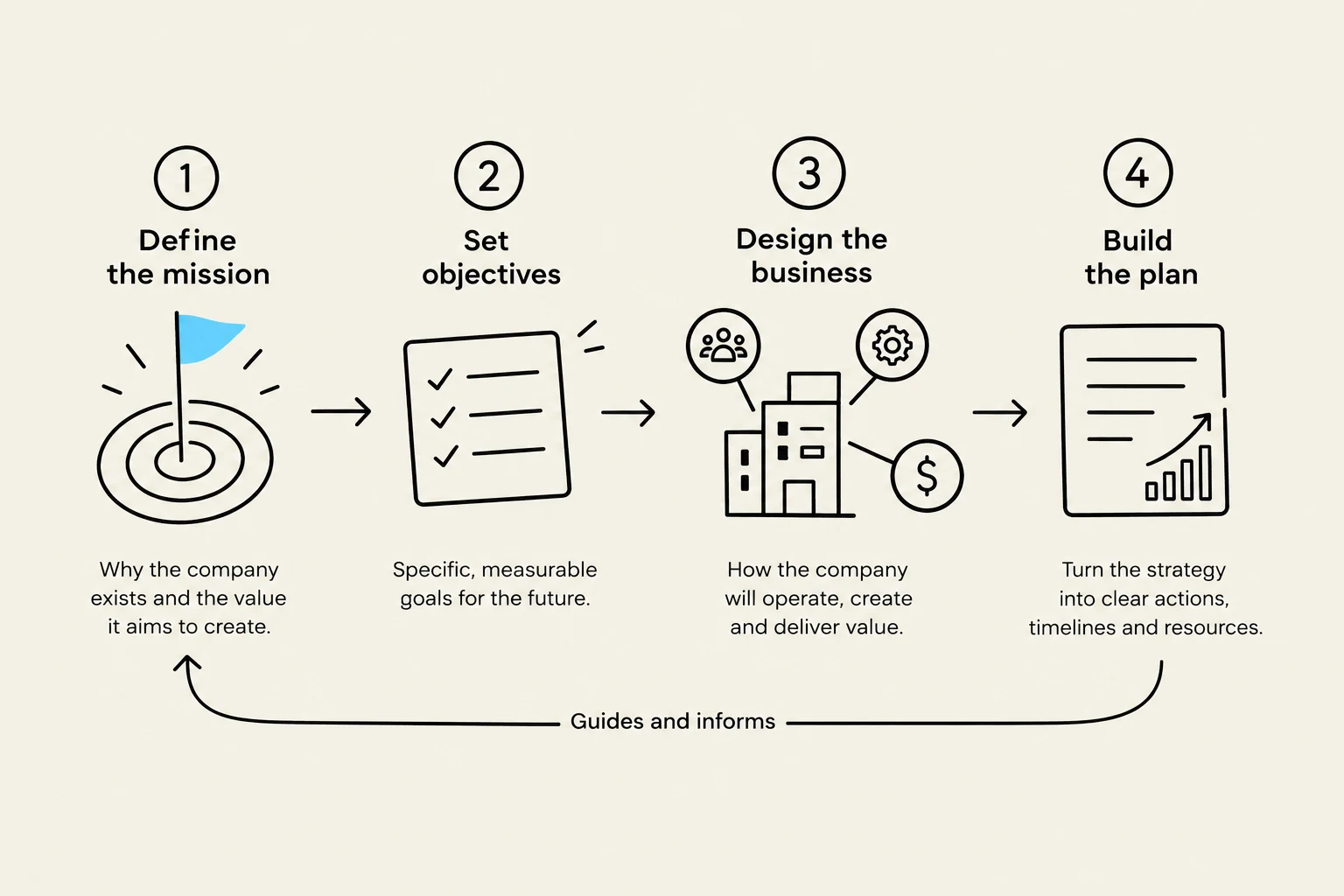
Strategic planning involves a series of steps that move from broad organizational purpose to specific functional plans. The foundation of this process is the mission statement, which defines the organization's purpose.
A successful mission statement should be market-oriented rather than product-oriented. A product-oriented definition focuses on what the company makes, whereas a market-oriented definition focuses on satisfying basic customer needs.
| Company | Product-Oriented Definition | Market-Oriented Definition |
|---|---|---|
| Starbucks | We sell coffee and snacks. | We sell "The Starbucks Experience," enriching lives one extraordinary cup at a time. |
| Walmart | We run discount stores. | We deliver low prices every day to give ordinary folks the chance to buy what the rich buy. |
| Airbnb | We rent places online. | We help create a world where people can "belong anywhere". |
Exam Tip: If a question asks you to identify a "market-oriented" mission, look for answers that focus on the benefit or experience provided to the customer rather than the physical item being sold.
Once the mission is set, the company establishes a hierarchy of objectives and goals, ranging from high-level business objectives to specific marketing objectives.
Keep reading for free.
Create an account to finish this reading and make it part of your study routine.
Continue reading freeAlready have an account? Log in
Updated