


In a perfect market, private goods like wheat or clothing are traded efficiently because they possess two key characteristics: they are excludable and rival in consumption. However, not all goods follow this pattern. When goods lack one of these characteristics, the market often fails to produce the socially optimal amount, leading to either overuse or underconsumption. This article explores two specific categories of market failure: common resources and artificially scarce goods.
The Building Blocks: Excludability and Rivalry
To understand why certain markets fail, we must first define the two attributes used to classify all goods:
- Excludability: This refers to whether a supplier can prevent people who do not pay from consuming the good. For example, if you don't pay for a pair of jeans, the store can prevent you from taking them (excludable). Conversely, it is very difficult to prevent people from benefiting from national defense (non-excludable).
- Rivalry in Consumption: This refers to whether one person's use of a good reduces the ability of others to use it. A cheeseburger is rival; if you eat it, no one else can. Digital music is non-rival; your listening doesn't stop someone else from listening to the same file.
Common Resources: The Problem of Overuse
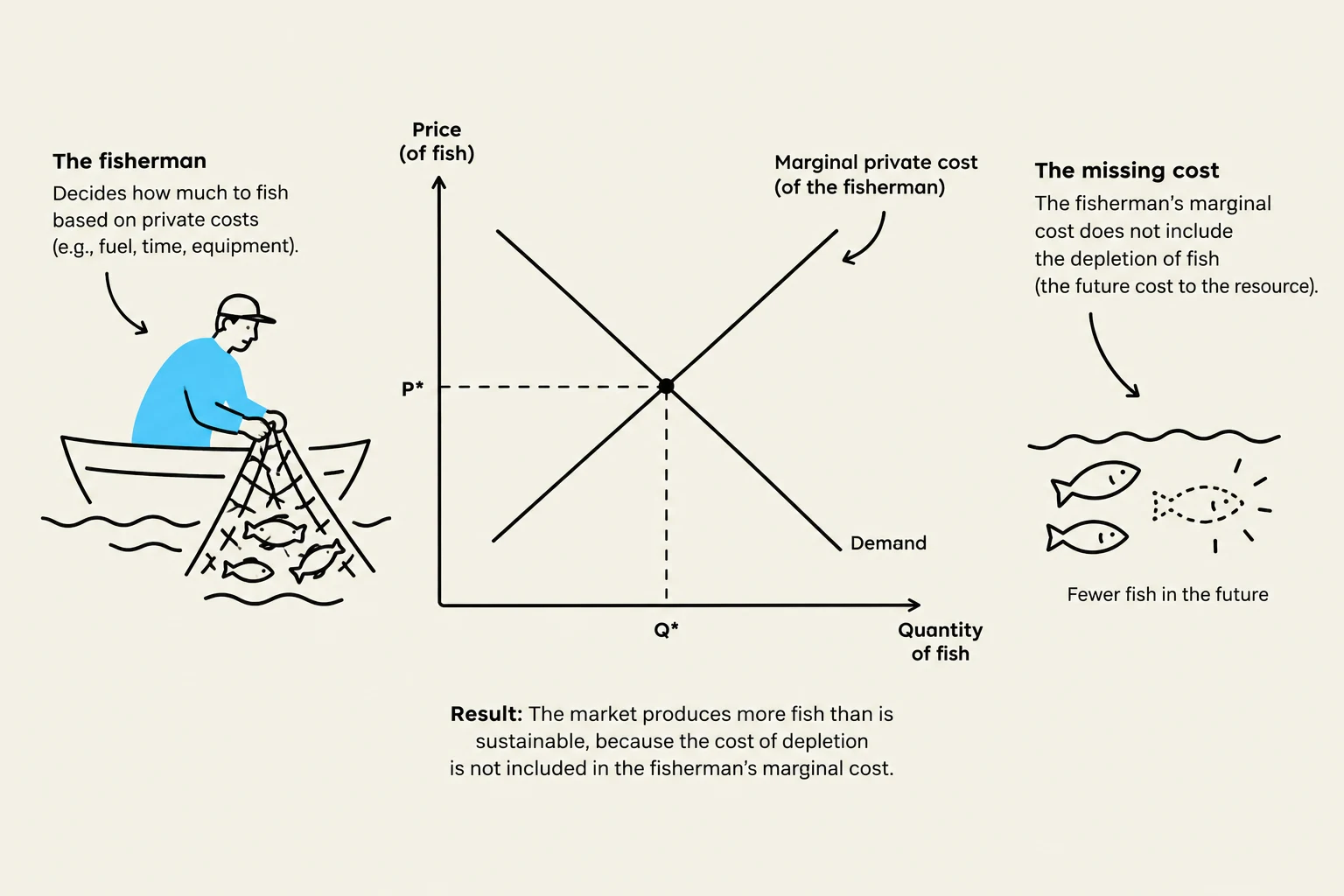
A common resource is a good that is non-excludable but rival in consumption. Because you cannot easily stop people from using the resource, but every user depletes the stock for others, these goods are prone to being overused.
Keep reading for free.
Create an account to finish this reading and make it part of your study routine.
Continue reading freeAlready have an account? Log in
Updated