Cognitive Assessment and Gerontological Nursing Care
This content covers cognitive assessment in gerontological nursing, differentiating between normal aging and pathological conditions like delirium, dementia, and depression. It details assessment components, standardized tools, and the importance of person-centred care and caregiver support.
As the global population ages, gerontological nursing has become an increasingly vital field. Nurses play a pivotal role in promoting the health and well-being of older adults by navigating the complex intersection of physiological changes, cognitive health, and psychosocial support. Central to this role is the ability to distinguish between normal age-related changes and pathological conditions, such as dementia, through precise assessment and compassionate, person-centred care.
Understanding Cognitive Impairment
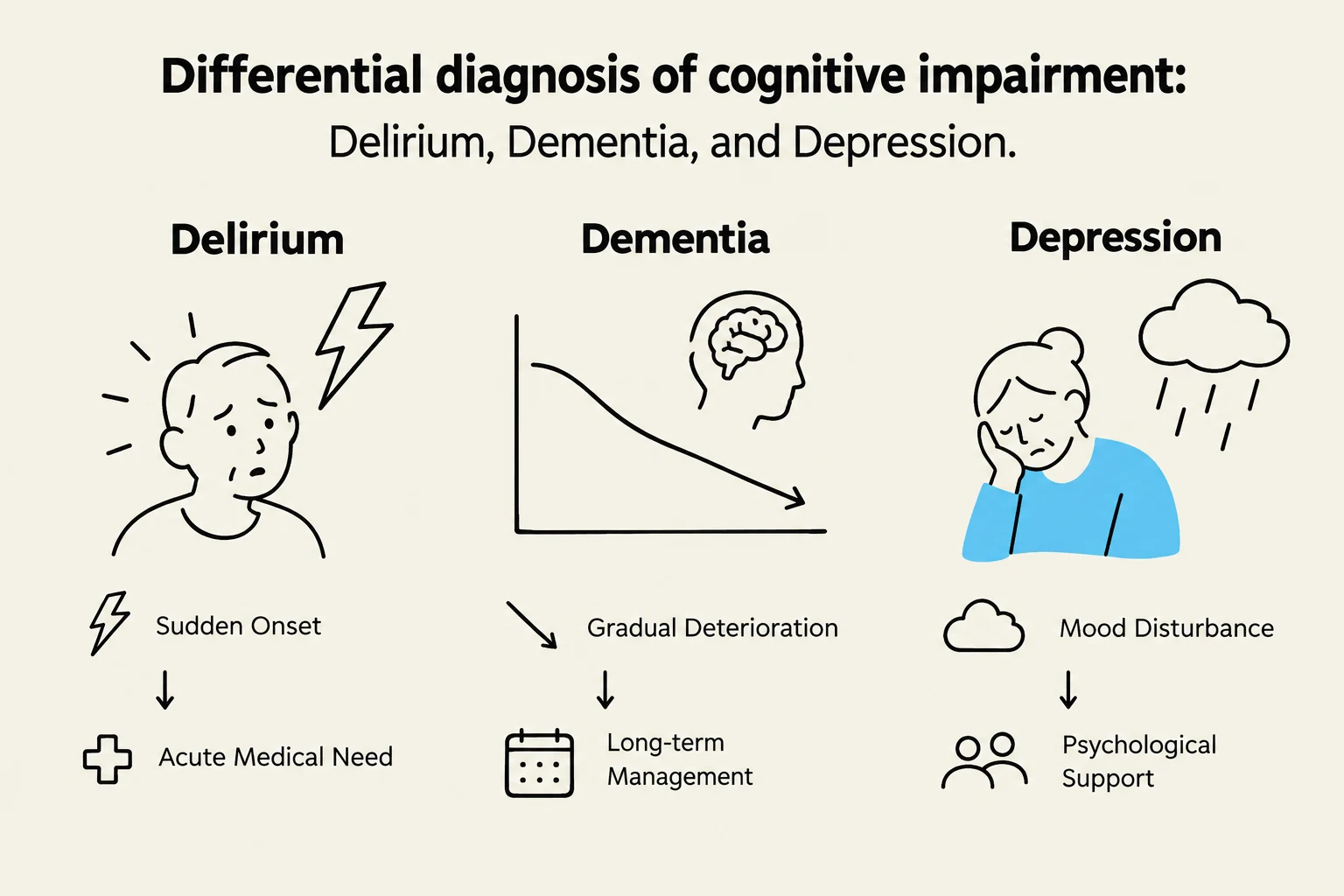
This diagram illustrates the differential diagnosis of cognitive impairment, distinguishing between Delirium, Dementia, and Depression based on their onset, progression, and management.
A common misconception in healthcare is that cognitive decline is an inevitable part of aging. While structural and physiological changes in the brain occur naturally as people age, symptoms such as disorientation, loss of language skills, inability to calculate, or poor judgment are not normal changes.
Nurses must be able to differentiate between several distinct conditions that affect cognition:
Delirium: An acute state of confusion characterized by a sudden onset.
Dementia: A generalized impairment of intellectual functioning involving gradual deterioration.
Depression: A mood disturbance characterized by feelings of sadness and despair, which can often mimic cognitive decline.
Identifying these differences is essential for determining whether a patient requires acute medical intervention (for delirium), long-term management (for dementia), or psychological support (for depression).
The Process of Cognitive Assessment
The Clock Drawing Test (CDT) assessment process illustrates the difference between a correct and an impaired clock drawing, highlighting features like circularity, number spacing, and hand alignment.
When an older adult experiences a change in cognitive function, a thorough assessment is required to identify specific pathological conditions. However, nurses must approach this task with extreme sensitivity. For many older adults, being "tested" can feel intrusive, intimidating, fatiguing, or offensive. Therefore, the nurse must prioritize appropriate timing—ensuring the patient is not overly tired or distressed—and use a gentle, respectful approach.
Components of a Comprehensive Assessment
A complete cognitive evaluation is not a single test but a multi-faceted investigation of several domains:
Level of Consciousness (LOC): Determining if the patient is alert and responsive.
Orientation: Assessing if the person knows who they are, where they are, and what the current date/time is.
Memory Assessment: Evaluating various types of memory (e.g., short-term vs. long-term).
Attention and Concentration: The ability to focus on a specific task or stream of information.
Abstract Reasoning: The ability to think conceptually rather than just literally.
Problem Solving: The capacity to navigate logical challenges.
Standardized Assessment Tools
To ensure accuracy and consistency, nurses utilize several validated tools:
Tool
Primary Use
Mini-Mental State Exam (MMSE)
A widely used standardized test for cognitive impairment.
Clock Drawing Test (CDT)
Evaluates executive function, visuospatial skills, and abstraction.
Mini-Cog
A brief screening tool often used in clinical settings.
Geriatric Depression Scale (GDS)
Specifically designed to screen for depression in older adults.
Confusion Assessment Method (CAM/CAM-ICU)
Used to identify delirium in clinical settings.
Nursing Tip: When performing assessments like the Clock Drawing Test (CDT), observe not just the final product, but the process the patient uses. Do they struggle with the numbers? Do they place the hands correctly? These observations provide vital clues about specific cognitive deficits.
Person-Centred Care and Activities of Daily Living (ADLs)
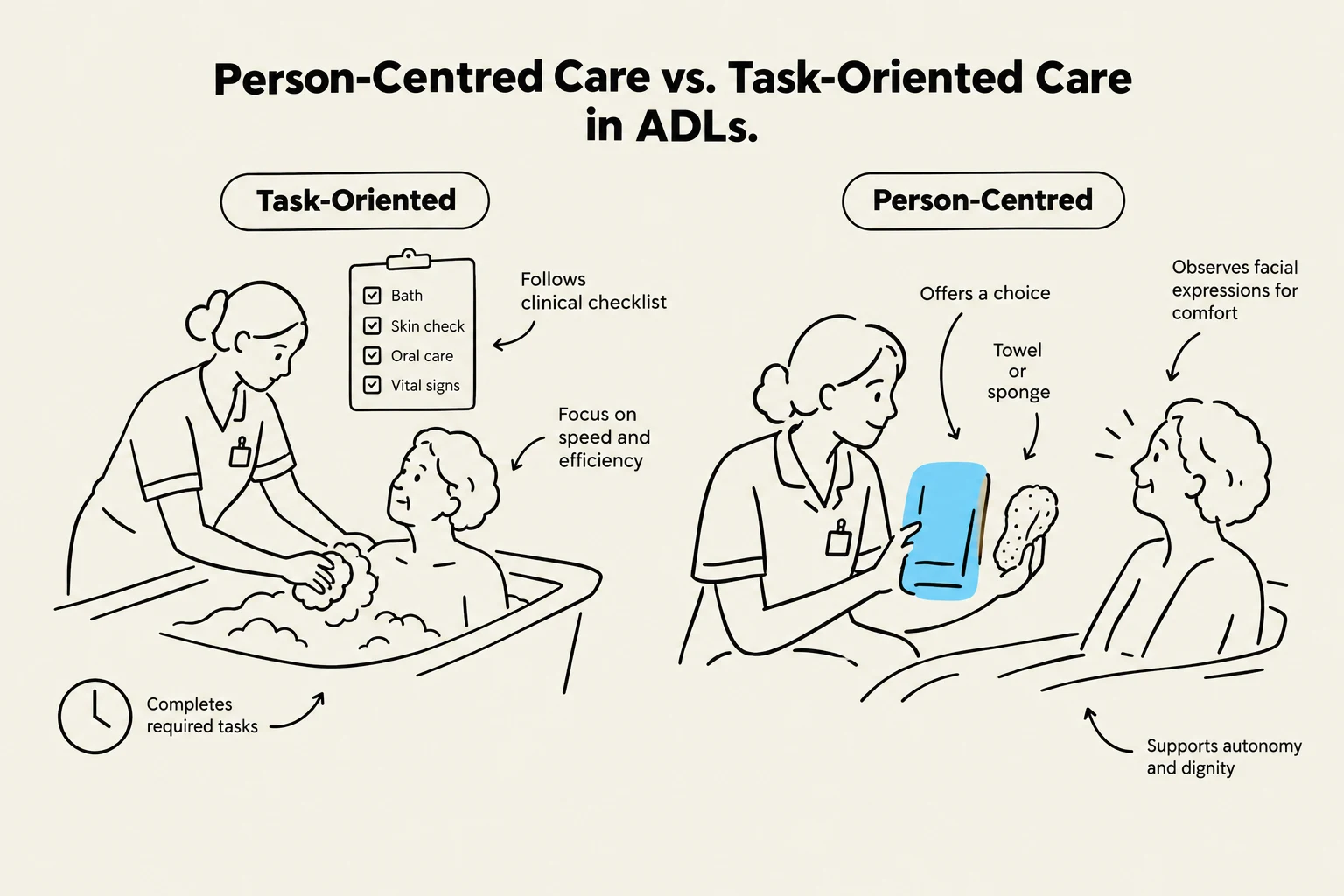
This illustration contrasts task-oriented care, which focuses on completing required tasks efficiently, with person-centered care, which prioritizes patient choice, comfort, autonomy, and dignity.
In gerontological nursing, the gold standard of practice is Person-Centred Care. This model shifts the focus away from the disease or the clinical tasks that must be completed and moves it toward the individual. The goal is not simply to "do things to the person," but to understand the person and enhance their overall quality of life.
This approach is most evident when assisting with Activities of Daily Living (ADLs), such as bathing or dressing. To provide person-centred care during ADLs, nurses should:
Respect Routines: Learn and honor the person's lifetime bathing preferences and schedules.
Promote Independence: Encourage self-care to the greatest extent possible to maintain dignity and function.
Respect Autonomy: If a person refuses to participate in care, respect that refusal and take the time to explain the necessity of the action.
Prioritize Comfort: Be attentive to pain and use alternative methods, such as sponge baths, if a full bath is too taxing.
Supporting the Environment and the Caregiver
Care for an individual with dementia extends beyond the patient to include their physical surroundings and their support network.
Environmental Alterations
The environment plays a significant role in managing the symptoms of dementia. Environmental alterations can be made in both private homes and institutional settings to reduce confusion and increase safety. Many healthcare facilities have developed Special Care Units (SCUs) specifically designed to meet the unique sensory and cognitive needs of people living with dementia.
The Vital Role of Family Caregiving
In Canada, the vast majority of people living with dementia reside in the community rather than in long-term care facilities. This means that the burden of care falls heavily on family members and friends.
Nurses must recognize that Family Caregivers of people with dementia face unique challenges. They are at a significantly higher risk for depression and physical health problems compared to caregivers of individuals with other chronic illnesses. Because of the immense emotional and financial strain, effective nursing intervention should include caregiver intervention programs that utilize bundled interventions to support the health of the caregiver as much as the patient.
Keep reading for free.
Create an account to finish this reading and make it part of your study routine.