An overview of the Code of Ethics for dental hygiene, covering national and provincial frameworks, core ethical principles such as beneficence, autonomy, integrity, accountability, privacy, and professionalism, as well as competence, reporting, and an ethical decision-making model.
In the field of dental hygiene, clinical skill is only one part of being a professional. To provide high-quality care, practitioners must navigate complex social, legal, and personal dilemmas that arise in the clinic every day. This is where the Code of Ethics becomes essential. A Code of Ethics is a set of rules or guidelines that address the ethical principles and standards of a profession to guide practice. It serves multiple purposes: it guides the practitioner, provides a resource for education and self-reflection, informs the public about professional standards, and promotes professional accountability.
National vs. Provincial Frameworks
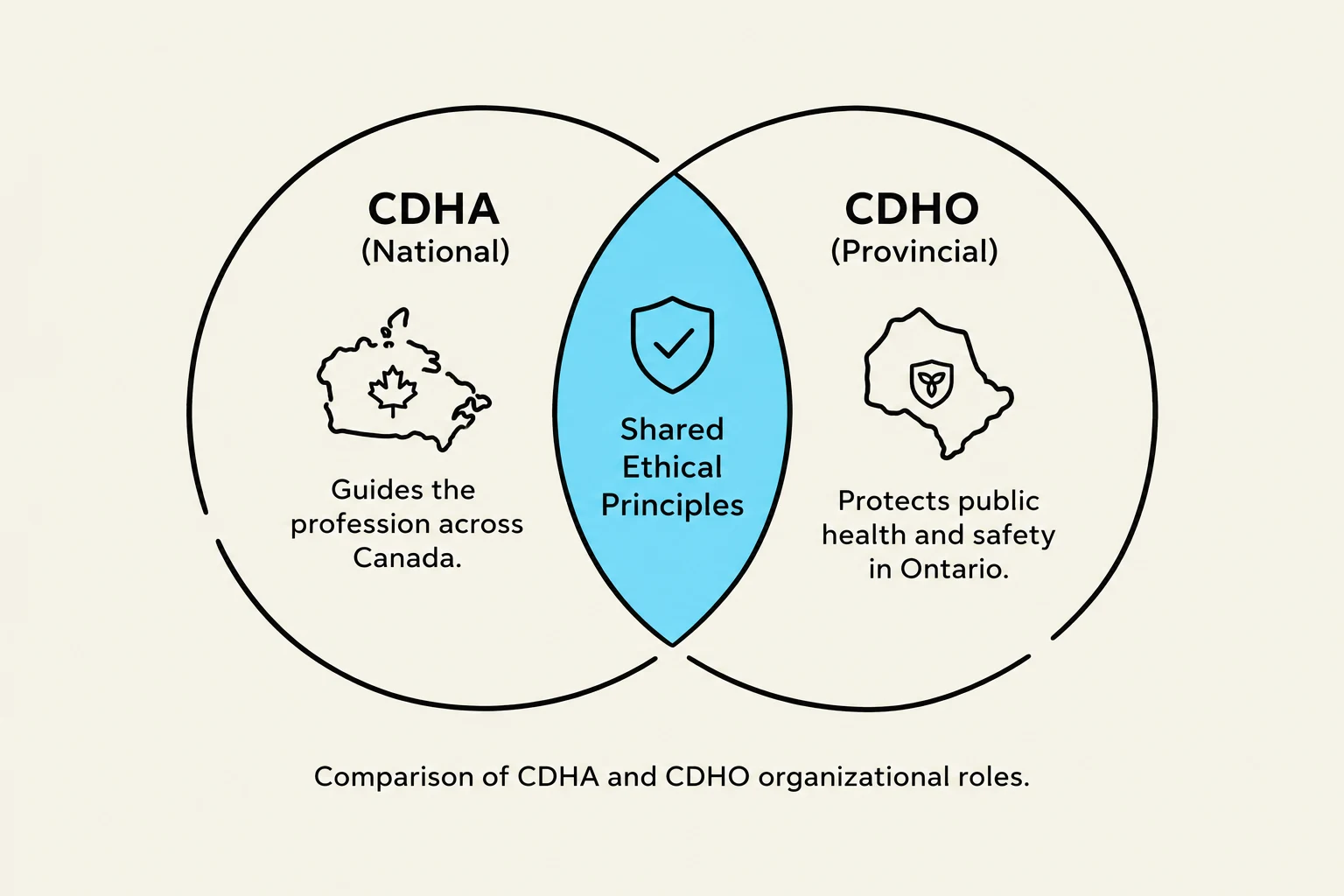
This Venn diagram illustrates the distinct and shared roles of CDHA (National) and CDHO (Provincial) organizations, highlighting CDHA's guidance of the profession across Canada and CDHO's protection of public health and safety in Ontario, with both organizations adhering to shared ethical principles.
It is important to understand that while there is a national framework, specific regulations may vary depending on your location.
The Canadian Dental Hygiene Association (CDHA) provides the national Code of Ethics, which is intended to guide ethical practice throughout the entire dental hygiene profession across Canada.
In Ontario, the College of Dental Hygienists of Ontario (CDHO) has adopted and endorsed the CDHA’s principles, but they apply them with a specific focus: to protect the health and safety of the public in Ontario. While the core values are similar, the way they are categorized and emphasized can differ between the two organizations.
Exam Tip: If you are testing on provincial standards, remember that the CDHO's primary purpose is the protection of the public in Ontario, whereas the CDHA serves as a guide for the profession across Canada.
The Core Ethical Principles
The foundation of ethical dental hygiene practice is built upon several key principles. While the CDHA and CDHO use slightly different terminology and ordering, they share the same ethical heart.
Beneficence
Beneficence is the obligation to promote the well-being of others and "do no harm". For a dental hygienist, this means using your knowledge and skills to help clients achieve and maintain optimal oral health. Modern practice also emphasizes providing care in a culturally safe environment and promoting equitable access to care.
Autonomy
Autonomy recognizes the client's right to make their own decisions. To support autonomy, a hygienist must communicate relevant, truthful, and open information. This allows the client to make informed choices and participate actively in their own oral health journey.
Integrity (CDHA Focus)
The CDHA places a strong emphasis on integrity. This principle relates to the consistency of a practitioner's actions, values, and methods. It involves promoting fairness and social justice, particularly for vulnerable clients, and acting with honesty and truthfulness.
Accountability
Accountability means accepting responsibility for your actions and your omissions (what you failed to do). Practitioners must act in accordance with professional standards, laws (such as the Dental Hygiene Act, 1991), and regulations. This principle also includes the duty to engage in self-evaluation and to be evaluated by others.
Privacy and Confidentiality
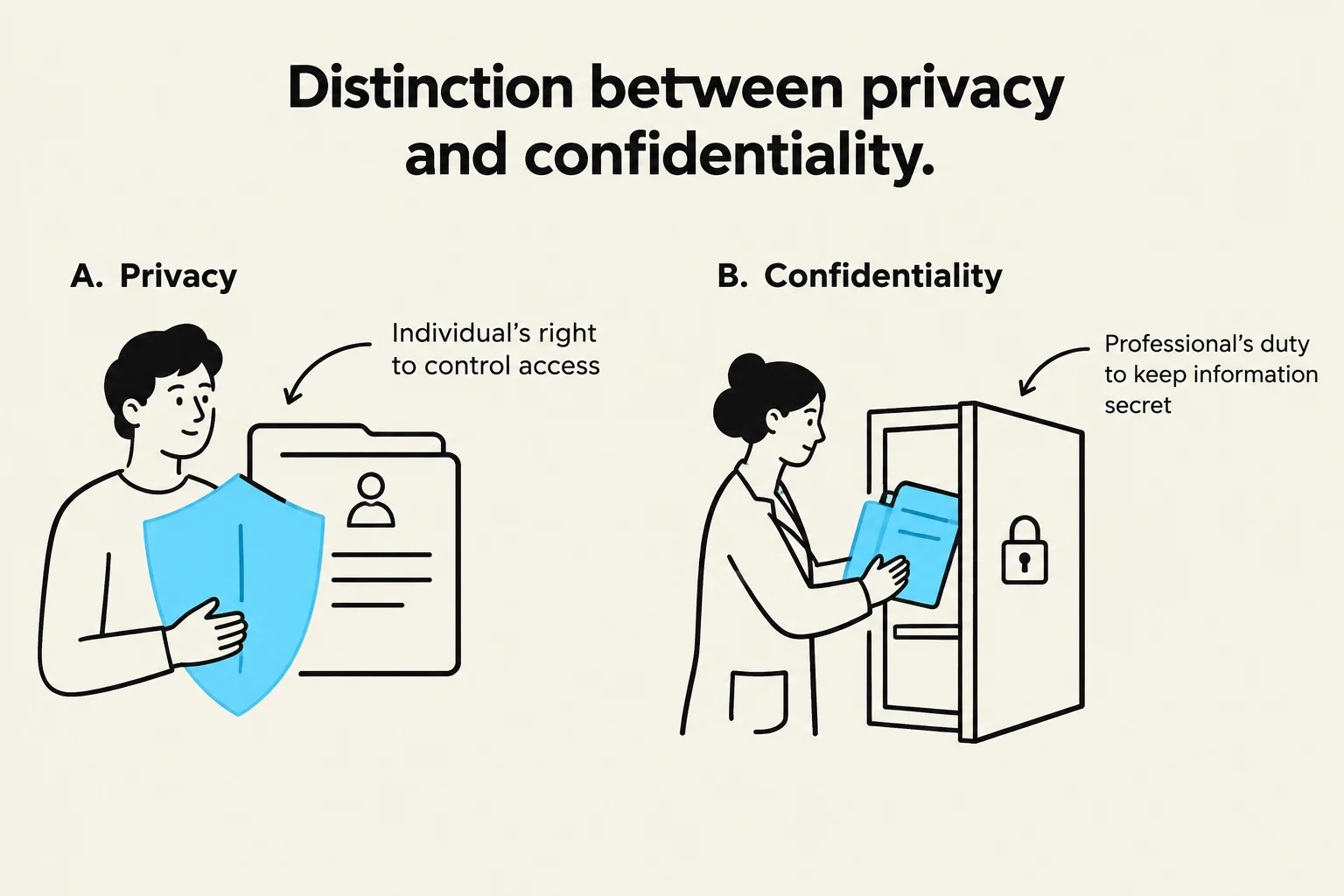
This illustration differentiates between privacy, defined as an individual's right to control access to their information, and confidentiality, which is a professional's duty to keep information secret.
These two concepts are closely linked to a client's right to control their personal information.
Privacy: The right of an individual to decide how their personal life or information is accessed.
Confidentiality: The professional duty to keep secret any information acquired during the professional relationship.
Professionalism (CDHO Focus)
The CDHO emphasizes professionalism as a commitment to using and advancing professional knowledge and skills to serve the client and the public good. This is demonstrated through individual practice and collective participation in quality assurance programs.
Competence and Reporting
Ethical practice is inseparable from competence. Dental hygienists are obligated to ensure they are practicing within their scope of practice and maintaining the necessary skills to provide safe care.
Furthermore, part of being an accountable professional involves reporting unethical conduct. This ensures that the standards of the profession are upheld and that the public remains protected from harm.
The Ethical Decision-Making Model
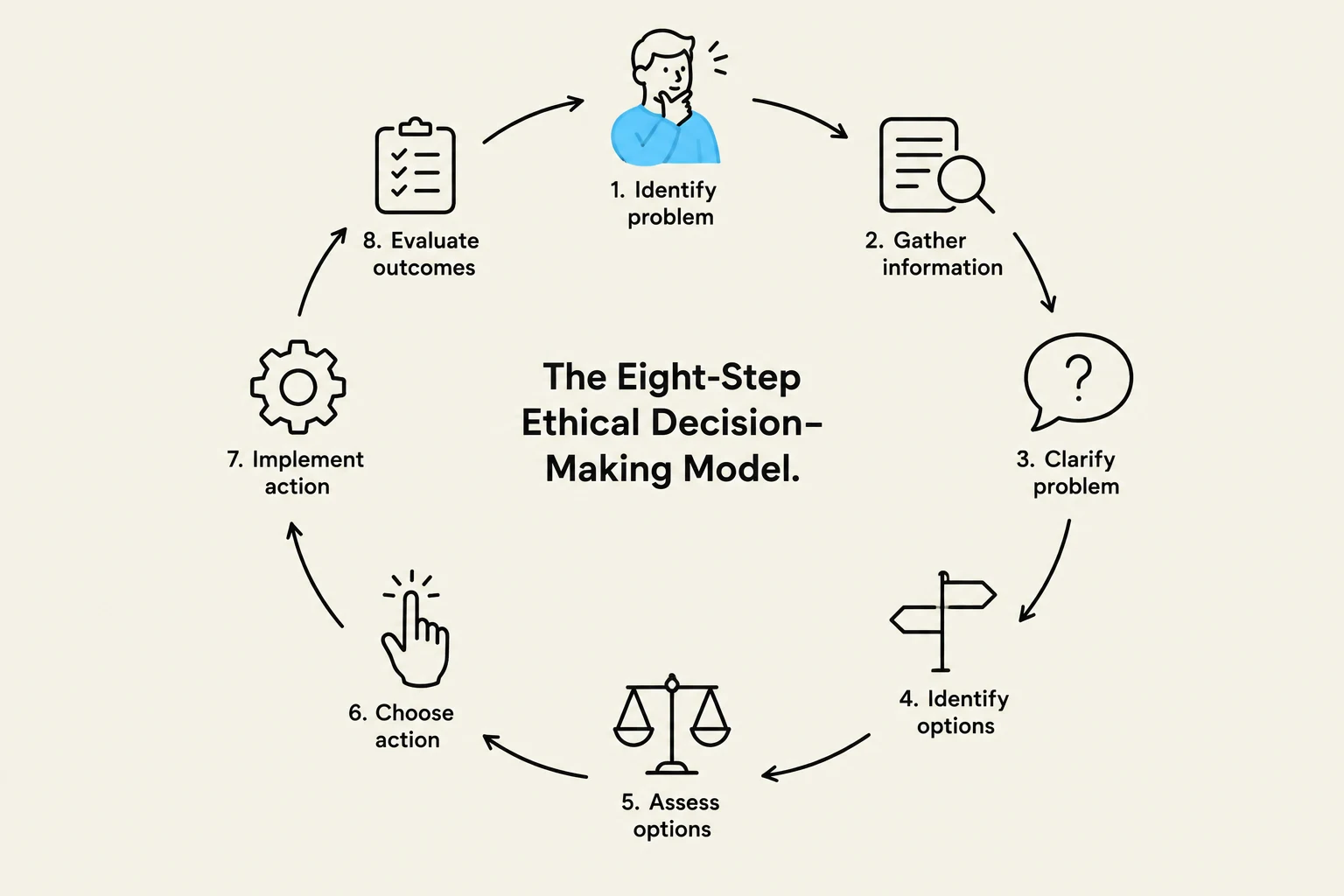
The Eight-Step Ethical Decision-Making Model illustrates a cyclical process for making ethical choices, starting with problem identification and ending with outcome evaluation.
In clinical practice, you will inevitably encounter "ethical dilemmas"—situations where two or more principles might conflict. To navigate these, the CDHO recommends an eight-step Ethical Decision-Making Model:
Identify the problem: Recognize the nature of the challenge or problem.
Gather information: Collect facts, relevant laws, regulations, and the views of stakeholders.
Clarify the problem: Elaborate on the problem and identify which ethical principles are at stake.
Identify options: Brainstorm the various possible actions you could take.
Assess options: Weigh the pros and cons of each potential action.
Choose a course of action: Decide on a path and be prepared to justify it.
Implement the action: Carry out the decision thoughtfully and sensitively.
Evaluate outcomes: Assess the consequences and the final result of your decision.
Study Tip: When practicing for exams, try applying these eight steps to a hypothetical scenario, such as a client requesting a treatment that you know is not clinically indicated.
Keep reading for free.
Create an account to finish this reading and make it part of your study routine.