


Acute Coronary Syndrome (ACS) represents a critical spectrum of ischemic heart disease, ranging from stable, predictable conditions to life-threatening emergencies that can result in sudden cardiac death. For clinicians, the ability to differentiate between various types of ischemia and identify the anatomical location of an acute myocardial infarction (MI) is essential for rapid intervention and risk stratification.
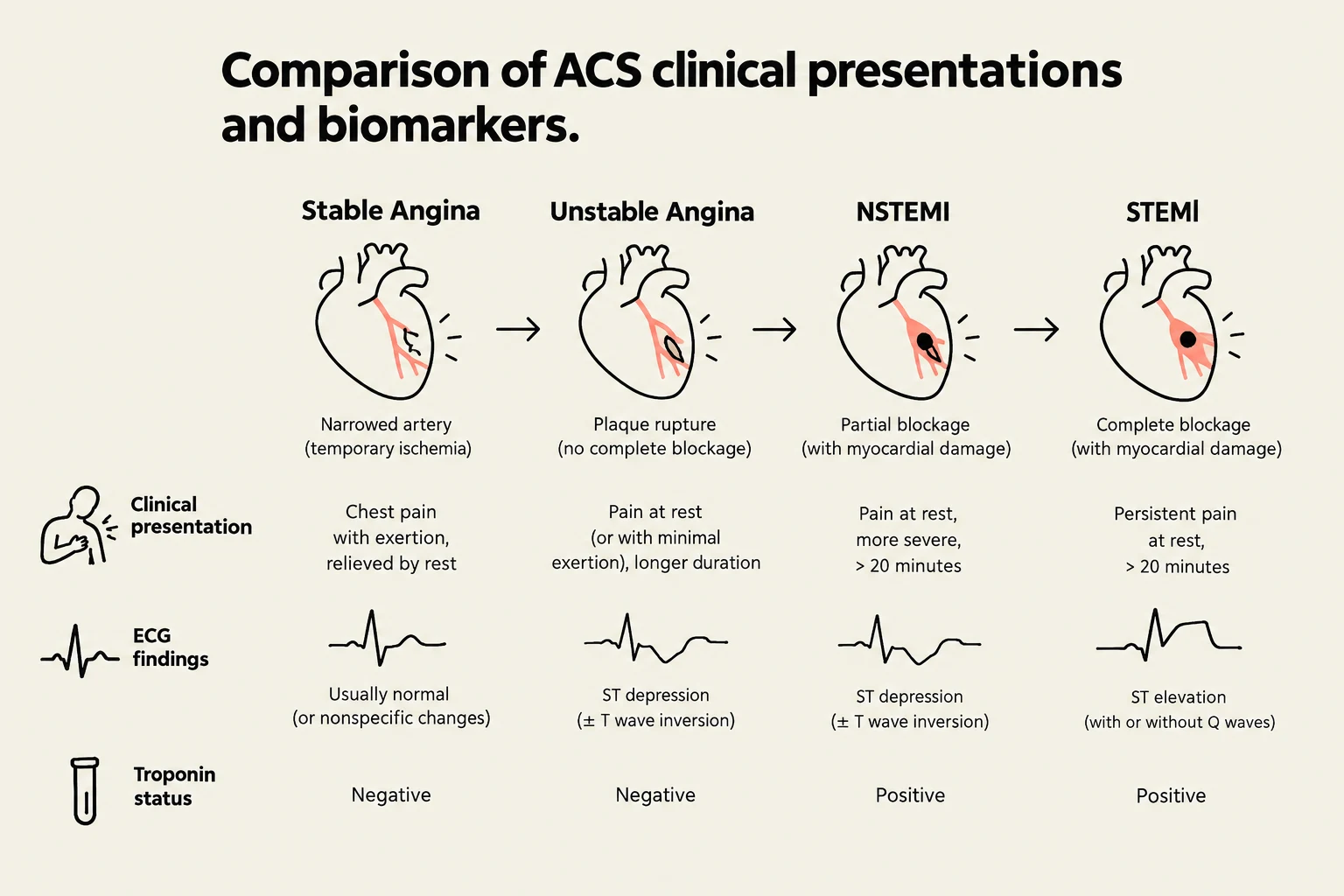
The Spectrum of Ischemic Heart Disease
Understanding ACS requires distinguishing between several clinical presentations based on symptoms, ECG findings, and cardiac biomarkers (Troponin):
- Asymptomatic Coronary Artery Disease (CAD): The presence of CAD without clinical symptoms.
- Stable Angina: Predictable chest pain that occurs with physical activity, typically caused by fixed, calcified lesions.
- Unstable Angina: Unpredictable chest pain that occurs even at rest. While it may be relieved by nitroglycerin, it is characterized by non-ST segment elevation and Troponin-negative results.
- NSTEMI (Non-ST Elevation Myocardial Infarction): Unrelenting chest pain associated with Troponin-positive results and either ST depression or ST elevation in two or more contiguous leads.
- STEMI (ST Elevation Myocardial Infarction): The most severe form, characterized by unrelenting chest pain, Troponin-positive results, and diagnostic ST elevation on the ECG.
- Prinzmetal's (Variant) Angina: A unique form of unstable angina caused by coronary artery spasms. It may present with transient ST segment elevation and can be precipitated by nicotine, ethanol, or cocaine.
Exam Tip: Silent ACS Not all patients present with classic chest pain. "Silent ACS" is more common in specific populations, including women, patients with diabetes, and those older than 75. In these patients, look for atypical symptoms such as nausea, shortness of breath (dyspnea), fatigue, delirium, or general malaise.

Keep reading for free.
Create an account to finish this reading and make it part of your study routine.
Continue reading freeAlready have an account? Log in
Updated