


In the fast-paced environment of healthcare, clinicians are constantly faced with a single, high-stakes question: "Which patient do I see first?" Whether you are a nursing student preparing for the NCLEX or a seasoned practitioner managing a heavy patient load, the ability to prioritize care is a fundamental skill that directly impacts patient outcomes. Prioritization is not about deciding who is "more important," but rather about identifying which physiological or psychological needs are most urgent and life-threatening.
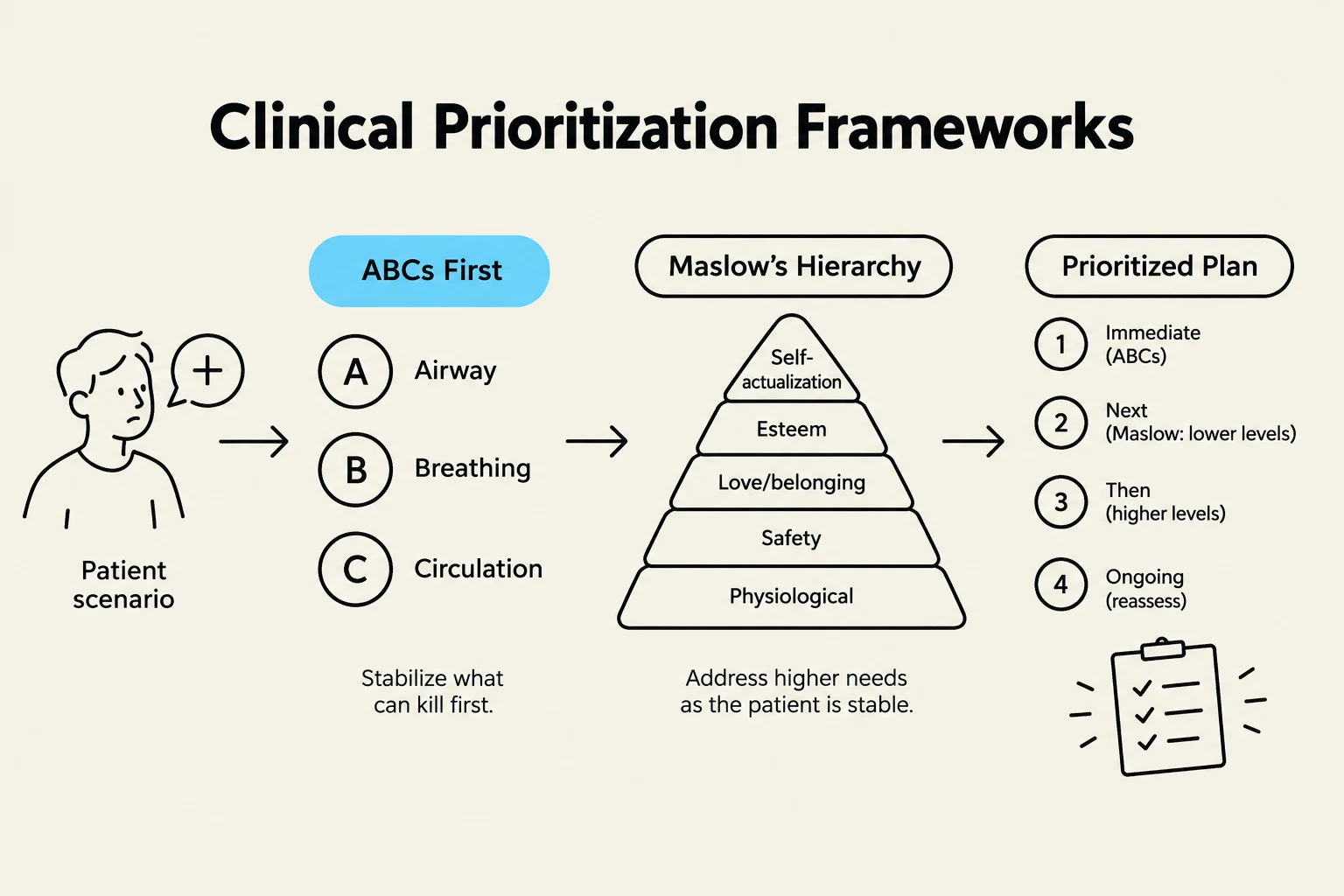
To make these decisions objectively and consistently, healthcare professionals rely on established clinical prioritization frameworks. Two of the most critical tools in your toolkit are Maslow's Hierarchy of Needs and the ABCs (Airway, Breathing, and Circulation).
Maslow’s Hierarchy of Needs: The Foundation of Human Needs
Maslow’s Hierarchy provides a psychological and physiological roadmap for understanding human needs. The theory suggests that certain basic needs must be met before an individual can focus on higher-level needs. In a clinical setting, this framework helps you categorize patient problems into levels of urgency.
The hierarchy is typically organized into five levels:
- Physiological Needs: These are the most basic requirements for human survival, such as oxygen, water, food, elimination, temperature regulation, and sleep.
- Safety and Security: Once physiological needs are met, the focus shifts to physical safety (e.g., preventing falls) and emotional security.
- Love and Belonging: This involves social connections and support systems.
- Esteem: This relates to a patient's sense of dignity, respect, and self-worth.
- Self-Actualization: The realization of personal potential.
When applying Maslow to clinical prioritization, you must always address the physiological needs first. A patient struggling to breathe (physiological) takes precedence over a patient expressing anxiety about their upcoming surgery (safety/emotional).

Keep reading for free.
Create an account to finish this reading and make it part of your study routine.
Continue reading freeAlready have an account? Log in
Updated