


The human visual system is a sophisticated transducer that converts light energy into neuronal signals via the retina. Because the eye is an intricate organ involving delicate epithelial layers, complex immune responses, and a high-pressure vascular system, pathologies can range from superficial irritations to sight-threatening emergencies. Understanding these disorders requires a systematic approach to differentiating between infectious, inflammatory, and vascular etiologies.
Corneal Disorders and Keratitis
The cornea is the eye's primary refractive surface, and its integrity is vital for clear vision. Keratitis refers to inflammation of the cornea, which poses a significant threat to vision due to the risk of corneal clouding, scarring, and perforation.
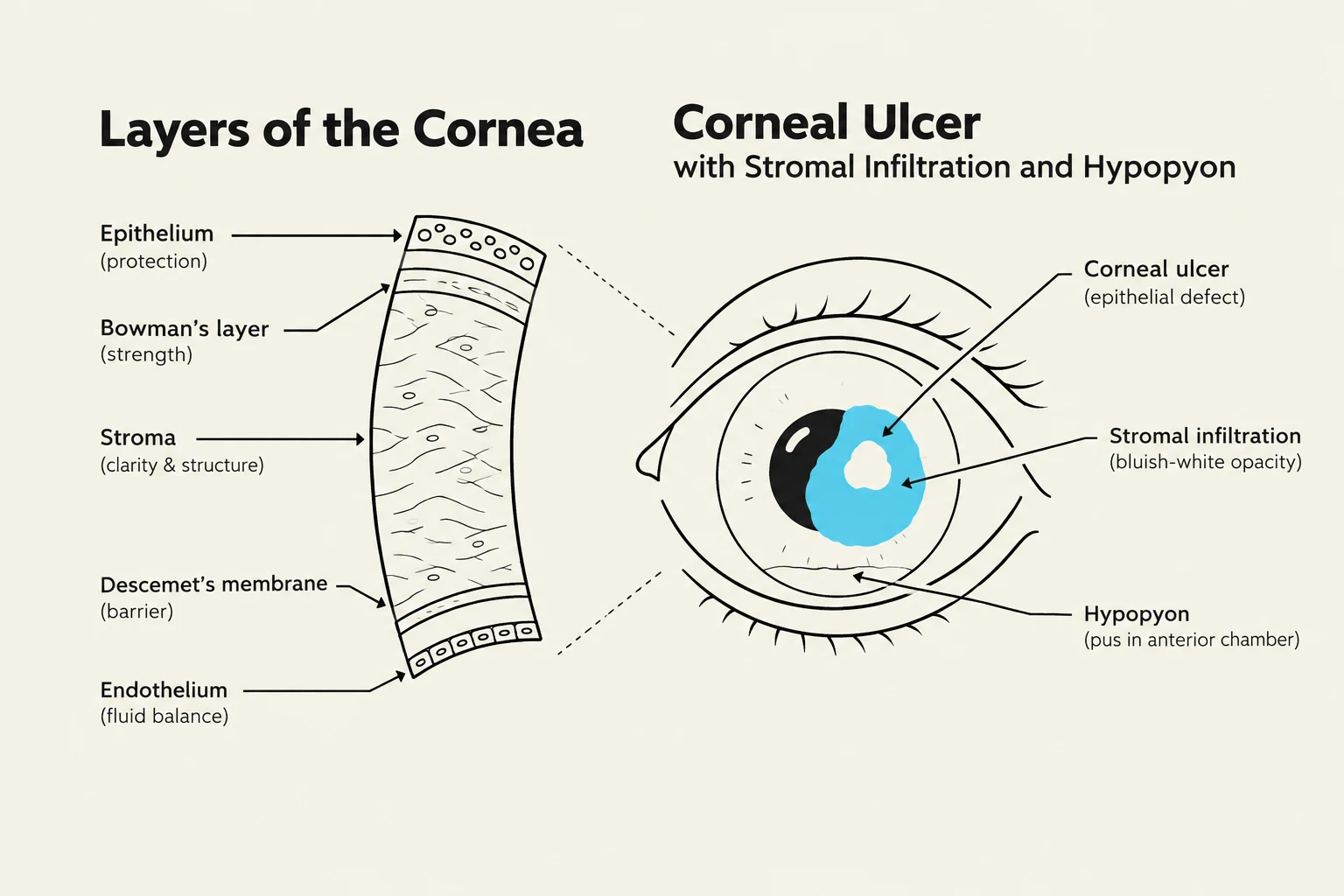
Clinical evaluation must distinguish between superficial keratoconjunctivitis and deep ulcerative processes. Deep keratitis often presents with significant pain, photophobia, and a cloudy infiltrate in the stroma. In severe cases, pus may settle in the bottom of the anterior chamber, forming a hypopyon.
Specific etiologies include:
- Fungal Keratitis: Common in warm, humid climates or following trauma involving plant or vegetable material.
- Acanthamoeba Keratitis: Strongly associated with improper contact lens disinfection.
- Herpes Simplex Keratitis: A major cause of blindness.
Clinical Pearl: When evaluating a red, painful eye, always check for a hypopyon via slit-lamp examination, as this indicates a deep, serious ulcerative process or severe intraocular inflammation.
Viral Keratitis: Herpes Simplex and Zoster
Herpes Simplex (HSV) is a leading cause of viral keratitis. Primary infection often presents as unilateral follicular blepharoconjunctivitis, while recurrent infection arises from the reactivation of latent virus. A hallmark finding is the dendritic pattern of corneal epithelial ulceration, which is pathognomonic when visualized with fluorescein staining.
Keep reading for free.
Create an account to finish this reading and make it part of your study routine.
Continue reading freeAlready have an account? Log in
Updated