


The oral cavity is a complex anatomical region comprising the lips, gingiva, tongue, hard and soft palates, and various salivary ducts. Because the mouth is frequently exposed to environmental irritants, pathogens, and systemic diseases, it serves as a critical diagnostic window for both localized infections and systemic pathologies. This article provides a clinical overview of common oral disorders, ranging from benign inflammatory conditions to life-threatening malignancies.
Malignant Oral Disorders
Squamous Cell Carcinoma (SCC)
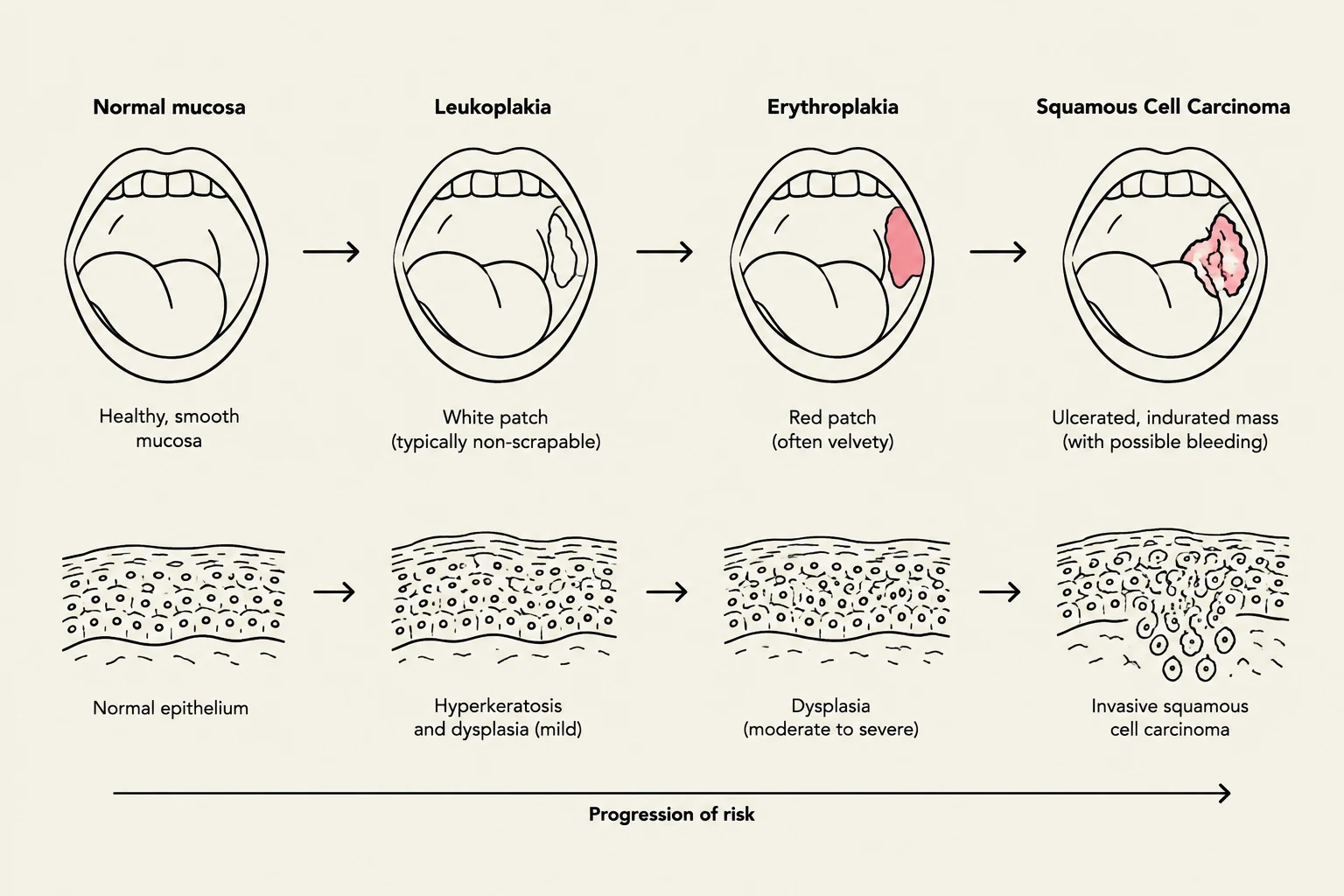
Squamous Cell Carcinoma is the most common type of oral cancer, accounting for approximately 90% of all oral malignancies. These lesions often originate from pre-cancerous states such as leukoplakia (white patches that cannot be wiped off) or erythroplakia (painless, well-defined red patches). Erythroplakia carries a significantly higher risk, with 90% of cases demonstrating dysplasia or carcinoma.
Clinical presentation of SCC often includes raised, firm, or ulcerative lesions. While small lesions (under 2cm in diameter) may be cured by local resection, larger lesions or those with significant depth increase the risk of metastasis. Major risk factors include tobacco and alcohol use.
Oropharyngeal SCC
Oropharyngeal SCC differs from oral cavity SCC in that it is typically larger and often buried within the lymphoid tissues of the palatine or lingual tonsils. Patients may present with unilateral odynophagia (painful swallowing), weight loss, and ipsilateral lymphadenopathy. Human Papillomavirus (HPV) types 16 and 18 are significant risk factors alongside tobacco and alcohol.
Clinical Red Flag: Any oral lesion, such as a persistent ulcer or mass, that fails to heal should be evaluated immediately via biopsy, which is the definitive diagnostic tool for malignancy.
Keep reading for free.
Create an account to finish this reading and make it part of your study routine.
Continue reading freeAlready have an account? Log in
Updated