


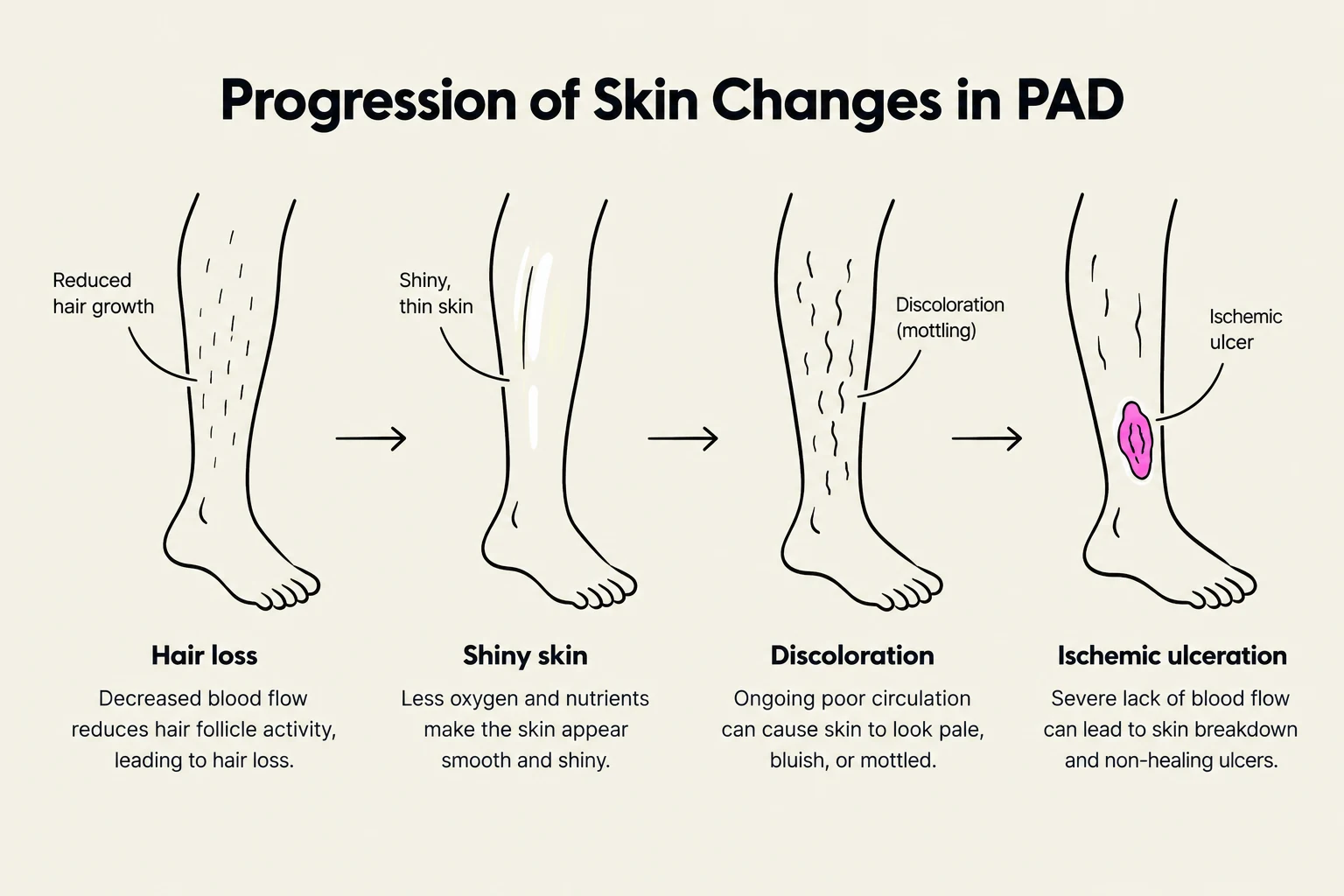
Peripheral Artery Disease (PAD) is a manifestation of systemic atherosclerosis, where the narrowing or occlusion of arteries reduces blood flow to the extremities. While many patients remain asymptomatic in the early stages, the clinical presentation can range from mild discomfort during exercise to debilitating rest pain and tissue necrosis. For healthcare students and clinicians, the ability to distinguish between different types of ischemic pain and recognize physical skin changes is critical for determining the severity of the disease and the urgency of intervention.
Intermittent Claudication: The Hallmark Symptom
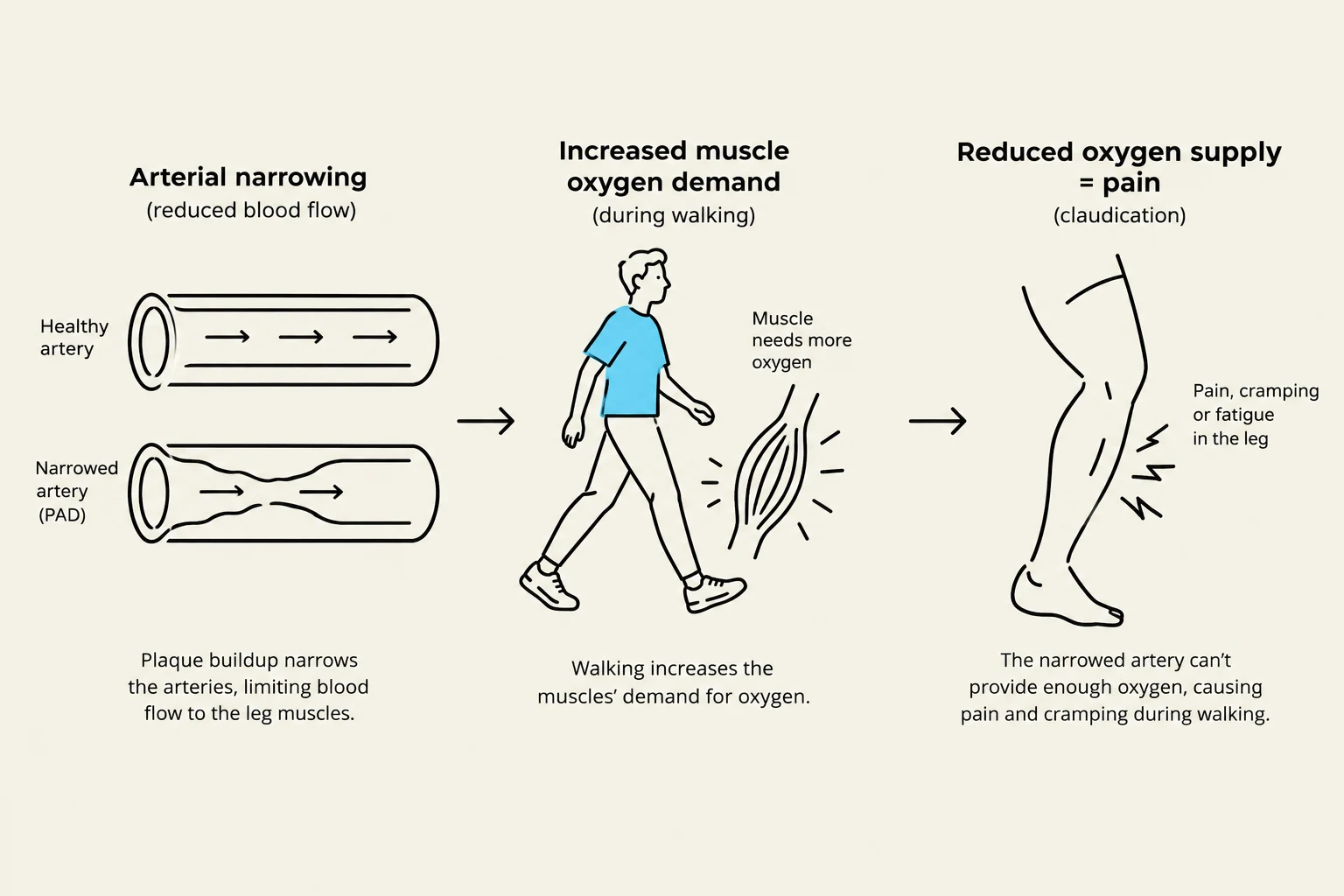
The most common clinical manifestation of PAD is intermittent claudication. This is characterized by muscle pain, cramping, or heaviness that occurs predictably during physical activity and is relieved by rest.
The pathophysiology is straightforward: during exercise, the metabolic demand of the skeletal muscle increases, requiring a higher supply of oxygenated blood. In a healthy individual, the arteries dilate to meet this demand. In a patient with PAD, the stenotic (narrowed) vessels cannot increase blood flow sufficiently, leading to localized ischemia and the buildup of metabolic byproducts like lactic acid, which triggers pain.
Exam Tip: When a patient describes "cramping in the calves that only happens after walking two blocks and stops immediately upon sitting," think Intermittent Claudication. Always note the distance (claudication distance) as it is a key metric for disease progression.
Keep reading for free.
Create an account to finish this reading and make it part of your study routine.
Continue reading freeAlready have an account? Log in
Updated