


Congenital hypothyroidism is a critical endocrine disorder characterized by the thyroid gland's inability to produce sufficient thyroid hormones from birth. Because thyroid hormones are essential for metabolic regulation and neurological development, early identification is paramount to prevent irreversible damage. Interestingly, many newborns may appear clinically normal at the moment of birth, a phenomenon often attributed to the protective transfer of maternal thyroid hormones to the fetus during gestation. However, as these maternal stores deplete, the underlying deficiency becomes apparent through a progressive series of clinical signs.
Clinical Manifestations Across Developmental Stages
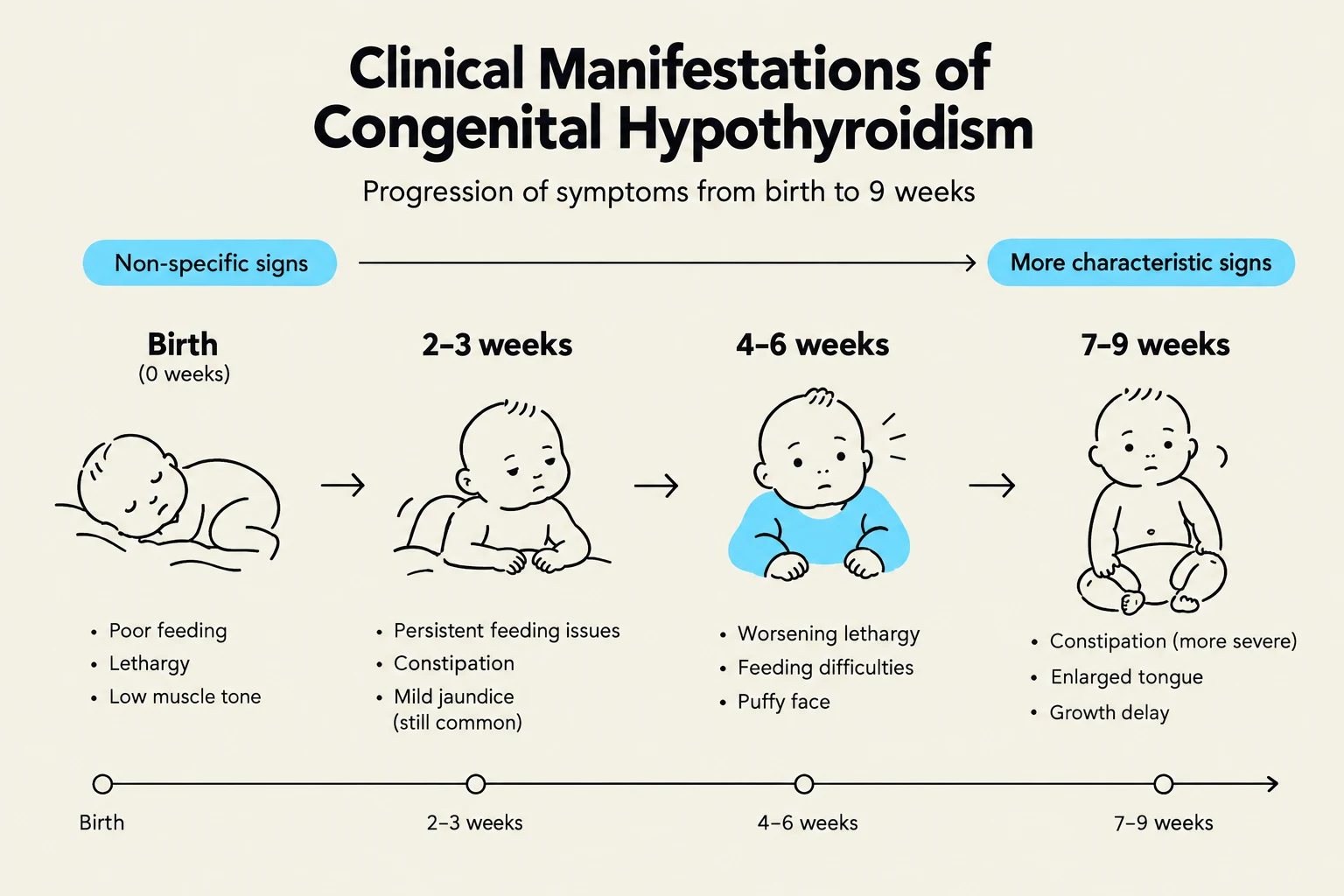
The presentation of congenital hypothyroidism is highly dependent on the infant's age. Because symptoms can be subtle or delayed—particularly in breastfed infants or those with certain familial types—clinicians must maintain a high index of suspicion.
The Neonatal Period (At Birth)
At birth, the signs may be non-specific, making diagnosis challenging without newborn screening. Common observations include poor feeding, lethargy with long sleep intervals, and an irregular stool pattern. Physical findings may include:
- Hypotonia: Decreased muscle tone.
- Cardiovascular/Respiratory: Bradycardia (slow heart rate), respiratory distress, and cyanosis.
- Physical Markers: Large anterior and posterior fontanelles, hoarseness, and being large for gestational age.
- Jaundice: Prolonged jaundice lasting longer than three weeks is a significant red flag.
Infancy (Ages 6 to 9 Weeks)
As the infant grows and maternal hormone levels diminish, the "classical" features of the disorder often emerge. During this stage, the clinical picture becomes more distinct and includes:
Keep reading for free.
Create an account to finish this reading and make it part of your study routine.
Continue reading freeAlready have an account? Log in
Updated