


Mastering elimination and tube management is a cornerstone of nursing practice. Whether you are managing a patient with neurogenic bladder or assisting a patient with fecal impaction, your interventions must balance clinical efficacy with strict adherence to safety and infection control protocols. This guide provides a structured overview of urinary and bowel management, focusing on the technical skills and critical thinking required for safe practice.
Urinary Incontinence and Bladder Training
Urinary incontinence is not a single condition but a spectrum of symptoms categorized by the mechanism of loss. Understanding these types is essential for selecting the correct nursing intervention:
- Stress Incontinence: Loss of urine during physical exertion like coughing or sneezing.
- Urge Incontinence: A sudden, intense need to void followed by involuntary loss.
- Overflow Incontinence: Dribbling caused by an overfilled bladder or retention.
- Functional Incontinence: Physical or cognitive barriers that prevent the patient from reaching the toilet.
- Reflex Incontinence: Predictable voiding intervals often seen in spinal cord injuries.
To manage these, nurses implement bladder training programs, which may include habit training (scheduled voiding) or pelvic floor (Kegel) exercises. For patients with neurogenic bladders, the Credé maneuver—applying gentle manual pressure over the lower abdomen—can help expel urine.
Exam Tip: When teaching patients about constipation prevention, always emphasize a fluid intake of per day and increased dietary fiber.
Urinary Catheterization: Types and Techniques
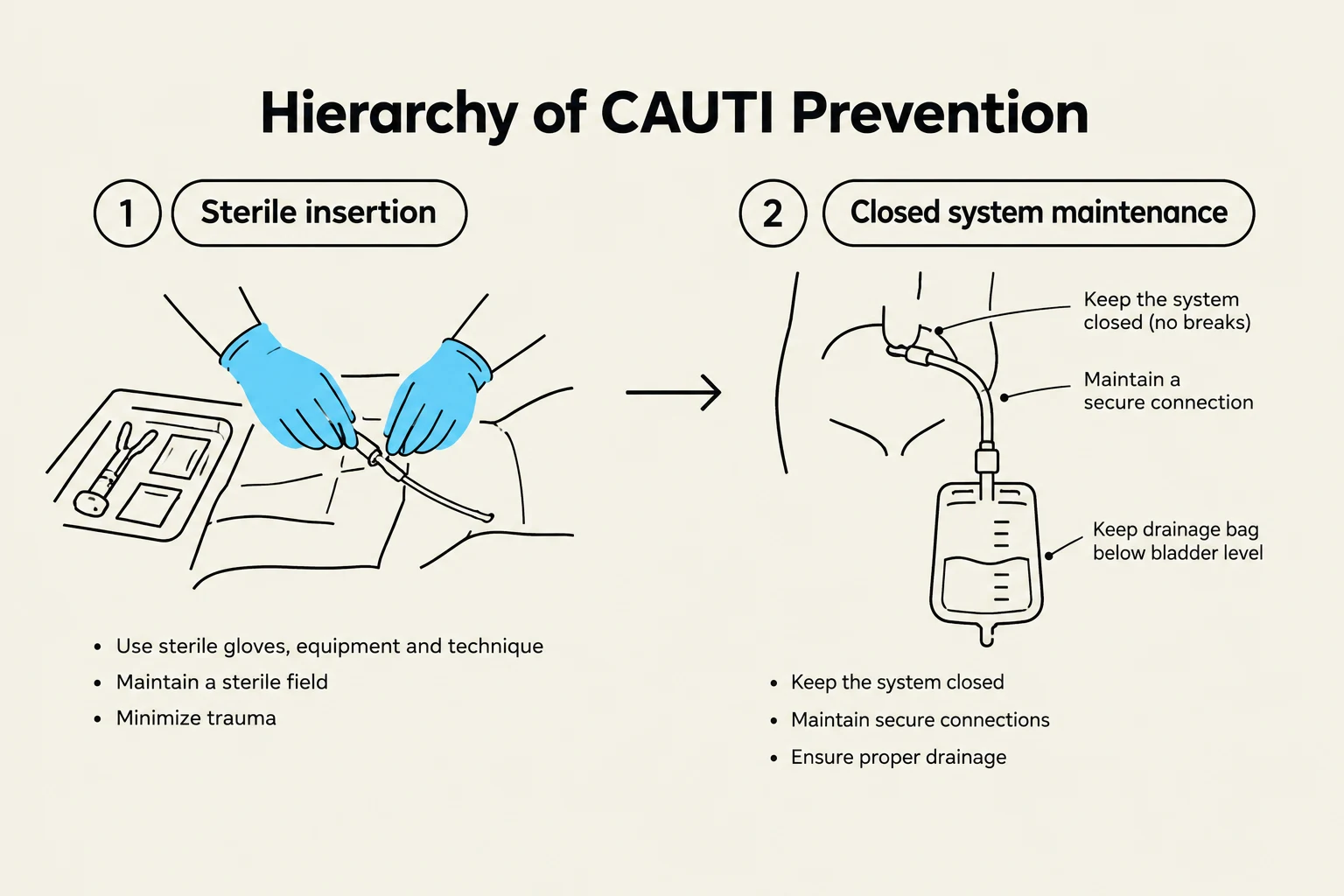
Catheterization is categorized into invasive and non-invasive methods. Non-invasive options include external condom catheters for males or clean-catch midstream collection. Invasive methods require strict surgical asepsis.
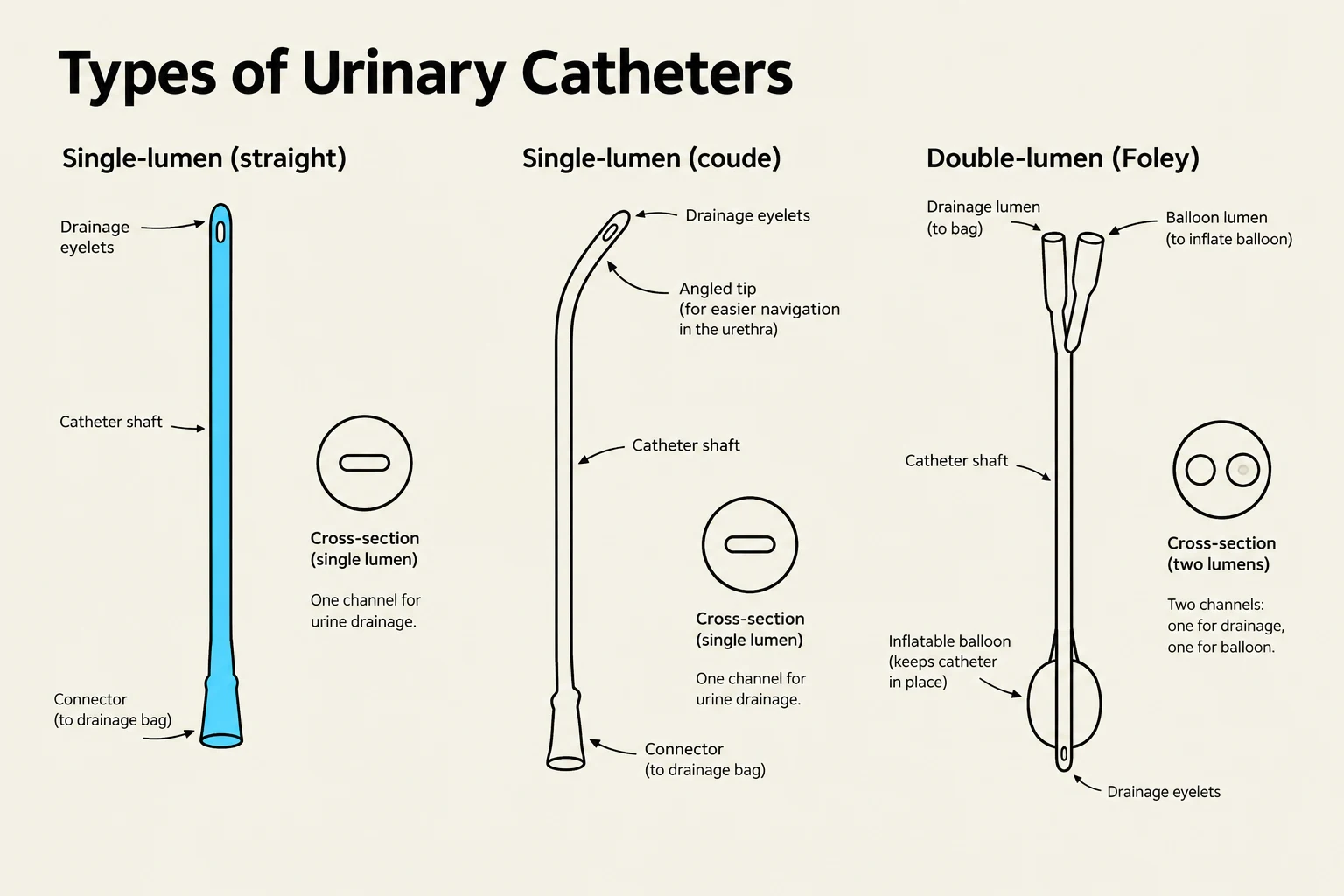
Common Catheter Types
- Indwelling (Foley) Catheter: Uses a retention balloon for continuous drainage.
- Straight/Intermittent Catheter: A single-lumen tube used for temporary drainage.
- Triple-Lumen Catheter: Specifically used for continuous bladder irrigation (CBI).
- Coude Catheter: Features a curved tip to navigate an enlarged prostate.
- Condom Catheter: A non-invasive external sheath for male patients.
Keep reading for free.
Create an account to finish this reading and make it part of your study routine.
Continue reading freeAlready have an account? Log in
Updated